

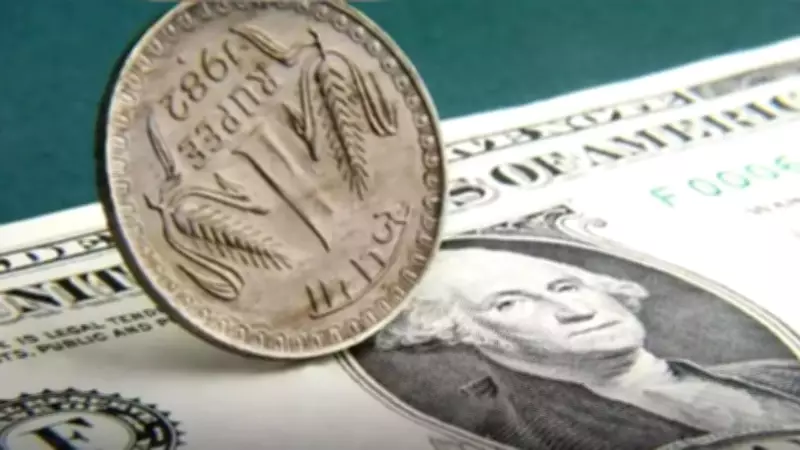
The Indian rupee experienced a significant decline on Tuesday, dropping by 23 paise to close at a historic low of 93.76 against the US dollar. This depreciation was primarily driven by a combination of factors, including a strengthening US dollar, elevated global crude oil prices, and ongoing foreign fund outflows linked to the escalating Middle East crisis.
Market Dynamics and Volatility
In the interbank foreign exchange market, the rupee opened at 93.66 against the dollar and exhibited considerable volatility throughout the trading session before settling at the record low of 93.76. This follows a previous milestone on Monday when the local unit briefly breached the 94 mark for the first time, though it eventually ended flat at 93.53.
Expert Insights on Currency Pressure
Anil Kumar Bhansali, Head of Treasury and Executive Director at Finrex Treasury Advisors LLP, provided analysis on the situation. He noted, "Persistent foreign portfolio investor (FPI) outflows continue to pressure the Indian rupee. A robust US dollar is keeping emerging market currencies weak, with the INR weakening by approximately 4.5 percent during the month. The expected range for the rupee on Wednesday is between 93.65 and 94.25."

Impact of Middle East Conflicts
The geopolitical tensions in the Middle East have significantly contributed to the rupee's weakness. Recent developments include reports of Saudi Arabia granting US base access and the United Arab Emirates shutting down Iranian assets, adding to regional instability. Additionally, US President Donald Trump's statements about talks with Iranian leaders and extended deadlines for reopening the Strait of Hormuz have created uncertainty, though Iran has denied these claims. These hostilities have pushed up global crude prices, further dampening investor sentiment.
Global Economic Indicators
The dollar index, which measures the US currency's strength against a basket of six peers, was trading 0.23 percent higher at 99.18. Meanwhile, Brent crude, the global oil benchmark, saw a decline of 1.45 percent to USD 101.4 per barrel in futures trade, reflecting market fluctuations amid the crisis.
Domestic Equity Market Performance
Despite the rupee's decline, domestic equity markets ended sharply higher on Tuesday. The BSE Sensex surged by 1,372.06 points, or 1.89 percent, to close at 74,068.45, while the NSE Nifty rose by 209.65 points, or 0.93 percent, to 22,722.30. This divergence highlights the complex interplay between currency and stock market movements.
Foreign Institutional Investor Activity
Foreign institutional investors (FIIs) were net sellers, offloading equities worth Rs 8,009.56 crore on Tuesday, according to exchange data. This continued outflow of foreign funds amid the Middle East uncertainties has been a key factor weighing on the domestic currency, as reported by PTI.
The combination of a strong US dollar, high crude oil prices, and geopolitical risks from the Middle East crisis has created a challenging environment for the Indian rupee, leading to its record low settlement. Market participants will closely monitor further developments in the region and global economic trends for cues on future currency movements.






