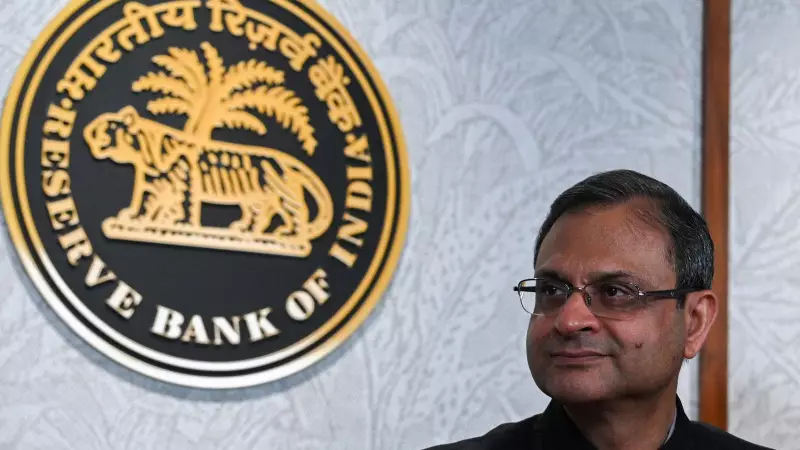
Reserve Bank of India (RBI) Governor Sanjay Malhotra has expressed confidence in the Indian economy's ability to demonstrate robust growth in the face of a difficult global environment. He attributed this resilience to strong domestic demand, controlled inflation, and sound macroeconomic policies.
Domestic Strength vs. Global Headwinds
In his foreword to the December 2025 edition of the Financial Stability Report (FSR), released on Wednesday, Governor Malhotra acknowledged that the past year was challenging. Geopolitical conflicts, trade tensions, and persistent policy uncertainty negatively impacted the global economy and financial systems. However, he noted that the world economy has shown more resilience than expected.
"Despite a volatile and unfavourable external environment, the Indian economy is projected to register high growth, driven by strong domestic consumption and investment," Malhotra stated. He emphasised that policymakers are building "strong guardrails" to protect the economy from external shocks and near-term risks stemming from geopolitical and trade uncertainties.

Evolving Risks in the Financial Landscape
The RBI Governor pointed out that the outlook for 2026 and beyond remains uncertain, as new global policies remain fluid. The international financial system faces vulnerabilities from several sources:
- Stretched valuations of risk assets.
- Expanding public debt levels worldwide.
- Growing interconnectedness between banks and non-bank financial institutions (NBFIs).
He added that rapid technological advances and the rise of non-bank financial intermediation, while creating opportunities, also introduce new risks. Malhotra specifically highlighted the potential challenges posed by the rise of stablecoins and private credit.
Stability and Innovation: The Dual Focus
On the domestic front, Governor Malhotra assured that India's financial system remains stable. Banks and NBFIs are healthy, supported by strong capital and liquidity buffers, robust earnings, and improved asset quality. Nevertheless, he cautioned that Indian financial markets are still susceptible to spillovers from global events.
"Maintaining financial stability and strengthening the financial system remains our north star," Malhotra asserted. He clarified that stability is not the sole objective. The central bank equally prioritises promoting innovation, protecting consumers, and adopting a pragmatic regulatory approach to enhance the financial system's efficiency.
He concluded that these goals are interconnected and vital for boosting productivity and long-term economic growth. The key task for policymakers is to foster a financial system that is resilient to shocks, efficient in service delivery, and conducive to responsible innovation.