

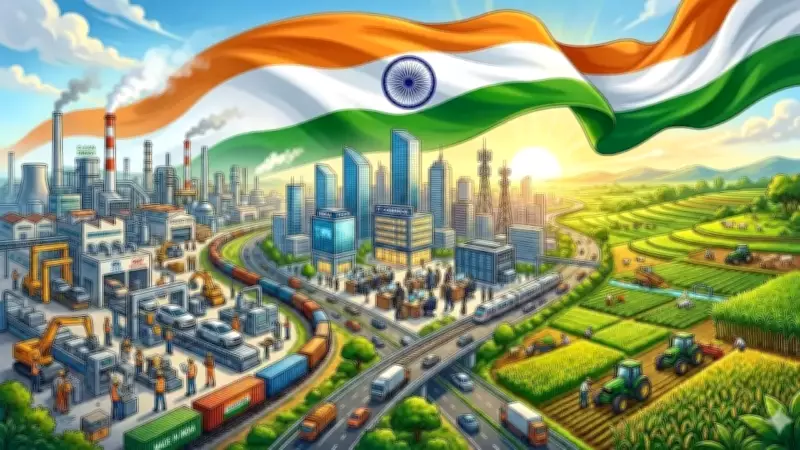
India's Economic Resilience Shines Amid Global Turmoil
India's growth trajectory is poised to remain robust and steady, even as the ongoing Middle East crisis sends shockwaves across the global economy. In a comprehensive new report, SBI Research has affirmed that the nation is navigating oil price shocks and the Iran war from a "situation of strength", projecting GDP growth to sustain between 6.8% and 7.1% in the fiscal year 2027.
Strong Domestic Fundamentals Buffer Against External Pressures
The report emphasizes that India entered this phase of global geopolitical conflict on firm footing, with FY26 growth estimated at 7.6%. This mirrors the resilience shown during the Russia-Ukraine crisis, when India was expanding at over 9%. Key domestic strengths include:
- A robust and stable banking sector that provides a solid foundation.
- Strong macroeconomic fundamentals that help absorb external shocks.
- The need for a comprehensive package to support the Balance of Payments and stabilize the Rupee.
However, the report also flags potential risks, such as fears of a "Super El Nino" that could cloud growth estimates. Inflation is expected to average around 4.5%, with the fiscal deficit projected to range from 4.5% to 4.6%.

Multiple Challenges and Emerging Opportunities
SBI Research describes "multiple vortexes of headwinds" affecting various sectors, including agriculture, MSMEs, consumption patterns, and global supply chains. Despite these pressures, the report points to "green shoots" that could enable India to reposition itself within global value chains, enhancing its economic standing.
For the Reserve Bank of India, the report highlights a "growth-inflation paradox", indicating little room for rate decisions at this juncture. Interest rates are likely to remain unchanged until the full impacts of the war and evolving climate patterns become clear, suggesting a "lower for longer" regime will persist.
Global Context: US Economy and Oil Shocks
Examining the global landscape, the report notes that past oil shocks have often pushed the United States into recession. However, the current scenario may unfold differently due to significant changes in the US economy:
- The US is now energy self-sufficient and operates as a net oil exporter, keeping higher energy spending domestically when prices rise.
- US households are receiving substantial tax refunds, which could sustain consumption and cushion economic slowdowns.
Historical examples, such as the 1973 oil embargo and the 2008 financial crisis, show sharp crude price increases leading to US downturns, but "this time may be different". Despite this, risks persist from ongoing Middle East tensions and supply chain disruptions.
Shifts in Global Finance and Travel
The report highlights emerging opportunities amid uncertainty. Financial centers in Dubai and Abu Dhabi are facing periods of instability, prompting global investors and NRIs to reassess exposure. This presents a good opportunity for IFSC GIFT City in India to position itself as a stable global financial destination.
In air travel, parts of Middle East and UAE airspace are becoming riskier, potentially shifting transit hubs to India and China. However, this transition may require significant investments in airport infrastructure, connectivity, and passenger experience enhancements.
Central Banks and Future Outlook
On monetary policy, the report notes that many central banks paused in 2026 after rate cuts in 2025 and are now "reassessing the glide path afresh" if a promising peace deal is brokered in West Asia. This reassessment incorporates domestic macroeconomic factors, trade headwinds, fiscal constraints, and currency perils.
Overall, SBI Research maintains that India's growth story continues to demonstrate remarkable resilience, with growth likely to remain within the 6.8% to 7.1% range despite formidable global and regional challenges. The nation's ability to leverage its strengths while navigating external pressures underscores its evolving economic prowess on the world stage.






