

India's Union Budget 2026-27: A Historic Sunday Presentation
India's Union Budgets have served as powerful reflections of the nation's evolving economic aspirations and developmental journey over the past eight decades. The upcoming Union Budget for 2026–27, scheduled for presentation on February 1, represents several groundbreaking firsts and significant milestones within this enduring tradition.
A Weekend Budget: Breaking Colonial Conventions
With just one day remaining before the presentation, the entire country is preparing for a financial statement that will be delivered on a Sunday. This marks a historic first in India's parliamentary history, as a Union Budget has never before been formally tabled on a weekend day. The 2026 Budget will be Finance Minister Nirmala Sitharaman's ninth consecutive Union Budget presentation, making her the first finance minister in Indian history to achieve this remarkable feat.
Nirmala Sitharaman will also become only the second finance minister to present a Union Budget on a Sunday, further emphasizing the extraordinary nature of this occasion. This development highlights how procedural reforms and practical considerations now take precedence over older colonial-era conventions in India's governance framework.

The Significance of February 1 Budgets
Since 2017, the Union Budget has consistently been presented on February 1, a significant reform introduced by the BJP-led NDA government. Prior to this change, the Budget was traditionally presented on the last working day of February, following a colonial-era practice established during British rule. The strategic shift to February 1 was specifically designed to provide ministries and state governments with additional planning and implementation time before the new financial year commences on April 1.
Because February 1, 2026, coincidentally falls on a Sunday, the Budget presentation will occur on a weekend, demonstrating how contemporary administrative needs now override historical conventions. This practical approach reflects India's evolving governance priorities and commitment to efficient fiscal management.
Historical Context of Weekend Budgets
While weekend Budget presentations remain relatively rare in Indian history, they are not entirely unprecedented. In 1999, when February 28 fell on a Sunday, former Finance Minister Yashwant Sinha presented the Budget one day earlier, on Saturday, February 27. Finance Minister Nirmala Sitharaman has previously presented Budgets on Saturdays, specifically on February 1, 2020, just before the Covid-19 lockdown, and again on February 1, 2025.
However, Budget 2026 will represent the first time in recent history that the Union Budget is actually presented on a Sunday itself, rather than being adjusted to avoid weekend scheduling. This development marks another step in the evolution of India's budgetary practices away from colonial traditions.
Evolution of Budget Presentation Traditions
The presentation of India's Union Budget has undergone several significant transformations over the decades. Until 1999, the Union Budget was traditionally presented at 5 pm, following a colonial-era practice aligned with British working hours. That year, Finance Minister Yashwant Sinha moved the presentation timing to 11 am, establishing a convention that continues to this day.
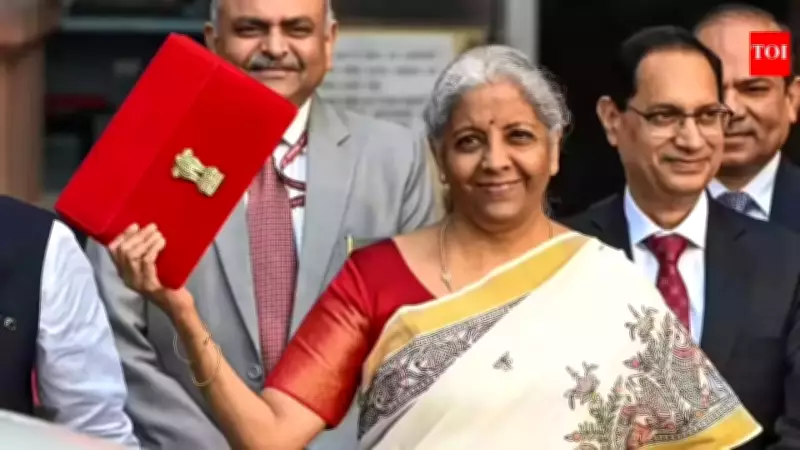
In 2017, then Finance Minister Arun Jaitley further reformed the budgetary process by advancing the presentation date to February 1 from the end of the month. Since 2019, Budget documents have been carried to Parliament in a traditional "bahi khata", replacing the colonial briefcase that had been used for decades. The red cloth folder, embossed with India's national emblem, proudly reflects the country's own accounting traditions and cultural heritage.
From 2021 onward, the bahi khata has been used to carry a digital tablet, symbolizing India's transition toward paperless Budget documentation and embracing technological advancement in governance. India's first Union Budget after Independence was presented on November 26, 1947, by the nation's inaugural finance minister, R K Shanmukham Chetty, establishing the foundation for this crucial annual financial exercise.

Understanding the Union Budget
Although commonly referred to as the "Budget," this term does not actually appear in the Indian Constitution. Under Article 112, it is formally designated as the Annual Financial Statement, which meticulously details the government's estimated receipts and expenditure for the upcoming financial year. India's financial year officially runs from April 1 to March 31, and the Budget is meticulously prepared by the Ministry of Finance through extensive consultation and analysis.
The current Budget Session of Parliament commenced on January 28 and will continue until April 2, providing the legislative framework for discussing and approving the government's financial proposals. This extended session allows for comprehensive examination of budgetary allocations and policy directions that will shape India's economic trajectory in the coming year.





