

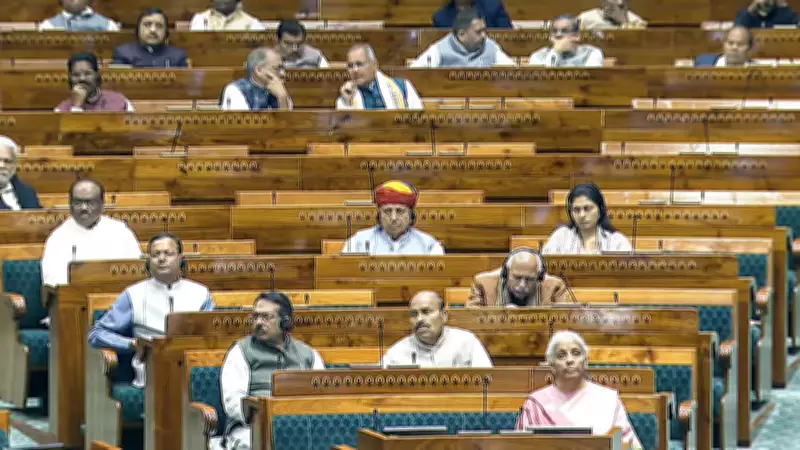
Finance Minister Nirmala Sitharaman has reaffirmed that economic growth remains the government's foremost priority, even as it progresses along the fiscal consolidation path. Speaking to reporters a day after presenting the Union Budget 2026-27 in Parliament, Sitharaman emphasized that the administration has deliberately chosen not to compress spending to achieve fiscal targets, opting instead to maintain infrastructure investment as a key growth driver.
Fiscal Consolidation with Growth Focus
The Finance Minister revealed that while the government could have pursued a more aggressive reduction in fiscal deficit, it consciously maintained a balanced approach. "Below 4.5% was my aim for fiscal deficit. I have reached 4.4% for FY26 and I am targeting 4.3% of GDP for FY27," Sitharaman stated. "We could have brought it down to 4%, but we are comfortable at 4.3%. The fiscal deficit depends on each year's situation, with growth being the priority."
Debt-to-GDP as New Fiscal Anchor
Sitharaman explained that the government has shifted its focus to the debt-to-GDP ratio as the primary fiscal anchor, with the Budget setting a target of 55.6% for FY27. "We are focusing on the debt-to-GDP ratio, but that doesn't mean we are overlooking the fiscal deficit as a percentage of GDP," she clarified. "We are looking to bring it down while creating assets."

The Finance Minister also addressed the need for coordinated fiscal discipline between the Centre and States, noting that the Centre would have to "keep nudging" States in this regard, particularly since States currently lack a similar debt-based fiscal framework.
Revenue Generation through Divestment
With concerns about slow tax revenue growth and future financial pressures from the Eighth Pay Commission implementation in FY28, Sitharaman outlined a comprehensive strategy for revenue generation. "Disinvestment and asset monetisation would set the tone for revenue generation," she declared.
The government is actively considering increased public float from Central Public Sector Enterprises (CPSEs) as part of this strategy. "Asset monetisation will also happen. Also, we are considering doing more public float from CPSEs," Sitharaman confirmed. "That doesn't mean that we will not focus on the tax side. We need to widen the tax base. The revenue estimates for FY27 are realistic."
STT Hike to Curb Speculative Trading
Addressing the Budget's increase in Securities Transaction Tax (STT) on futures and options (F&O) trading, Sitharaman explained that the move aims to deter speculative derivative trading. "We have only touched the F&O segment, which is highly speculative," she said. "I have received calls from many parents saying their children are losing money, and seeking government intervention. The STT hike in F&O will act as a deterrence."
The Budget proposals include raising STT on futures contracts to 0.05% from 0.02%, while STT on options premium and exercise would increase to 0.15% from 0.1% and 0.125% respectively. This aligns with SEBI data showing over 90% of retail investors lose money in F&O trading.
Customs Duty Changes and External Concerns
Sitharaman clarified that recent Customs duty adjustments and incentives for labor-intensive sectors like textiles, leather, and footwear were not influenced by US tariffs. "We have been making changes in Customs in every Budget for a while now, and we have continued the same in this Budget," she explained. "These steps are part of a larger scheme to help Indian citizens and businesses."
On external economic concerns, the Finance Minister acknowledged that rupee exchange rate management remains a priority, with the government maintaining regular communication with the Reserve Bank of India on this matter.
Support for SMEs and Medium Enterprises
The Budget's proposal to create "champion SMEs" received special attention from Sitharaman, who emphasized that while medium-sized enterprises would be the primary focus, small enterprises would not be neglected. "We can't allow small enterprises to remain small," she stated. "But medium enterprises fear becoming big because they think they will lose their advantages on turning big."

The Finance Minister's comprehensive briefing underscores the government's multi-pronged approach to maintaining economic momentum while ensuring fiscal responsibility through strategic divestment and targeted policy interventions.





