

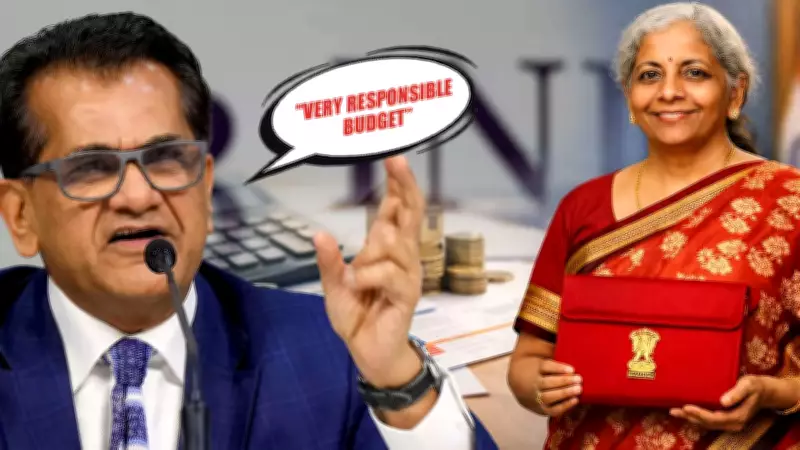
Former NITI Aayog CEO Commends Budget 2026's Fiscal Prudence in Global Economic Uncertainty
In a significant endorsement of India's economic strategy, former NITI Aayog CEO Amitabh Kant has publicly hailed the Union Budget 2026-27, presented by Finance Minister Nirmala Sitharaman. His praise comes at a critical juncture marked by persistent global economic uncertainty, highlighting the budget's robust emphasis on fiscal discipline as a cornerstone for stability and growth.
Fiscal Deficit Reduction: A Key Achievement
Amitabh Kant specifically lauded the government's success in reducing the fiscal deficit to 4.3% of GDP for the upcoming fiscal year. This marks a substantial improvement from the 9.2% recorded in FY21, demonstrating a commendable trajectory of fiscal consolidation. Kant emphasized that this reduction is not merely a statistical achievement but a vital confidence-building measure that enhances investor trust in the Indian economy.
He noted that a lower fiscal deficit facilitates smoother credit flow to the private sector, as it reduces government borrowing and leaves more resources available for private enterprises. This, in turn, supports broader economic expansion by enabling businesses to access capital more efficiently and at potentially lower costs.

Balancing Fiscal Consolidation with Growth-Oriented Expenditure
Kant further highlighted that Budget 2026-27 skillfully pairs fiscal consolidation with a strategic increase in capital expenditure. The budget allocates 4.4% of GDP to capital expenditure, a move he described as crucial for addressing supply-side constraints and fostering sustainable growth.
This dual approach ensures that while the government maintains fiscal prudence, it simultaneously invests in infrastructure and development projects that can stimulate economic activity and create long-term assets. Kant argued that such expenditure is essential for overcoming bottlenecks in the economy and laying a solid foundation for future prosperity.
Focus on Banking Reforms and Cost of Capital
In his assessment, Amitabh Kant also directed attention to the need for ongoing banking reforms. He emphasized that the high-level committee on banking reforms should prioritize reducing the cost of capital for private enterprises. By making credit more affordable, this initiative would ensure continued support for economic expansion and private sector development across India.
Kant's remarks underscore the importance of a holistic economic policy that not only manages public finances responsibly but also creates an enabling environment for private investment and innovation. His endorsement of Budget 2026-27 reflects a broader consensus among economic experts on the necessity of fiscal discipline in navigating global challenges.
As India positions itself in a volatile global economic landscape, the insights from former NITI Aayog CEO Amitabh Kant provide valuable perspective on how strategic budgeting can bolster resilience and drive growth. His praise for the budget's focus on fiscal consolidation, coupled with growth-oriented expenditure, highlights a balanced approach that aims to secure India's economic future amidst external uncertainties.






