

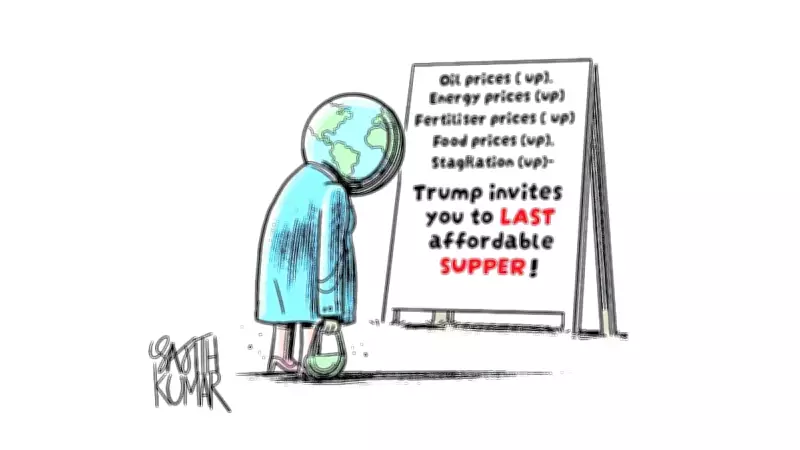
DH Cartoon Satirizes India's Soaring Food Prices as 'Last Affordable Supper'
A recent editorial cartoon published by Deccan Herald has captured widespread attention for its sharp and humorous critique of the escalating food inflation crisis in India. The cartoon, titled "DH Toon: Last Affordable Supper," uses satire to highlight the severe financial strain faced by ordinary families as prices for essential food items continue to surge across the nation.
Visual Depiction of Economic Hardship
The cartoon portrays a family gathered around a modest dining table, with expressions of concern and resignation on their faces. The scene is set against a backdrop of empty shelves and price tags showing steep increases for staples such as vegetables, lentils, and grains. The caption "Last Affordable Supper" underscores the grim reality that many households are struggling to afford basic meals due to relentless inflation.
This artistic representation serves as a poignant commentary on the broader economic challenges, including supply chain disruptions, climate-related agricultural issues, and policy impacts that have driven up food costs. By blending humor with social critique, the cartoon resonates with readers who are directly experiencing these financial pressures in their daily lives.

Context of Rising Food Inflation in India
India has been grappling with persistent food inflation, with recent data indicating significant price hikes for items like tomatoes, onions, and pulses. Factors contributing to this trend include erratic monsoon patterns affecting crop yields, increased transportation costs, and global market fluctuations. The cartoon effectively brings these complex economic issues into the public discourse through accessible and relatable imagery.
Experts note that such visual satire plays a crucial role in raising awareness about socioeconomic issues, often reaching audiences who might not engage with traditional news reports. The "Last Affordable Supper" cartoon has sparked discussions on social media and in community circles, emphasizing the urgent need for effective measures to stabilize food prices and support vulnerable populations.
Public and Critical Reception
The cartoon has received positive feedback for its timely and impactful message, with many praising Deccan Herald for using creative means to address serious topics. It highlights the power of editorial cartoons in fostering public dialogue and holding policymakers accountable for economic management.
As food inflation remains a pressing concern in India, this cartoon serves as a reminder of the human impact behind statistical data, urging both citizens and authorities to prioritize affordability and accessibility in the nation's food supply chain.






