

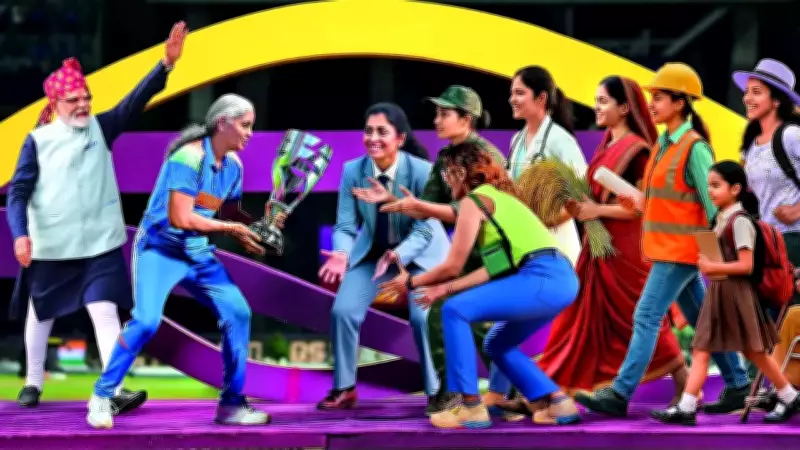
Finance Minister Nirmala Sitharaman's recent Budget 2026-27 has sparked significant political analysis, particularly regarding allocations to states. While her previous budget featured substantial schemes for Bihar and Andhra Pradesh—widely interpreted as gratitude for their contributions to the NDA's Lok Sabha tally—this year's approach marks a notable shift.
Avoiding the Freebie Template
Many political observers anticipated that the Modi government would follow a similar template by announcing targeted schemes for the upcoming poll-bound states of West Bengal, Tamil Nadu, Assam, Kerala, and the Union Territory of Puducherry. However, Sitharaman refrained from such direct allocations. This decision has led to speculation that she may be heeding warnings from the Economic Survey about the potential harms of freebies, a move that has been welcomed by fiscal conservatives.
This restraint does not eliminate the possibility of state units later announcing freebies in their election manifestoes, but it sets a different tone at the central level.

Strategic Signals to Poll-Bound States
Despite avoiding direct freebies, the Budget is not devoid of positive signals toward states headed for elections. Several key initiatives have regional implications:
- The dedicated rare-earth corridors scheme prominently includes Tamil Nadu and Kerala.
- Both states will also benefit significantly from the enhanced coconut promotion scheme.
- High-speed rail corridors are planned to span Chennai and Siliguri in northern Bengal, where the BJP has been gaining political traction.
Additionally, measures announced for promoting textiles, leather goods, ayurveda, and a robust 'care ecosystem' are expected to resonate with voters in Tamil Nadu and Kerala. These strategic allocations, combined with the finance commission's recommendations, could help counter allegations of the BJP administration discriminating against southern states—a charge aggressively pushed by parties like the DMK in Tamil Nadu, Congress in Karnataka, and the LDF in Kerala to curb the BJP's expansion in traditionally resistant regions.
Addressing Regional Perceptions
The finance commission's adjustments play a crucial role in this political calculus. While Tamil Nadu's share has seen a marginal decrease, Congress-governed Karnataka has received an increased allocation. This nuanced distribution limits the opposition's ability to accuse the BJP of an anti-South bias. Furthermore, the trimming of allocations for NDA-governed states like Madhya Pradesh, Bihar, and Chhattisgarh adds another layer to this narrative, suggesting a balanced rather than partisan approach.
Taxpayer Relief and Middle-Class Focus
Beyond state-level politics, Sitharaman has continued addressing taxpayer grievances. Following last year's tax rate cuts for small taxpayers and the neo-middle class, this Budget introduces measures for the upwardly mobile middle class. Key changes include:
- Immunity from penalties for under-reporting income.
- A form of amnesty for delays in disclosing income or assets.
- Simplified filing procedures to reduce bureaucratic hurdles.
While these may seem like minor adjustments to those unaffected, they are poised to significantly assuage a vocal section of society whose influence often outweighs its numerical strength.
Broader Economic Vision
The Budget aligns with Prime Minister Narendra Modi's vision of India as a confident nation ready to join the ranks of developed countries. It reflects an awareness of challenges posed by turbulent geopolitics, such as those stemming from Donald Trump's tariff policies, without being overawed by them. By prioritizing economic calmness over nervousness, the Budget aims to reassure citizens of Modi's steady leadership. This message could gain further amplification if ongoing trade disputes with the volatile US administration see resolution.
In summary, Budget 2026-27 strategically balances political messaging with fiscal prudence, offering targeted benefits without resorting to overt freebies, while reinforcing the government's broader economic narrative.






