

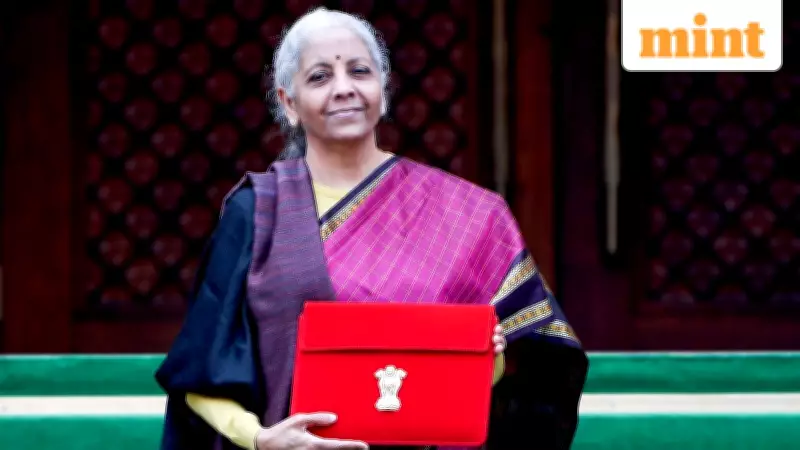
Budget 2026 Takes Strategic Long View on India's Growth by Focusing on Capabilities
Finance Minister Nirmala Sitharaman, in her record ninth consecutive budget presentation to Parliament, has demonstrated remarkable foresight by not becoming complacent about India's current favorable macroeconomic situation. Despite what appears to be a 'Goldilocks' scenario with steady growth momentum and remarkably low inflation, the budget strategically focuses on building capabilities for sustainable long-term development.
Conservative Fiscal Approach Amid Economic Strengths
The Indian economy currently presents macroeconomic numbers that would be the envy of many nations. Quarterly growth shows consistent upward momentum, while inflation remains at remarkably low levels. The corporate sector maintains healthy balance sheets with substantial deleveraging and sustained profitability over recent years. Simultaneously, the banking sector reports strong profits and minimal bad-loan ratios.
However, Finance Minister Sitharaman recognizes that this growth momentum relies heavily on the Union government's capital-expenditure push, which must eventually ease. Furthermore, the low inflation figures primarily result from sharp food-price deflation, a situation that could reverse unexpectedly. Consequently, the budget adopts a prudent approach centered on capability building rather than premature celebration of current successes.

Fiscal Arithmetic and Projection Credibility
The budget's fiscal projections reveal a conservative yet strategic approach. Total spending is projected to increase to ₹53.5 trillion in 2026-27, representing a modest 7.7% rise over the revised estimate for 2025-26. Total revenue, excluding borrowings, is expected to grow 7.2% to ₹36.5 trillion, slightly slower than expenditure growth.
These budget numbers grow only somewhat faster than real GDP growth, with implied nominal GDP growth at 10% and inflation expected to return to 4-5%. This suggests anticipated lower real GDP growth, possibly indicating the finance minister's awareness of potential economic slowdown. Nevertheless, both expenditure and revenue projections remain conservative, reflecting the Centre's commitment to fiscal prudence.
Fiscal Discipline and Capital Allocation
Finance Minister Sitharaman highlighted her success in fulfilling a four-year-old promise to reduce the fiscal deficit below 4.5% and maintain it there. This achievement is crucial for preserving India's recently upgraded sovereign rating from international agencies, which helps lower foreign capital costs, address dollar shortages, and cushion rupee exchange rate fluctuations.
Despite tight fiscal constraints, the budget allocates approximately 10% more for capital spending on infrastructure, totaling ₹12.2 trillion. This ensures continued government support for growth through infrastructure investment. However, substantial gross borrowing by both Union and state governments—₹17.2 trillion and ₹12.6 trillion respectively—creates significant bond market pressure, keeping long bond yields near 7% despite RBI's monetary easing efforts.
Strategic Capability Building Initiatives
The budget demonstrates exceptional focus on building growth-enhancing capabilities across multiple sectors:
- Services Sector Ambition: Setting a bold target of achieving 10% global market share in services, extending beyond software to include content creation, design, healthcare, and tourism
- Education-Employment Linkage: Establishing a standing committee on education for employment and enterprise to address the future of work and chart a path toward services dominance
- Manufacturing Strategy: Implementing detailed sector-wise plans for strategic and frontier sectors including rare earths, bio-pharma, electronics, and nuclear energy
- Cluster Development Approach: Connecting education and training institutes with sectoral clusters in textiles and leather goods, while reviving over 200 legacy industrial clusters
Support for Small and Medium Enterprises
The budget provides much-needed attention to small and medium enterprises (SMEs) with specific measures addressing critical challenges:

- Formalization support as small enterprises transition to organized sector status
- Addressing excessive payment delays that hinder business operations
- Improving working capital financing through efficient bill discounting mechanisms
- Mandating large company participation in India's TReDS exchange to enhance liquidity
- Linking GST invoicing to the Udyam portal to deter payment delays
Vision for Developed Economy Status
As India progresses toward developed nation status, the annual budget presentation should ideally become a non-event, serving primarily as an occasion for delivering a state-of-the-economy address and articulating long-term fiscal vision. In developed economies, growth primarily stems from private sector activity, requiring stability, predictability, and continuity in tax policies.
The current budget performs well in this regard by avoiding excessive tinkering with tax rates while maintaining credible and conservative projections. It acknowledges existing challenges and refrains from premature celebration of macroeconomic successes. The overarching message emphasizes government commitment to building growth-sustaining capabilities while exercising necessary fiscal restraint for long-term economic resilience.





