

Union Budget 2026-27 Holds Steady Amid Global Challenges, Emphasizes Manufacturing and Infrastructure
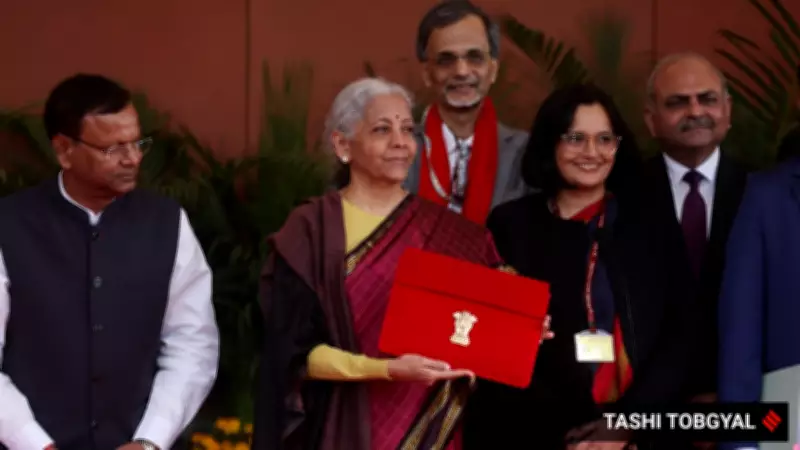
In a move reflecting caution amidst global economic headwinds, Finance Minister Nirmala Sitharaman presented the Union Budget for 2026-27, opting for continuity rather than radical shifts. The budget focuses on bolstering manufacturing sectors and maintaining robust infrastructure spending, signaling continued reliance on government-led initiatives as private sector support remains subdued.
Modest Growth and Tax Concerns Highlight Fiscal Prudence
The budget projects a nominal GDP growth of 10% for 2026-27, which, assuming inflation rates of 3-4%, translates to a real growth estimate of 6-7%. However, a concerning aspect is the tax growth projection of just over 7%, marking the fourth consecutive year it falls below nominal GDP growth. This underscores the challenges in revenue generation despite fiscal discipline.
Market Turmoil Triggered by Tax Hike and Lack of Positive Triggers
Despite Sitharaman's commitment to keeping the fiscal deficit below 4.5% of GDP in 2025-26, markets reacted sharply to the proposed increase in securities transaction tax for futures and options. This, combined with an absence of other positive measures, led to a significant drop of 1,546 points, or nearly 2%, in the BSE Sensex, marking the second-largest percentage decline on a Budget day since 2014.

Foreign Capital Disappointment and Alternative Investment Avenues
Contrary to expectations raised by the Economic Survey 2025-26, which highlighted the drying up of foreign capital as a major concern, the budget did not introduce measures to attract foreign direct investment (FDI) or foreign institutional investment (FII). Instead, it turned to Individual Persons Resident Outside India (PROI), including NRIs and OCI card holders, by increasing their investment limits in listed equities through the Portfolio Investment Scheme from 5% to 10% per individual, with an overall cap raised to 24%.
Capital Expenditure Boost and Fiscal Anchor Transition
In a positive note, the budget allocates over Rs 12.22 lakh crore for capital expenditure, a more than 10% increase, representing 4.4% of GDP—the highest in a decade. Analysts note that this capex likely exceeds net borrowings for the first time, indicating a focus on asset creation over liability accumulation. Additionally, the budget transitions to a debt-GDP ratio as the fiscal anchor, targeting a reduction to 50% or lower by 2030-31 from an estimated 55.6% in 2026-27.
Subsidies and Infrastructure Initiatives Underpin Broader Goals
While subsidies for food and fertiliser remain elevated at nearly Rs 4 lakh crore, or about 1% of GDP, the budget introduces initiatives like dedicated rare earth corridors in states such as Odisha, Kerala, Tamil Nadu, and Andhra Pradesh to reduce dependence on China. It also announces seven high-speed rail corridors as "growth connectors," covering key routes like Mumbai-Pune and Delhi-Varanasi, to enhance connectivity and economic activity.
Job Creation and Skill Development as Central Themes
A recurring theme in the budget is the emphasis on job creation, with measures including a high-powered committee for the services sector and skill development programs for healthcare workers and tourist guides. These efforts aim to address unemployment and equip the youth with necessary skills for the evolving job market.






