

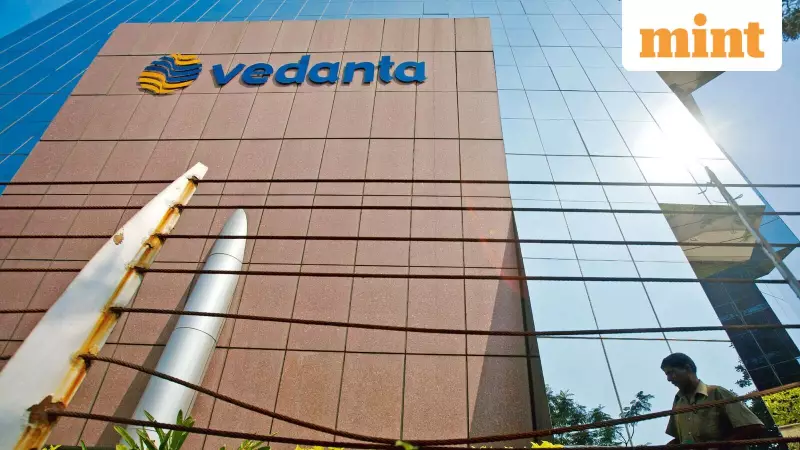
The National Company Law Tribunal (NCLT) has granted its crucial approval to Vedanta Ltd's ambitious plan to split its sprawling Indian operations into five distinct, independently listed companies. This decision on Tuesday marks a pivotal regulatory victory for billionaire Anil Agarwal, ending a period of uncertainty and setting the stage for a complex corporate restructuring aimed at unlocking value.
NCLT Order Overrules Government Objections
The tribunal's order came after considering, and ultimately rejecting, objections raised by the Ministry of Petroleum and Natural Gas. The government body had alleged that Vedanta misrepresented its oil and gas assets and failed to fully disclose liabilities. The NCLT ruled that the demerger plan was fair, lawful, and not against public interest, confirming that all legal requirements were met.
It also dismissed the charge of non-disclosure, siding with Vedanta's argument that it had shared all necessary information and had secured overwhelming approval from more than 99.9% of its shareholders and creditors. This clearance removes the most significant regulatory hurdle that had caused repeated delays to the two-year effort.

The Road Ahead: Timeline and Process
With the NCLT nod in hand, Vedanta has provided a revised guidance to complete the entire demerger exercise by March 2026, which is a year later than its original target. Analysts suggest the immediate next steps involve informing the stock exchanges and seeking their approvals.
Suman Kumar, Assistant Vice-President for Metals and Mining at Philip Capital, explained that Vedanta will need to set a record date. On this date, all existing shareholders will become eligible to receive shares in the five new entities. Subsequently, shareholders will be allotted one share in each of the five demerged companies for every single share of Vedanta Ltd they hold. These new entities will then be listed separately for independent trading.
While the official deadline is March 2026, Amit Lahoti, Lead Analyst for Metals and Mining at Emkay Institutional Equities, estimates the process may extend by just one to two months beyond that date, if not completed within it.
The Five-Way Split and the Critical Debt Allocation
The restructuring will create the following five pure-play companies:
- Vedanta Ltd: The flagship entity holding shares in Hindustan Zinc, Sterlite Copper, and international assets like Zinc International and Konkola Copper Mines.
- Vedanta Aluminium: Housing the country's largest aluminium business, including refining operations.
- Vedanta Oil & Gas: Containing the business of Cairn India, a key player in exploration and production with major assets in Rajasthan.
- Vedanta Iron and Steel: Comprising the steel business under ESL Limited and the company's iron ore mines.
- Vedanta Power: Encompassing the merchant power business, including the Talwandi Sabo plant in Punjab.
A major point of focus for investors is how Vedanta will distribute its substantial debt burden of approximately ₹66,000 crore across these new units, as this will define their individual financial health.
Analyst Amit Lahoti from Emkay provides an estimated breakdown: The aluminium business, being the largest cash generator, is expected to take the lion's share of about ₹30,000 crore. The flagship Vedanta Ltd is likely to hold around ₹20,000 crore, supported by dividend income from Hindustan Zinc. The remaining debt is projected to be split among Iron and Steel (₹4,500 crore), Oil & Gas (₹4,000 crore), and Power (₹7,000 crore).
Market Reaction and Strategic Rationale
The market responded positively to the NCLT approval. Vedanta's stock rose 3.5% to close at ₹569.35 on the BSE following the order and jumped another 2% the next day to hit a fresh all-time high of ₹580.45 per share.

The core rationale behind this massive demerger, as stated by the Anil Agarwal-led group in 2023, is to unlock shareholder value and simplify the corporate structure. By creating sector-focused companies, Vedanta aims to allow investors to make direct investments in specific commodity verticals like aluminium or oil & gas, rather than through a complex conglomerate. This, the company believes, will enable faster growth and clearer valuation for each business.
However, some analysts view the NCLT order as an incremental step rather than a transformational event. Philip Capital's Suman Kumar noted that the restructuring's primary aim appears to be setting the stage for future monetization of non-core assets or attracting investments into pure-play businesses, rather than delivering an immediate significant reward.





