

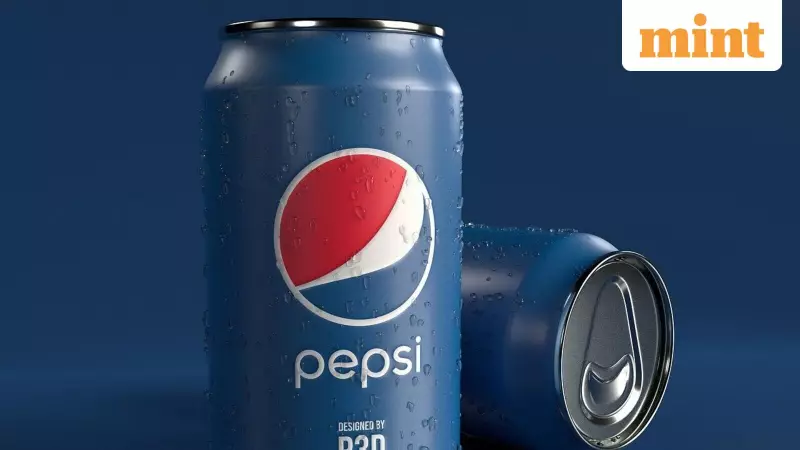
In a strategic move to secure future growth, Varun Beverages Ltd (VBL), PepsiCo's largest bottler outside the US, has set its sights on Africa. The company's recent acquisition of South Africa-based beverage firm Twizza for an enterprise value of ₹1,120 crore signals a pivotal shift in focus. As competition at home squeezes profit margins, VBL is looking overseas for scale, even if the financial rewards take longer to materialize.
The Strategic Rationale Behind the Twizza Acquisition
This acquisition, finalized through VBL's South African subsidiary, The Beverages Company Proprietary Ltd (Bevco), is not aimed at providing an immediate boost to earnings. Instead, it is designed to extend the company's growth runway beyond the increasingly challenging Indian market. While VBL's domestic operations remain robust, intense rivalry is creating significant headwinds for margin expansion.
Twizza operates in South Africa's mature ready-to-drink market, which is estimated to be about 40% the size of India's by volume. Although the market is established, analysts from Emkay Global Financial Services express confidence. They point to VBL's successful track record of turnarounds in markets like Zimbabwe and Nepal, where it now commands over 50% market share. They project that with Twizza integrated, VBL's volume market share in South Africa could jump from around 10% currently to approximately 20% by 2027.

Financial Metrics and the Margin Trade-Off
The deal values Twizza at an EV/sales multiple of 1.24x and an EV/EBITDA of 7-8x, based on FY25 numbers. JM Financial Institutional Securities noted that Twizza's sales grew at a modest 4% CAGR over the last three years to ZAR 170 crore (about ₹902 crore), contributing roughly 4-5% to VBL's consolidated sales. A key point of analysis is the margin differential. While VBL enjoys a consolidated EBITDA margin of about 23%, Twizza's margins are in the mid-teens, around 15%.
This highlights the central trade-off: VBL is exchanging some margin for scale and geographic diversification. However, there is significant upside potential. VBL's realizations in South Africa are estimated to be about 50% lower than those of its main rival, Coca-Cola Beverages Africa. As market consolidation progresses, this gap presents a substantial opportunity for improvement, though any narrowing is expected to be gradual.
Broader Portfolio and Current Market Sentiment
VBL's African strategy isn't limited to carbonated soft drinks. In a notable diversification attempt, the company entered an exclusive distribution agreement with Carlsberg in October 2025 to pilot beer sales in parts of Southern Africa. This initiative, though in its early stages with limited visibility, reflects VBL's ambition to broaden its beverage portfolio in the region.
These strategic moves come at a time when VBL's stock has faced pressure, declining about 25% year-to-date in 2025. Investor concerns revolve around margin normalization in India, rising domestic competition, and uneven performance in international markets outside South Africa. These worries were partly realized in the third quarter of CY25, where consolidated sales and EBITDA missed estimates due to weaker international volumes.
Despite an adverse monsoon, VBL's India business maintained stable gross margins, with management attributing recent volume softness to weather and indicating a return to double-digit growth in October. Nevertheless, the path to further margin gains in India appears increasingly difficult. With international markets already accounting for 27.4% of sales volumes in the first nine months of CY25, the Africa push underscores a clear strategic pivot from milking the domestic market to building substantial scale abroad. For investors, the message is clear: the payoff from this ₹1,120 crore bet will require patience.






