Centre Calls for Private Investment in Infrastructure Across All Sectors
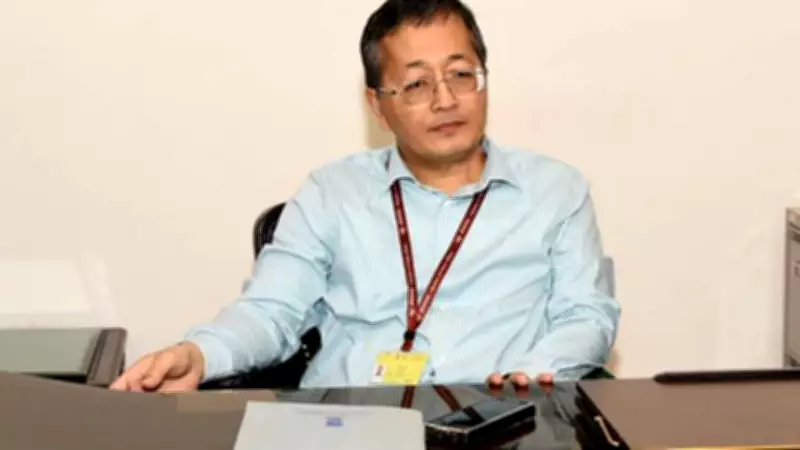
Expenditure Secretary Vumlunmang Vualnam has articulated a clear vision for India's infrastructure development, emphasizing the need for projects to emerge across all sectors with increased private sector participation. In an exclusive interview with Aanchal Magazine and Siddharth Upasani, the senior official from the Ministry of Finance highlighted the government's multipronged approach to infrastructure growth.
Broadening Infrastructure Beyond Roads and Railways
While sectors like roads and railways continue to dominate government capital expenditure allocations, Vualnam stressed that the Centre wants to see infrastructure development spread across all areas of the economy. "We would like to see infrastructure projects coming in all the sectors," he stated, acknowledging that different sectors require varied approaches to funding and execution.
The Secretary explained that where Central Public Sector Undertakings have sufficient resources and delegated powers, they will proceed independently. However, in cases requiring government financing or where Public Private Partnership structures can be implemented, the Centre is actively pushing for collaborative approaches. "It's a multipronged approach to infrastructure development," Vualnam emphasized.

Enhancing Private Sector Participation
Vualnam specifically called for greater involvement of private finance in infrastructure projects, noting that this isn't merely about saving budget money but about finding mechanisms that ensure better build quality and maintenance arrangements. "We would like these sectors to involve private finance and the private sector more and more," he said, pointing to the highway sector as an example where sophisticated financing models like the Hybrid Annuity Model have shown promise.
The government is now exploring whether Build-Operate-Transfer models might offer even better outcomes. "The stakeholders should be incentivised because we would not like highways to be built and then deteriorate very quickly," Vualnam cautioned, highlighting the importance of sustainable infrastructure development.
Focus Areas for Public Private Partnerships
Regarding specific sectors where PPP initiatives are gaining momentum, Vualnam identified several key areas:
- Highways: Already showing progress with sophisticated financing models
- Railways: Expected to see concrete PPP developments in the coming financial year, with projects like Bhopal railway station serving as early examples
- Shipbuilding: A major focus area through the Rs 69,000 crore Shipbuilding Mission and Maritime Development Fund
- Coastal Shipping: Identified as an efficient transportation method with experiments linking rail and road networks
The Secretary expressed optimism about railway PPP initiatives, noting that detailed work is underway for projects like the New Delhi railway station redevelopment. "For railways, I believe this coming financial year will be when we see something concrete," he predicted.
Addressing 16th Finance Commission Concerns
Vualnam also addressed state governments' potential concerns about the 16th Finance Commission's recommendations, urging them not to view the changes adversely. He explained that while the vertical devolution has remained at 41%, the horizontal devolution criteria have been tweaked to include contribution to GDP as a factor.
"The way I see it is: the pool is growing, the pie is growing," Vualnam stated. "So, states should not see it in the way that because of the change in the criteria, we are losing; but rather that because the country is growing, revenues are growing."
He emphasized that the Finance Commission conducted detailed interactions with all states and made recommendations based on comprehensive data and justifications. "We should allow it to be implemented and adjust suitably," he advised state governments.

High-Speed Rail Projects and Cost Considerations
Regarding high-speed rail projects, Vualnam acknowledged their significant costs while pointing to potential savings through indigenization. The Mumbai-Ahmedabad project, which has seen costs double, involved early Japanese collaboration, but newer projects are benefiting from indigenous developments.
"Now, the Ministry of Railways is working on indigenous coaches which can go up to 280 km per hour, signalling systems which are almost indigenous with some European collaborators," he explained. "The point is that with all that indigenisation, the cost should come down."
However, he recognized that these remain expensive interventions, particularly elevated corridors like Mumbai-Ahmedabad. "The structuring and financing have to be worked out," Vualnam noted, indicating that detailed discussions about financing packages for the seven newly announced corridors are forthcoming.
Confidence in Infrastructure Sector Absorption Capacity
Despite concerns about some sectors' capacity to utilize funds, Vualnam expressed confidence in India's infrastructure ecosystem. "We are quite confident that all our infrastructure sectors are now quite well geared-up to absorb the budgets that we provide," he stated, pointing to the highway sector's substantial project pipeline as evidence of absorption capability.
The Secretary's comments reflect a strategic shift toward more diversified infrastructure development with increased private sector involvement, while maintaining government support where necessary and ensuring states benefit from the country's overall economic growth through the Finance Commission's recommendations.