

A significant shift is on the horizon for India's corporate insolvency framework. Companies undergoing insolvency proceedings may soon be permitted to entertain multiple resolution plans for distinct assets or business units, moving away from the current rigid, single-plan model.
Parliamentary Panel's Key Recommendation
A Lok Sabha Select Committee examining the Insolvency and Bankruptcy Code (Amendment) Bill, 2025, recommended this change last week. The objective, as stated in the committee's 17 December release on the Lok Sabha website, is to enable the sale of individual assets or business verticals in diversified companies. This aims to maximize value realization and attract a wider pool of bidders compared to forcing a single, consolidated resolution for the entire entity.
Insolvency experts hail this as an evolutionary step. "Allowing multiple resolution plans marks a significant evolution of the Insolvency and Bankruptcy Code, 2016," said Abhinav Agnihotri, partner at Kochhar & Co., noting it moves the regime towards a more flexible and market-responsive framework.

Addressing Current System Flaws
Under the existing IBC, while multiple bidders can submit plans, the committee of creditors (CoC) can approve only one final plan for the corporate debtor as a whole. This plan must keep the company as a going concern. Courts have emphasized finality, and the law does not recognize backup plans. If an approved plan fails, the process may restart or head to liquidation.
This vulnerability was exposed in high-profile cases like Jet Airways, where the Supreme Court set aside the resolution plan after delays and non-implementation. Similar issues arose in the Bhushan Power & Steel and Hindustan National Glass matters, where approved plans were initially struck down.
Yogendra Aldak of Lakshmikumaran & Sridharan Attorneys explained the proposed change's benefit: "Strategic buyers can bid selectively for assets aligned with their core competencies. This enables more precise pricing, as bidders focus on intrinsic business value instead of discounting for group-level risks."
Building on Regulatory Momentum
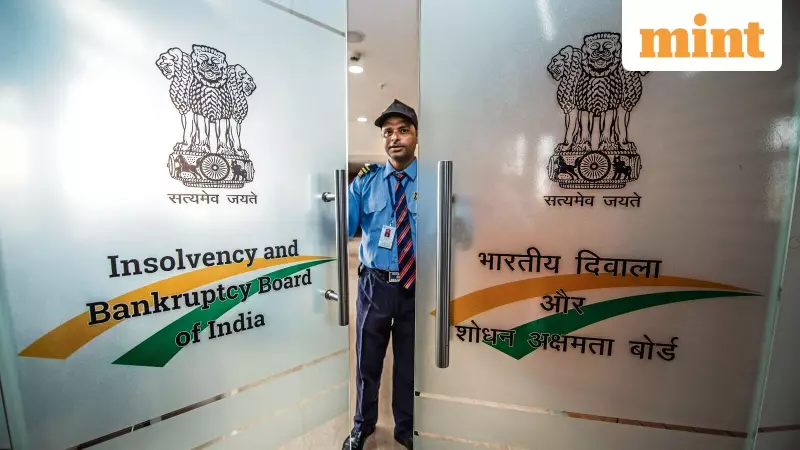
This legislative proposal follows a regulatory nudge earlier in 2025. In May, the Insolvency and Bankruptcy Board of India (IBBI) amended regulations to introduce the concept of part-wise resolution. This allowed resolution professionals, with creditor approval, to invite bids for the whole company, specific assets, or both.
The move sought to shorten timelines, prevent value erosion in viable segments, and broaden investor participation. According to IBBI data (July-September 2025), the IBC has resolved about 1,300 cases via resolution plans, while 2,896 ended in liquidation. Creditors realized around ₹3.99 trillion from resolutions, about 170% of the liquidation value, though processes took an average of 603 days.
Lawyers believe the new approach could strengthen the CoC's negotiating power and improve recoveries. The request for resolution plan (RFRP) will remain central, allowing creditors to adopt flexible evaluation methods.
Potential and Pitfalls
Mukesh Chand, senior counsel at Economic Laws Practice, stated, "Having more than one plan does not dilute price discovery; rather, it can strengthen competition." He added that multiple plans could act as a safeguard if one is later challenged.
However, experts caution against potential risks. The committee's recommendations do not clarify if multiple plans can be formal backup options. Aldak warned, "Permitting multiple resolution plans should not be conflated with creating a formal 'backup plan' mechanism. IBC jurisprudence has consistently emphasized finality."
Mohit Adatiya, director at NPV Insolvency Professionals, highlighted a critical concern: "Without clear guardrails, it could encourage cherry-picking of stronger assets while leaving weaker businesses unresolved."
The proposed amendment represents a pivotal moment for India's insolvency ecosystem, aiming to inject commercial flexibility and market dynamics into the resolution of stressed assets.






