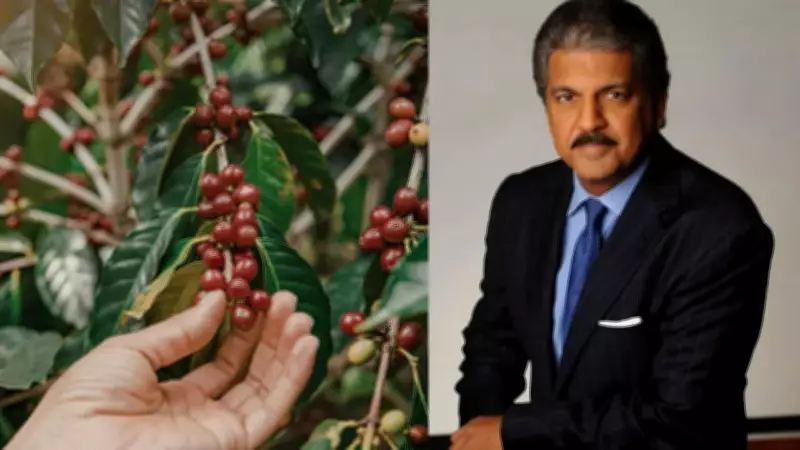
Anand Mahindra Shares Personal Journey with India's Coffee Landscape
Industrialist Anand Mahindra recently provided a comprehensive insight into his deep-rooted connection with India's coffee sector through a detailed post on X (formerly Twitter). Responding to a discussion comparing the coffee-growing regions of Karnataka, Kerala, and Tamil Nadu with Araku, Mahindra's remarks blended personal history with industry analysis, offering a unique perspective on both legacy and innovation.
Family's Kodagu Coffee Estate: A Legacy Since the 1960s
Mahindra revealed that his family invested in nearly 60 acres of farmland in the Kodagu region of Karnataka during the 1960s, establishing a plantation near Nagarhole National Park. The area's optimal climatic and topographical conditions supported the cultivation of both Arabica and Robusta coffee varieties. Consistent effort was required to manage soil quality, rainfall patterns, and shade levels to ensure successful crop growth and harvesting.
"I used to visit the plantation frequently during vacations and early in my working life, gaining hands-on experience in coffee farming," Mahindra shared, highlighting how these visits shaped his understanding of agricultural practices.

Sustaining Tradition: The Estate's Continued Operation
Following the passing of his parents, management of the estate transitioned to Mahindra's sister and her husband, who have maintained its productivity without significant changes or expansions. This continuity has preserved the estate as a family heritage piece, representing generational knowledge and traditional cultivation methods that define many established coffee plantations in India.
Araku Coffee: A Model of Structured Global Expansion
In contrast to the traditional approach, Mahindra acknowledged the rise of Araku Coffee, which has gained international recognition through a disciplined focus on quality, consistency, and organized production. He specifically praised the efforts of individuals like Manoj Kumar, David Hogg, and Anupama Sreeramaneni for developing long-term strategies that have positioned Araku as a global brand.
Traditional vs. Modern Approaches in India's Coffee Industry
The comparison between Kodagu's traditional estates and Araku's model underscores two distinct pathways within India's coffee sector:
- Traditional Plantations: Rely on generational expertise and consistent cultivation practices, maintaining regional identity and heritage.
- Modern Ventures like Araku: Emphasize organized production, scalability, and global market outreach through structured branding.
Both models operate within the same industry framework but cater to different market segments. Mahindra's perspective bridges these aspects, reflecting an understanding shaped by direct plantation experience and engagement with contemporary coffee initiatives. His insights highlight how India's coffee industry balances legacy with innovation, offering diverse pathways for growth and recognition on both domestic and international stages.