LPG Supply Crisis Looms in West Bengal as Qatar Attacks Disrupt Imports via Hormuz
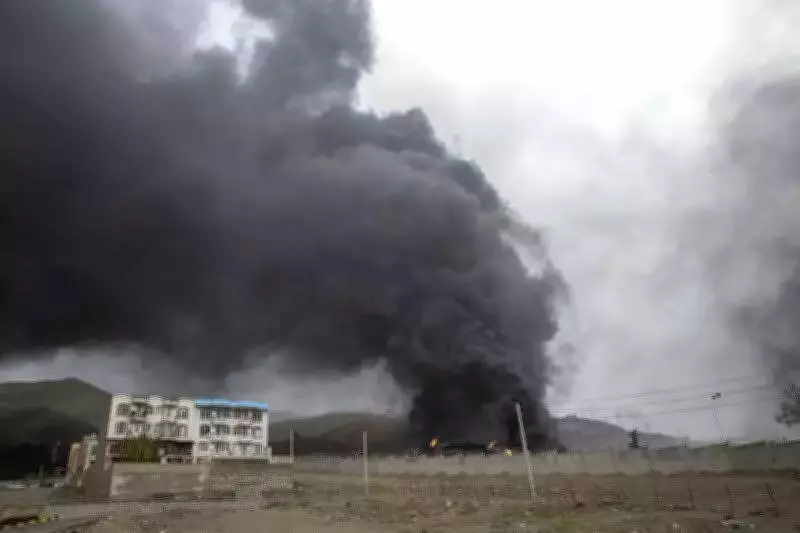
Oil industry officials in West Bengal are warning that delays in delivery cycles and disruptions in commercial LPG supply could intensify significantly in the coming days. This alarming situation stems from recent attacks on key gas facilities in Qatar, including the Ras Laffan LNG hub, which have escalated regional tensions and compounded supply chain issues.
Geopolitical Tensions Impacting Critical Supply Routes
The attacks in Qatar have coincided with broader geopolitical instability, including actions related to the Israel-Iran conflict, where over 20 nations have issued a joint statement condemning Iran's de facto closure of the Strait of Hormuz. Additionally, Iran has tested long-range missiles, with some fired toward Diego Garcia, prompting the US to deploy Marines and warships in response. These events have created a perfect storm for energy supply disruptions.
With nearly 90% of India's LPG imports routed through the Strait of Hormuz, now effectively disrupted, supply uncertainty has surged. Oil Marketing Companies (OMCs) report that the immediate impact is already visible on urban distribution networks. "We are witnessing a growing mismatch between demand and available supply," said an OMC spokesperson, highlighting the severity of the situation.

Kolkata's Vulnerability Due to Limited PNG Infrastructure
In Kolkata, the effects are expected to be particularly severe due to the city's heavy reliance on LPG, driven by limited piped natural gas (PNG) infrastructure. The state currently has only around 450 active PNG connections, a negligible figure compared to metros like Delhi and Mumbai, where connections number in the lakhs. Although Bengal Gas has indicated that connections could scale up to 3,500 quickly, infrastructure constraints remain a significant hurdle.
Kolkata alone has approximately 15.5 lakh LPG consumers, with the number exceeding 2 crore across West Bengal. The absence of a robust gas pipeline network means that both compressed natural gas (CNG) and PNG are transported via cascade systems, limiting scalability and exacerbating the supply crunch.
Growing Anxiety Among Consumers and Businesses
Dealers across Kolkata are reporting mounting anxiety among consumers and businesses. "Bookings are piling up, and we are unable to commit delivery dates," said a local LPG distributor in south Kolkata. "Commercial cylinders are especially hit. Restaurants and small businesses are already feeling the pinch."
Pradeep Rozario, owner of KK's Fusion, expressed his concerns: "We have introduced induction, but all cooks are not very comfortable with such instruments." Restaurant owners fear that delays in resuming steady commercial LPG supply could be "inordinate" if the crisis persists.
Consumers are also beginning to feel the strain. Anup Sandhukhan, a resident of Salt Lake, shared his experience: "Earlier, we would get a cylinder within two to three days of booking. Now we are being told it may take a fortnight or more. It's worrying because there's no alternative."
Expert Warnings and Future Outlook
Energy experts caution that unless the geopolitical situation stabilises soon, supply disruptions could intensify further. The heavy reliance on LPG in West Bengal underscores the scale of the challenge, with potential long-term impacts on both households and the economy if the crisis deepens.