

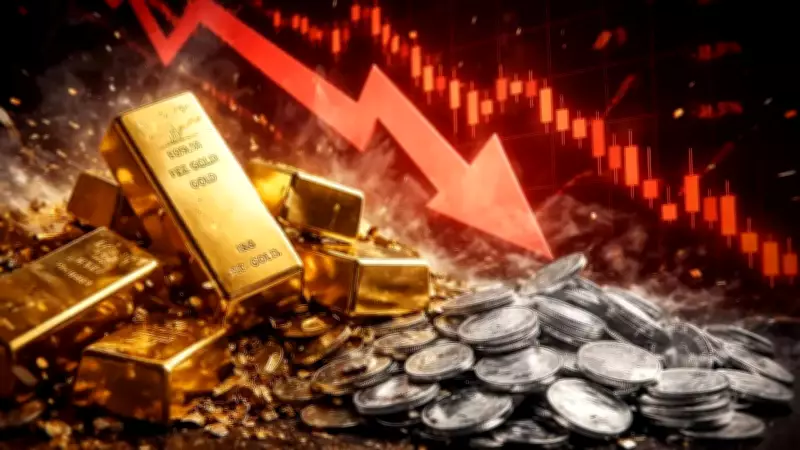
Gold and Silver Prices Face Volatility Amid Geopolitical and Economic Headwinds
Gold and silver prices are anticipated to remain highly volatile in the coming week, with potential for further corrective movements. Investors are closely tracking developments in the escalating Middle East conflict and a packed schedule of major central bank policy meetings, according to market analysts.
Middle East Conflict Remains a Key Market Trigger
Market participants are expected to keep a sharp focus on the evolving geopolitical situation in the Middle East. Any signs of escalation or de-escalation in the region could trigger sharp swings across commodities, currencies, and broader financial markets.
Analysts emphasize that geopolitical headlines will likely continue to be the biggest short-term driver for bullion prices. Pranav Mer, Vice President of EBG - Commodity & Currency Research at JM Financial Services Ltd, stated via PTI, "In the week ahead, focus will remain in the Middle East region as any signs of further escalation or de-escalation may lead to increased volatility in the financial markets."

While gold and silver are traditionally viewed as safe-haven assets during crises, recent trading sessions have demonstrated that broader market stress can also lead to profit-booking and cash-raising activities. This dynamic can weigh on prices even when geopolitical risks remain elevated.
Central Bank Meetings Under Intense Scrutiny
On the macroeconomic front, investors will also monitor a heavy lineup of central bank meetings this week. The US Federal Reserve is set to announce its policy decision on Wednesday, followed by the European Central Bank and the Bank of England on Thursday, and the People’s Bank of China on Friday.
These central banks are widely expected to keep interest rates unchanged. However, traders will be closely analyzing their forward guidance for clues on the path of global monetary policy. This scrutiny comes at a critical time when higher crude oil prices are complicating inflation expectations globally.
Bullion Under Pressure in Recent Trading
Bullion prices remained under significant pressure in domestic markets last week. On the Multi Commodity Exchange (MCX), silver fell by Rs 8,850, or 3.3%, while gold declined by Rs 3,168, or 2%.
In the international market, Comex silver dropped nearly $3, or 3.52%, during the week, and gold fell by $97, or 2%. Mer explained to PTI that gold broke down from a consolidation range on Friday, ending the week nearly 2% lower. This decline was dragged by a stronger US dollar and growing expectations that major central banks may delay interest rate cuts due to the inflationary impact of surging crude oil prices.
Why Bullion Fell Despite Safe-Haven Demand
The fall in bullion prices occurred even as equities and other risk assets experienced broad pressure. According to PTI, Mer noted that gold prices slipped despite a wider sell-off in risk assets because traders and investors may have chosen to book profits at higher levels or sold holdings to meet margin calls and liquidity needs.
Nevertheless, he highlighted that bullion continues to retain an important support base from safe-haven demand due to the escalating conflict in the Middle East. "Silver prices closed in negative for the second consecutive week, weighed by a stronger dollar and a consolidative/corrective move in the industrial metals," Mer added.
Long-Term Allocation Still Favored by Experts
Despite near-term volatility, analysts assert that gold and silver continue to play a crucial role in portfolio construction. Vijay Kuppa, CEO of InCred Money, stated via PTI, "Gold and silver earn their place not because of what they return in isolation, but because of how they behave relative to everything else."
He emphasized that the two metals remain valuable due to their low correlation with equities and their ability to act as a hedge against currency debasement. Kuppa also cautioned investors against attempting to time the market. He advised that while broader commodity markets have been disrupted by supply chain issues and changing trade routes amid the conflict, investors should maintain a long-term allocation to bullion rather than chase short-term price swings.






