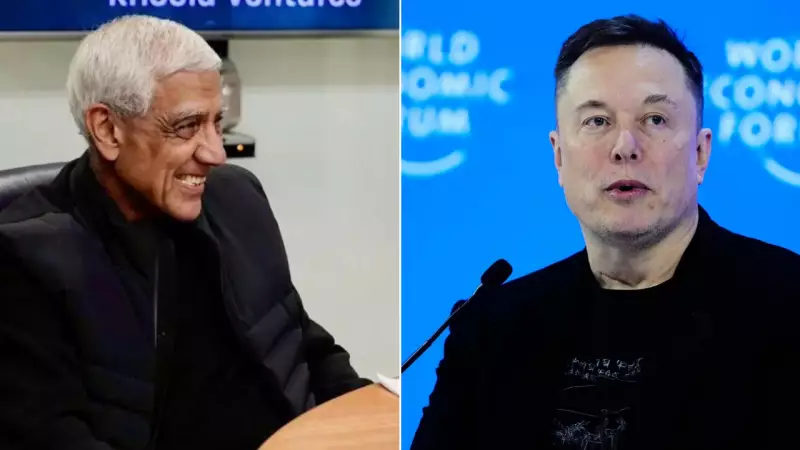
Vinod Khosla's Bold Challenge to Trump-MAGA Influence in Tech Industry
In a striking departure from the prevailing trends within Silicon Valley's elite circles, Indian-American venture capitalist Vinod Khosla has ignited a significant political and cultural debate. While many tech leaders have increasingly aligned themselves with President Donald Trump's MAGA vision, Khosla stands out as a vocal dissenter, recently directing a provocative message towards employees of Elon Musk's enterprises.
A Direct Appeal to Musk's Workforce
Through a widely circulated post on the social media platform X, Khosla launched a scathing critique of Musk's alignment with Trump's movement. He accused Musk of promoting what he termed "WAGA" or "white America great again," framing it as a paradigm that celebrates racism. This commentary was in response to Musk's remarks about white people becoming a "rapidly diminishing minority."
In an unprecedented move, Khosla extended an invitation to all non-white employees at Tesla, SpaceX, and X, urging them to resign and consider opportunities at Khosla Ventures. He also welcomed "all decent whites" who share his concerns, encouraging them to submit their LinkedIn profiles. This call to action represents a unique blend of political condemnation and strategic talent acquisition, highlighting Khosla's willingness to confront powerful figures head-on.

Khosla's Broader Opposition to Trump's Agenda
This confrontation with Musk is not an isolated incident but part of Khosla's sustained critique of the Trump administration. For several months, he has utilized his social media presence to challenge Trump's leadership, values, and governance approach. In January 2026, he characterized the administration's agenda as "The Undoing Project," accusing Trump of orchestrating a widespread assault on American democratic institutions and norms.
Khosla's resistance is deeply personal, rooted in his immigrant experience from India and his co-founding role at Sun Microsystems. He argues that Trump's rhetoric and policies undermine the meritocratic principles that have historically fueled Silicon Valley's innovation and success. During the 2024 election cycle, Khosla expressed strong disdain for Trump, citing his "lack of values, pathological lying, and selfishness," and accusing him of appealing to society's least admirable aspects.
Silicon Valley's Shift Towards Trump Alignment
Khosla's stance places him at odds with the dominant trajectory of the tech industry, where a growing number of influential figures have embraced the MAGA movement, either explicitly or implicitly. Elon Musk has emerged as a central figure in this shift, making substantial donations to Trump's campaign and becoming one of the president's most powerful allies in the tech world.
Other notable tech personalities in Trump's orbit include PayPal co-founder Peter Thiel, investor David Sacks, and venture capitalists Marc Andreessen and Ben Horowitz. These individuals have praised Trump's promises of deregulation, tax reductions, and a more lenient regulatory approach towards emerging technologies like artificial intelligence and cryptocurrency.
Even executives who previously expressed skepticism about Trump have largely adopted a posture of pragmatic cooperation. Leaders of major corporations such as Meta, Amazon, Apple, Google, Microsoft, and IBM have participated in Trump events, increased political contributions, and committed billions to U.S. investments. This strategic alignment is driven by a desire for regulatory relief, access, and influence, often outweighing ideological reservations.
The Rarity of Open Opposition in Tech
In this context, open opposition to Trump within Silicon Valley has become increasingly uncommon. Aside from Khosla, only a few prominent figures like LinkedIn co-founder Reid Hoffman and entrepreneur Mark Cuban have maintained a public distance from the administration. While numerous venture capitalists now lean pro-Trump, outspoken critics remain few and far between.

This divide has tangible implications for tech workers, many of whom retain liberal political views even as their employers move towards conservative alignment. Recently, over 450 employees from companies like Google, Meta, and Microsoft signed an open letter urging their CEOs to address concerns about ICE practices. Khosla's call for non-white employees to leave Musk's companies taps into this underlying tension, underscoring a growing gap between executive decisions and workforce values.
Conclusion: A Lone Voice in a Changing Landscape
As Trump consolidates power during his second term, Silicon Valley appears to be choosing alignment over resistance, prioritizing business interests over ideological dissent. Vinod Khosla, however, represents a defiant counter-narrative, betting that principled opposition still holds value in shaping the industry's future. His actions highlight the complex interplay between politics, culture, and technology in contemporary America, offering a rare glimpse of dissent in an increasingly conformist sector.