

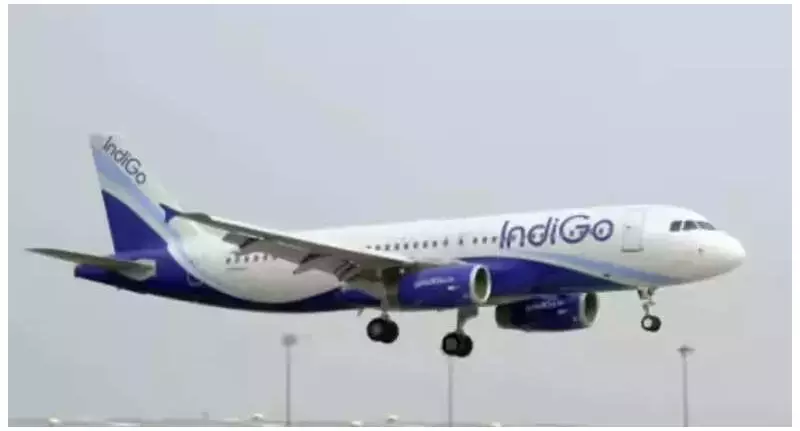
In a significant shift in India's aviation sector, budget carrier IndiGo has, for the first time, flown more international passengers than the combined Air India Group. This milestone, revealed by the latest regulatory data, is a direct consequence of the tragic Ahmedabad Dreamliner crash that impacted Air India's operations and passenger confidence.
The Numbers Tell the Story
Official data from the Directorate General of Civil Aviation (DGCA) for the period of July to September 2025 shows a narrow but historic lead for IndiGo. The Tata Group airlines, comprising Air India and Air India Express, together flew 41 lakh international passengers. IndiGo, however, edged ahead with 41.36 lakh passengers on its international network.
This reversal is attributed to a 15% reduction in Air India's flight operations, primarily on wide-body international routes, following the crash of its Boeing 787 Dreamliner in Ahmedabad on June 12. The accident, which claimed 260 lives, led to a noticeable reluctance among travelers to fly with the national carrier for several weeks, especially on its Boeing 787 fleet.

Strategic Cancellations and Regulatory Scrutiny
The disparity in how airlines manage disruptions has also come under the lens. Even during the severe operational meltdown faced by IndiGo earlier in December 2025, the airline's international schedule was largely protected. Data shows that between December 1 and 9, IndiGo cancelled only 2.4% of its 2,702 planned international flights. In stark contrast, its domestic cancellations were nearly 25% of 17,404 scheduled flights—ten times higher.
The DGCA's ongoing probe into the IndiGo crisis is specifically examining this strategy of prioritizing international flights over domestic ones during the period of complete disarray.
A Changing Competitive Landscape
This is not the first time IndiGo has overtaken a legacy carrier. It first became the largest Indian airline for international passengers in 2019 following the collapse of Jet Airways. In the last quarter of Jet's operations (January-March 2019), the pecking order was Air India, followed by Jet, and then IndiGo. Historically, during Jet's prime in early 2018, the hierarchy for foreign traffic was Jet Airways, Air India, AI Express, IndiGo, and SpiceJet.
The coming quarters present further uncertainty for Air India. The airline is now pulling out its legacy Boeing wide-body aircraft for a major revamp, with some being returned to lessors. This move is expected to reduce its wide-body international capacity in the short to medium term.
Conversely, IndiGo faces its own regulatory challenges. The aviation ministry is finalizing a directive to cut at least 10% of IndiGo's flights until it demonstrates improved operational reliability. The exact split between domestic and international reductions remains unclear.
The events of the past months underscore a volatile period for Indian aviation, where safety incidents, operational resilience, and strategic fleet decisions are rapidly reshaping market leadership on lucrative international routes.






