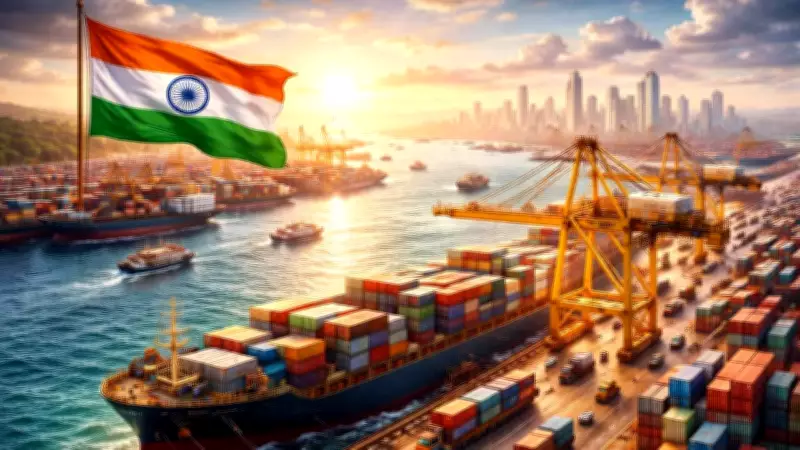
Budget 2026-27: ELI and SDG Compliance Vital for India's Maritime Ambitions
As India charts its course toward becoming a global maritime power, key demands are emerging for the upcoming Union Budget 2026-27. Industry experts emphasize that prioritizing efficiency-linked incentives and promoting compliance with Sustainable Development Goals are essential to realizing this ambitious vision.
Navigating Through Maritime Vision Documents
The Maritime India Vision 2030 and Maritime Amrit Kaal Vision 2047 serve as comprehensive roadmaps for this transformation. While MIV 2030 focuses primarily on port modernization and operational efficiency, MAKV 2047 sets a long-term agenda for creating a sustainable, environmentally friendly, and technologically advanced maritime sector.
Current Port Landscape and Growth Trajectory
India's port sector stands at a critical juncture. During fiscal year 2025, ports across the country handled an impressive 1,593.04 million tonnes of traffic annually, achieving a compound annual growth rate of approximately 4% over the past five fiscal years. Concurrently, port capacity expanded significantly to reach 2,762 million tonnes.

The Maritime India Vision aims to further boost port capacity to 3,000 million tonnes by fiscal 2030. To accommodate both capacity expansion and advancements in shipping technology, development of mega ports—those with capacities exceeding 300 million tonnes per annum and drafts deeper than 18 meters—has become a priority.
Significant progress is already underway with greenfield port projects at Vadhavan and Galathea Bay. Additionally, outer harbor developments at Paradip, Chennai, and Tuticorin are expected to elevate existing ports to mega port status. Several state governments, including those of Andhra Pradesh, West Bengal, Odisha, and Karnataka, are also actively developing greenfield ports that will contribute substantially to national port capacity.
Addressing Capacity Utilization Challenges
Despite these expansions, overall port capacity utilization currently stands at 57.7%. While non-major ports maintain healthier utilization rates between 65-68%, major ports lag at around 50%. Enhancing efficiency represents the most viable pathway to improving these utilization metrics.
A multi-faceted approach encompassing modernization, technological integration, and process improvements could significantly boost traffic, thereby increasing both capacity utilization and revenue generation. The government could stimulate this transformation by introducing incentives for ports that demonstrate measurable efficiency gains.
Policy Initiatives and Infrastructure Development
The government has launched several significant policy initiatives for the port sector, including:
- Indian Ports Act 2025 – providing a unified legal framework for port operations
- Bill of Lading Act 2025 – emphasizing electronic trade documentation
- One Nation One Port and Sagarmanthan – aimed at digitalization and process improvement
Additionally, the Harit Sagar Green Port Guidelines have been introduced to help ports align with Sustainable Development Goals. However, implementing green and sustainability initiatives requires substantial government support and financial allocation.
Efficiency-Linked Incentives: A Path to Self-Sufficiency
While asset monetization efforts continue to boost income, efficiency improvements represent another crucial avenue for traffic growth and revenue enhancement. Major ports have already demonstrated significant progress, with average turnaround time nearly halving from 96 hours in fiscal 2015 to 49.5 hours in fiscal 2025.
Other key metrics show similar improvement: pre-berthing detention time decreased from 5.02 hours to 3.8 hours, while average output per ship berth day increased from 12,458 tonnes to 18,304 tonnes.

To encourage similar efficiency gains across all ports, the upcoming budget could introduce an Efficiency-Linked Incentive scheme that offers financial rewards to ports and operators demonstrating measurable improvements in key performance indicators. A structured framework could assess parameters annually, evaluating improvements in turnaround time, pre-berthing detention, and output per ship berth day against baseline measurements.
Sustainable Development Goals: Budgetary Allocation Imperative
Indian ports are actively aligning with Sustainable Development Goals through initiatives like the Harit Sagar guidelines. Their commitments include:
- Decarbonization – targeting 30% emission reduction by 2030
- Renewable Energy – aiming for over 60% renewable energy usage by 2030
- Electrification, Biodiversity, and Circularity – comprehensive environmental stewardship
- Carbon Neutrality – targeting 2035 for carbon neutrality and 2047 for net-zero emissions
The port sector specifically seeks to comply with several SDGs:
- SDG 9 (Industry, Innovation and Infrastructure) through resilient, sustainable port infrastructure
- SDG 14 (Life Below Water) by protecting marine ecosystems through stricter regulations
- SDG 7 (Affordable and Clean Energy) via transition to clean energy sources
- SDG 13 (Climate Action) through emission reduction contributing to national climate goals
Achieving these ambitious goals requires substantial investment, making budgetary allocation crucial for supporting ports in implementing sustainability initiatives. Non-compliance risks severe environmental damage, negative socio-economic impacts on coastal communities, diminished global trade competitiveness, and failure to meet national climate commitments.
Conclusion: Twin Strategies for Maritime Transformation
The combination of efficiency-linked incentives and Sustainable Development Goals alignment represents a powerful dual approach to catalyzing growth in India's maritime sector. Together, these initiatives can help the industry navigate toward a more efficient, sustainable, and globally competitive future, ultimately realizing India's vision of becoming a preeminent maritime power on the world stage.