BSNL's 4G Network Faces Technical Challenges
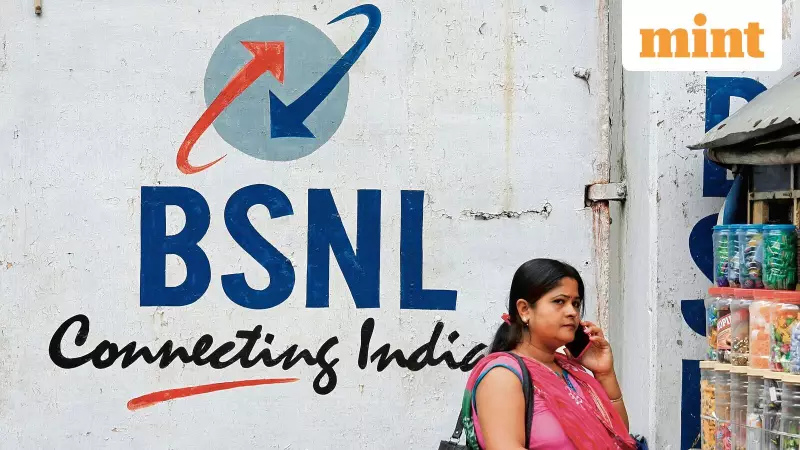
State-owned telecom operator Bharat Sanchar Nigam Ltd (BSNL) is grappling with significant technical issues affecting its newly launched 4G network services. The company has identified weak transmission signals at thousands of its recently installed 4G towers, resulting in persistent call drops and slower data speeds for customers across multiple regions.
This development comes at a critical juncture for BSNL, which is attempting a major turnaround supported by successive government revival packages worth substantial financial investments.
Vendors Tasked with Urgent Resolution
In response to the growing network problems, BSNL formally approached its technology vendors Tata Consultancy Services (TCS) and Tejas Networks last month, demanding immediate investigation and resolution of the transmission issues. According to internal documents and sources familiar with the matter, the company highlighted that numerous tower sites are operating below required power levels.

The core issue revolves around transmission power deficiencies. BSNL's analysis revealed that over 132,000 cells are currently transmitting power below 35 dBm (3.16 watts), significantly lower than the required standard of 46 dBm (40 watts). This substantial power gap is causing multiple operational challenges including limited coverage area, difficulties in device connectivity, poor signal quality, and increased interference.
An independent telecom analyst, Parag Kar, emphasized the severity of the situation: "If the network was designed for 46 dBm and many sites are radiating only around 35 dBm, it means the system is in serious distress. At 35 dBm the site emits barely 8% of the intended power, causing a collapse of both coverage and capacity."
Regulatory Tests Confirm Network Deficiencies
The Telecom Regulatory Authority of India (Trai) conducted comprehensive drive tests in recent months to evaluate network performance across all telecom operators. The results demonstrated that BSNL's network consistently struggled with slower speeds and higher call drop rates compared to private sector competitors Reliance Jio and Bharti Airtel.
Private operators largely provided better speeds, lower call drop rates, and more reliable connections according to the regulatory assessment. This performance gap has raised concerns about BSNL's ability to compete effectively in the increasingly demanding telecommunications market.
Despite these challenges, TCS and Tejas maintained in their official statement that most of the identified issues have been resolved and there is no significant impact on the company's key performance indicators (KPIs). The vendors asserted that call quality metrics remain within acceptable limits and comparable with other networks.
The companies emphasized that network optimization to reduce call drops and improve coverage is an ongoing process for any mobile network operator, including BSNL. They also highlighted that data consumption on BSNL's network has crossed 4 petabytes (4 million GBs), indicating substantial user engagement despite the technical challenges.
Financial and Operational Context
BSNL's 4G network represents a crucial component of the government's revival strategy for the state-owned telecom enterprise. In 2022, the Union Cabinet approved 100,000 4G tower sites for BSNL at a cost of ₹19,592 crore, with the company subsequently spending ₹25,000 crore in FY25 to install these towers for 4G services.
The indigenous network technology stack was developed by Tejas Networks and C-DOT, with TCS serving as the system integrator. A consortium led by C-DoT and TCS secured the majority share of the ₹25,000-crore project to supply telecom equipment to BSNL.
BSNL officially launched its 4G services using India-made technology on 26 September with over 92,000 operational towers. Of its total subscriber base of 91.7 million as of August end, the company serves more than 20 million 4G users nationwide.

The operator has demonstrated recent subscriber growth, adding 1.8 million users in the July-September quarter compared to losing 0.6 million in the April-June period. Data from Trai also indicated that BSNL surpassed Bharti Airtel in subscriber additions for two consecutive months—August and September.
However, financial results tell a different story. For the September quarter, BSNL reported a net loss of ₹1,357 crore, wider than the ₹1,048 crore loss in the preceding quarter and the ₹1,241.7 crore loss in the same quarter last year. The increased losses are attributed to higher depreciation, amortization expenses, network operating costs, and finance charges.
Communications Minister Jyotiraditya Scindia has emphasized that "quality of service is non-negotiable" during recent meetings with BSNL circle heads. The minister directed the company to measure service quality daily and ensure no circle reports negative EBITDA even for a single day.
BSNL has requested TCS and Tejas to provide weekly progress reports on resolving the transmission power issues and has asked for reconfiguration or replacement of all affected cells to restore optimal network performance and deliver quality services to customers.