Bihar's Business Community Presents Divided Verdict on Union Budget 2026-27
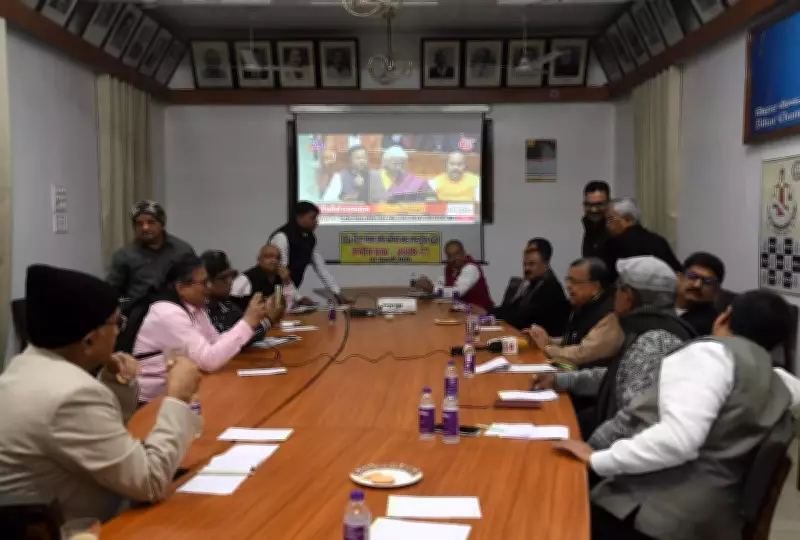
The recently announced Union Budget for the fiscal year 2026-27 has elicited a spectrum of responses from traders, commerce bodies, and industry leaders across Bihar. The reactions reflect a complex blend of appreciation for the budget's overarching national vision and palpable disappointment regarding the perceived absence of targeted, state-specific support measures that many had anticipated.
Praise for National Initiatives and MSME Focus
P K Aggarwal, President of the Bihar Chamber of Commerce and Industries (BCCI), offered a largely positive assessment, highlighting the budget's robust emphasis on empowering Micro, Small, and Medium Enterprises (MSMEs) and the youth. He noted substantial governmental efforts aimed at skill-building and expanding employment avenues, positioning these sectors as pivotal drivers for the nation's economic and social advancement.
Aggarwal commended several specific announcements, including:

- The establishment of a ship repair ecosystem for inland waterways in Varanasi and Patna to simplify vessel maintenance.
- A plan to construct a women's hostel in every district across the country.
- Enhanced promotion of the Khelo India Mission to bolster sports infrastructure.
- Reductions in prices for critical disease medicines and solar energy products to improve affordability.
- Cuts in Tax Collected at Source (TCS) rates, including for international travel.
- A five-year income tax exemption for non-residents to encourage toll construction projects.
- Personal income tax exemptions in select cases to provide relief to taxpayers.
- A six-month disclosure scheme for taxes on foreign-held properties.
- The creation of three new Ayurveda AIIMS and five regional medical centres to strengthen healthcare.
- A substantial Rs 10,000 crore SME Growth Fund to fuel small business expansion.
- Mandatory Trade Receivables Discounting System (TReDS) settlement platforms to improve liquidity for MSMEs.
- A dedicated push for applying Artificial Intelligence (AI) in the agricultural sector.
Furthermore, Aggarwal hailed significant tax simplifications set to take effect from April 1, 2026. These include allowing small taxpayers to submit Form 15G/H without certificates for Tax Deducted at Source (TDS) non-deduction, replacing criminal charges with penalties for improper ledger maintenance, and exempting criminal proceedings for undeclared assets or income up to Rs 24 lakh. He described these measures as encouraging signals that would foster a more compliant and business-friendly environment.
Disappointment Over Lack of State-Specific Support
In stark contrast, the Bihar Industries Association (BIA) presented a more measured and ultimately critical perspective. BIA President Ram Lal Khetan acknowledged that the Union Budget does promote long-term national growth, stimulate investment, and bolster infrastructure. He pointed to measures such as the allocation of approximately Rs 12.5 lakh crore for capital expenditure, which aims to enhance production capacity, generate employment, and strengthen the country's economic foundations.
Khetan also noted accelerated infrastructure initiatives in key sectors like roads, railways, water supply, and electricity, designed to improve rural-urban connectivity and invigorate broader economic activity. He highlighted approvals for seven high-speed rail projects and new national waterway developments, which are expected to strengthen logistics networks, lower transportation costs, and energize trade and industry nationwide.
However, Khetan expressed a core grievance: "Bihar continues to lag on most development indicators and requires special, additional backing to catch up, especially as India aims for developed nation status by 2047." He stated that the absence of any dedicated special package or significant new projects specifically for Bihar left many in the state disheartened. Expectations for concrete, targeted steps to spur the state's own economic and industrial progress, he argued, remained largely unmet.

BIA Vice-President Purushottam Kumar Agarwal reinforced the positive aspects of the heightened capital expenditure and its potential ripple effects on infrastructure and growth. Simultaneously, Second Vice-President Dev Prakash Singh emphasized the budget's focus on small and medium enterprises as a direct catalyst for job creation, echoing the BCCI's positive view on that front.
The divergent reactions from Bihar's leading business associations underscore a central tension in the budget's reception: widespread approval for its macro-economic direction and sectoral reforms, juxtaposed with localized frustration over the perceived need for more tailored interventions to address regional developmental disparities.