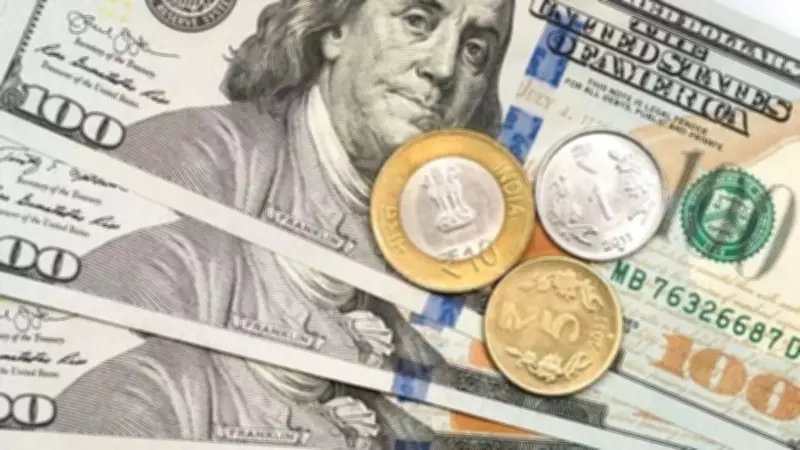
The Indian rupee weakened by 20 paise to hit a fresh all-time low of 95.86 against the US dollar in early trade on Tuesday, as persistent dollar demand and sustained foreign capital outflows weighed on the domestic currency.
Factors Behind the Decline
Forex traders attributed the rupee's fall to a strong greenback overseas and a risk-averse sentiment among investors. The dollar index, which gauges the greenback's strength against a basket of six currencies, was trading higher at 106.70, adding pressure on emerging market currencies like the rupee.
Foreign Fund Outflows
Foreign institutional investors (FIIs) remained net sellers in the capital markets, offloading shares worth Rs 1,234 crore on Monday, as per exchange data. This continuous selling spree has been a major factor behind the rupee's weakness.

Crude Oil Prices
Rising crude oil prices also dented investor confidence. Brent crude, the international benchmark, was trading above $85 per barrel, increasing India's import bill and putting additional strain on the rupee.
Market Reaction
At the interbank foreign exchange market, the rupee opened at 95.75 and touched an intraday low of 95.86 against the dollar, surpassing its previous record low of 95.66 hit earlier this month. The domestic unit is now down over 2% so far this year.
Central Bank Intervention
The Reserve Bank of India (RBI) is likely intervening in the forex market to curb excessive volatility, though its actions have been limited in preventing the gradual depreciation. Traders expect the rupee to remain under pressure in the near term due to global headwinds.
Outlook
Analysts suggest that the rupee may test the 96-mark in the coming sessions if dollar demand remains robust. However, any sharp depreciation could be met with more aggressive RBI intervention. The focus now shifts to the US Federal Reserve's policy stance, which could influence dollar movements further.