

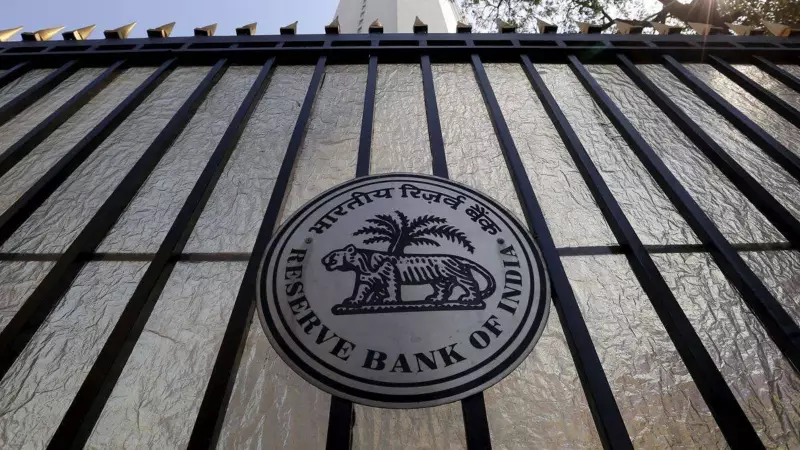
The All India Reserve Bank Employees Association (AIRBEA), a union representing RBI staff, has raised a red flag over a severe scarcity of small denomination currency notes across the country. In a formal communication to the central bank, the union has called for immediate steps to ensure an adequate supply of these essential notes for daily public use.
Union Highlights Public Hardship
In a recent letter addressed to RBI Deputy Governor T Rabi Shankar, who heads the Department of Currency Management, AIRBEA General Secretary Samir Ghosh detailed the widespread problem. The union pointed out that while higher-value notes like Rs 100, Rs 200, and Rs 500 remain readily available, there is an acute shortage of smaller notes, particularly in semi-urban and rural areas.
The letter emphasized that this shortage is causing significant disruption in public life. "ATMs dispense with higher denomination notes only, there is no provision for availability of small denomination notes," Ghosh wrote. He further noted that even commercial bank branches often express their inability to provide notes of Rs 10, Rs 20, and Rs 50 denominations.

Impact on Daily Transactions and RBI's Response
This scarcity directly affects countless small-scale transactions that are the backbone of the Indian economy. The union listed essential uses such as paying fares for auto-rickshaws and toto vehicles, buying groceries from local kirana stores, and numerous other daily needs of common citizens.
The letter also referenced the RBI's past considerations of replacing small paper notes with more durable metal coins. However, it noted the challenges in this approach, including the strain on the country's scarce metal resources. As a solution, AIRBEA has strongly urged the Reserve Bank of India to circulate adequate quantities of small notes through both commercial bank counters and its own offices.
Call for Coin Melas and Circulation Data
Beyond paper currency, the union advocated for better distribution of small denomination coins. Ghosh suggested that RBI offices should revive the practice of organizing 'coin melas' or coin fairs, not just in cities but also in urban and rural regions. This should be done in coordination with local panchayats, cooperatives, regional rural banks, and self-help groups to ensure effective reach.
According to official data, the currency in circulation includes banknotes, coins, and the central bank digital currency (CBDC). Presently, legal tender banknotes comprise denominations of Rs 2, Rs 5, Rs 10, Rs 20, Rs 50, Rs 100, Rs 200, Rs 500, and Rs 2,000. It is important to note that the RBI has stopped printing notes in the Rs 2, Rs 5, and Rs 2,000 denominations.
During the 2024-25 fiscal year, the value and volume of banknotes in circulation grew by 6% and 5.6%, respectively. The share of Rs 500 notes, which was 86% by value, saw a slight decline. In volume terms, Rs 500 notes constituted 40.9% of all banknotes, followed by Rs 10 notes at 16.4%. Combined, smaller notes of Rs 10, Rs 20, and Rs 50 made up 31.7% of the total banknote volume in circulation last fiscal.
In the same period, the value and volume of coins in circulation increased by 9.6% and 3.6%, respectively. As of March 31, 2025, coins of Rs 1, Rs 2, and Rs 5 together accounted for 81.6% of the total coin volume and 64.2% of the total coin value.






