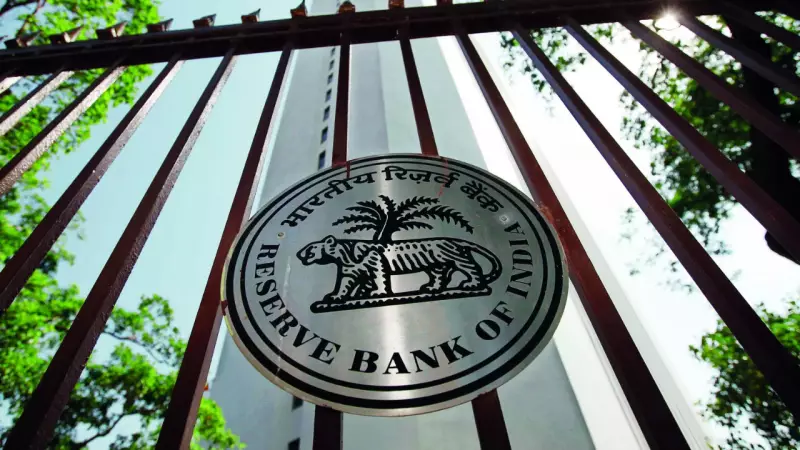
The Reserve Bank of India has undertaken what it calls a once-in-a-generation cleanup of its regulatory framework, dramatically simplifying seven decades of banking instructions into a streamlined system that promises to transform how financial institutions comply with rules.
The Great Regulatory Consolidation
In a massive exercise that spanned numerous legacy documents, the central bank has consolidated thousands of circulars issued over seventy years into just 244 master directions categorized for 11 types of regulated entities. This monumental effort resulted in the elimination of 9,446 circulars, with some dating as far back as the colonial era.
Deputy Governor Shirish Murmu described this consolidation as a significant milestone that will substantially improve how regulated entities access regulatory instructions. "This is a major step in achieving the objective of ease of doing business," Murmu stated, emphasizing the transformative nature of the reform.

Clearing Decades of Regulatory Clutter
The cleanup revealed just how much regulatory baggage had accumulated over the years. From the total of 9,446 circulars that were repealed, 5,673 were identified as completely obsolete and were dropped entirely from the new framework.
One notable example of the outdated regulations was a circular from 1944 that dealt with providing loans against bonds issued by the British government during the Second World War. This particular regulation had remained on the books for nearly eight decades despite having no contemporary relevance.
The reform represents more of a reorganization than a rewriting of the regulatory regime. The primary goal is to reduce ambiguity in compliance requirements and ensure that lenders no longer need to navigate through thousands of legacy circulars to understand their obligations.
Modernizing for the Digital Age
Beyond just cleaning up old regulations, the revised master directions incorporate new requirements tailored for contemporary banking needs. The framework now includes specific provisions for digital banking that mandate explicit customer consent for digital services and require banks to provide transaction alerts.
This forward-looking approach ensures that the regulatory framework not only sheds historical baggage but also addresses current technological realities. The consolidation creates a single, continuous reference framework that replaces what was previously a dense and scattered web of rules.
The RBI's initiative marks a significant step toward regulatory efficiency, potentially setting a precedent for other regulatory bodies in the country. By creating a more accessible and understandable regulatory environment, the central bank aims to foster better compliance while reducing the administrative burden on financial institutions.