

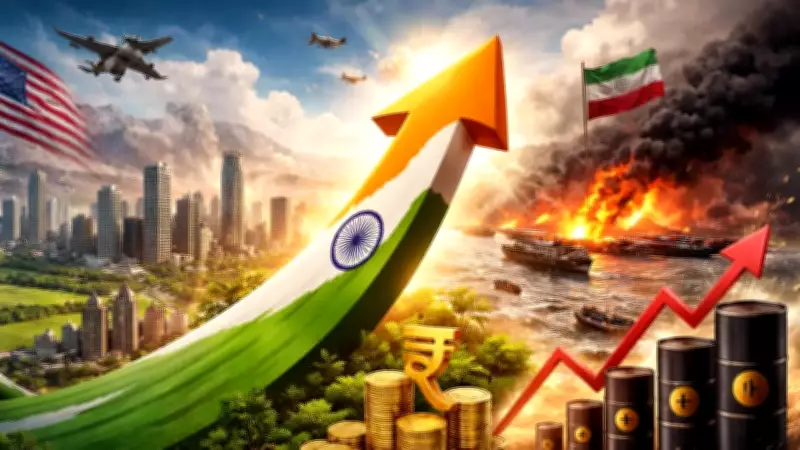
RBI Maintains Status Quo on Repo Rate Amid Global Uncertainties
The Monetary Policy Committee (MPC) of the Reserve Bank of India (RBI), under the leadership of Governor Sanjay Malhotra, has decided to keep the repo rate unchanged while continuing with a neutral monetary policy stance. This decision comes as the central bank expresses concerns over potential risks to India's GDP growth and inflation, largely influenced by the ongoing US-Iran conflict, which recently saw a two-week ceasefire announcement.
Governor Malhotra Highlights Economic Resilience and Downside Risks
In his policy statement, Governor Sanjay Malhotra emphasized that before the escalation of the West Asia conflict, India's macroeconomic fundamentals were robust, characterized by strong growth and low inflation. However, conditions deteriorated in March as the conflict zone expanded and intensified. Despite this, Malhotra noted that the Indian economy is on a stronger footing compared to previous crisis periods and many other global economies, which should provide greater resilience against external shocks.
Nevertheless, he cautioned that downside risks to growth projections persist, particularly if the US-Iran war prolongs. The RBI has projected GDP growth for FY 2025-26 at 7.6%, with an initial assessment for FY 2026-27 at 6.9%. Quarterly forecasts for the current financial year include:

- 6.8% growth in the first quarter
- 6.7% growth in the second quarter
- 7% growth in the third quarter
- 7.2% growth in the fourth quarter
Five Key Channels of Impact from the US-Iran Conflict
Governor Malhotra outlined five primary ways in which the ongoing conflict could affect the Indian economy, detailing the transmission channels for potential shocks:
- Elevated crude oil prices may lead to increased imported inflation and a wider current account deficit.
- Disruptions in energy markets, fertilizers, and commodities could negatively impact industry, agriculture, and services, reducing domestic output.
- Heightened uncertainty and risk aversion might affect domestic liquidity conditions, economic activity, consumption, and investment.
- Weaker global growth prospects could dampen external demand and reduce remittance flows.
- Adverse spillovers from global financial markets may tighten domestic financial conditions and raise borrowing costs.
Malhotra warned that what begins as a supply shock could evolve into a demand shock over the medium term if supply chain restoration is delayed. He specifically pointed to elevated energy prices and potential disruptions in the Strait of Hormuz as factors likely to impact growth in 2026-27.
Supportive Factors and Government Measures
On a positive note, the RBI governor highlighted several supportive elements for the economy. He mentioned that the government has taken proactive steps to ease supply constraints in critical sectors. Additionally, sustained momentum in the services sector, the ongoing impact of GST rationalization, and healthy balance sheets of financial institutions and corporates are expected to bolster economic activity.
Business expectations remain optimistic, with leading indicators showing resilience in manufacturing and services. The government's focus on scaling up domestic manufacturing in strategic and frontier sectors is also viewed favorably for India's future growth trajectory.
Caution Amid Elevated Uncertainties
Despite these strengths, Malhotra added a note of caution. Further escalation and wider spread of the conflict, increased volatility in global financial markets, and weather-related events could weigh on the domestic growth outlook. He stated that risks to baseline projections are tilted to the downside, with uncertainty remaining elevated due to the ongoing West Asia conflict.
This comprehensive assessment by the RBI underscores the delicate balance between India's economic resilience and the external threats posed by geopolitical tensions, shaping the monetary policy landscape in the coming months.






