

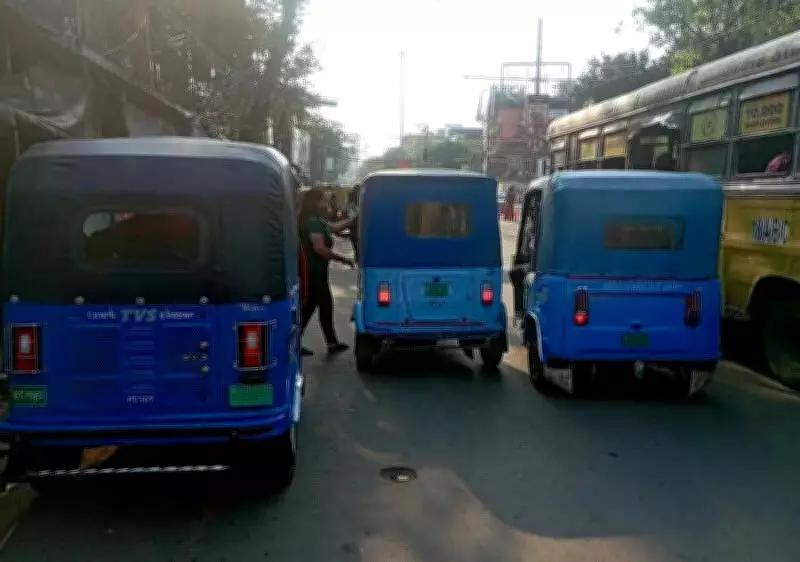
West Asia Conflict Triggers Auto LPG Crisis in Kolkata, Sparking Electric Vehicle Revolution
The ongoing conflict in West Asia has created a severe ripple effect in Kolkata's transportation sector, with auto LPG prices experiencing a sharp and sustained spike that is fundamentally reshaping the city's auto-rickshaw landscape. This price surge, coupled with significant supply disruptions, has triggered a dramatic shift among auto operators who are now abandoning their gas-powered vehicles in favor of electric alternatives at an unprecedented rate.
Scrapyard Data Reveals Stunning Transformation
Operators at city scrapyards, where retired autos are processed and new vehicle choices are made, report a complete reversal of long-standing fuel preferences. "Earlier, almost everyone chose LPG. Now, 9 out of 10 are opting for electric. Since the crisis began, about 95% of scrapped autos are being replaced with e-autos," revealed a representative from a local scrapping agency. Industry estimates suggest that nearly 97% of all autos being retired are now being replaced with electric models.
This represents a stark contrast to the city's recent history, where LPG autos dominated the fleet with approximately 98% of vehicles running on the fuel. The network of 19 auto-gas dispensing stations that once efficiently served most drivers has become strained by supply disruptions, with LPG transportation via trucks becoming increasingly unreliable.

Operators Face Economic Hardship and Supply Challenges
Auto operators are experiencing significant economic pressure and operational difficulties due to the crisis. "Earlier, we would refill in 15-20 minutes. Now, we wait for hours, and sometimes there is no gas at all. In the last month, prices went up so fast that daily earnings are hit badly," explained Ramesh Kumar, an operator on the Behala-Ballygunge station route.
The current situation marks a dramatic departure from 2008, when LPG emerged as the only viable alternative following a Calcutta High Court verdict that mandated a complete shift from petrol autos to 4-stroke LPG vehicles, leading to mass adoption across the sector.
Changing Rental Economics Drive Transition
A key factor accelerating the shift to electric autos is the changing rental economics, locally referred to as 'baatchit.' While LPG autos are typically rented by a single driver for approximately Rs 600 per 12-hour shift, electric autos—rented at Rs 800-Rs 900—are often shared between two drivers, effectively lowering individual costs despite the higher rental price.
"Even if rent is higher, we split it. Plus, electricity costs much less than LPG. We can actually save more at the end of the day," said another driver, Sunil Saw, highlighting the practical financial advantages driving the transition.
Dealers Report Surge in Electric Auto Demand
Dealers of electric three-wheelers across Kolkata have witnessed a dramatic increase in demand and enquiries in recent weeks. "We have seen a two- to three-fold increase in enquiries since the fuel crisis. Customers are switching out of necessity," reported a dealer associated with Bajaj Auto in Tiljala.
A TVS auto dealer added, "Fleet operators and individual drivers are both moving towards electric. The running cost advantage is now impossible to ignore." This sentiment reflects the growing recognition among operators that electric vehicles offer substantial long-term economic benefits despite higher initial costs.
Early Adoption Phase with Rapid Growth Potential
Despite the surge in interest and shifting preferences, electric auto adoption in Kolkata remains in its early stages. The city's four Regional Transport Offices have registered 784 e-autos through the end of February, but experts anticipate rapid growth if current trends continue.
"The number is expected to rise rapidly if current trends continue. We can see a tremendous jump in e-autos," predicted Avik Dasgupta, an electric vehicles expert, suggesting that the current crisis may accelerate Kolkata's transition toward sustainable transportation faster than previously anticipated.

The combination of geopolitical factors affecting fuel supplies, economic pressures on operators, and the inherent cost advantages of electric vehicles has created a perfect storm that is fundamentally transforming Kolkata's auto-rickshaw ecosystem, potentially setting a precedent for other Indian cities facing similar challenges.





