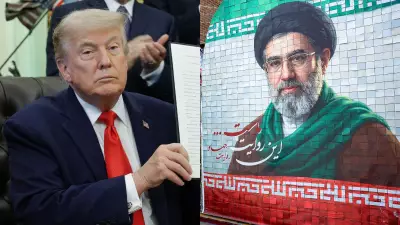
Trump Declares Strait of Hormuz Fully Open for Commercial Passage
Former United States President Donald Trump has announced that the strategically vital Strait of Hormuz is now fully open and ready for full commercial passage. This declaration came after Iran stated it would permit vessels to transit during a temporary ceasefire in regional conflicts.
Trump's Social Media Announcement and Clarification
In a post on his Truth Social platform on Friday, Trump wrote emphatically, "IRAN HAS JUST ANNOUNCED THAT THE STRAIT OF IRAN IS FULLY OPEN AND READY FOR FULL PASSAGE. THANK YOU!" However, he later provided a crucial clarification in a subsequent post.
Trump specified that while the Strait of Hormuz is completely open for business and full passage, the United States' naval blockade on shipping from Iranian ports remains in full force and effect. He stated this blockade applies specifically to Iran and will continue until what he described as "our transaction with Iran is 100% complete." Trump added that this process should proceed quickly since most points are already negotiated.

Background of US Blockade and Regional Tensions
The United States has imposed a comprehensive blockade on shipping from Iranian ports, with military authorities confirming that maritime trade to and from Iran has been completely halted. The Trump administration implemented this blockade during the US-Iran ceasefire, despite ongoing failures in peace negotiations.
The Strait of Hormuz, a narrow channel connecting the Persian Gulf to international waters, has become a major flashpoint of tension since US and Israeli strikes on Iran began approximately six weeks ago. This strategic waterway is crucial for global oil shipments and maritime commerce.
Iran's Announcement and Ceasefire Linkages
Iran's Foreign Minister Abbas Araghchi announced earlier on Friday that the decision to allow passage through the strait is directly linked to the ceasefire in Lebanon. He stated this would apply for the remaining duration of the truce under a coordinated route.
In a social media post, Araghchi explained, "In line with the ceasefire in Lebanon, the passage for all commercial vessels through Strait of Hormuz is declared completely open for the remaining period of ceasefire, on the coordinated route as already announced by Ports and Maritime Organisation of the Islamic Rep. of Iran."
Previously, Iran had restricted passage to only ships with explicit clearance from Iranian authorities that were not linked to the US or Israel. These vessels were directed through a route near Larak Island to avoid potential sea mines in the waterway.
Ceasefire Timelines and Regional Connections
The Lebanon-Israel ceasefire is expected to last for 10 days, while a separate two-week ceasefire between the US and Iran is scheduled to expire on Tuesday. Araghchi's statement appeared to connect the shipping decision specifically to the halt in fighting between Israel and Iranian-backed Hezbollah forces in Lebanon.
This complex situation highlights the interconnected nature of regional conflicts and how maritime access has become both a practical concern and a diplomatic tool in ongoing tensions between the United States, Iran, and their respective allies in the Middle East.