

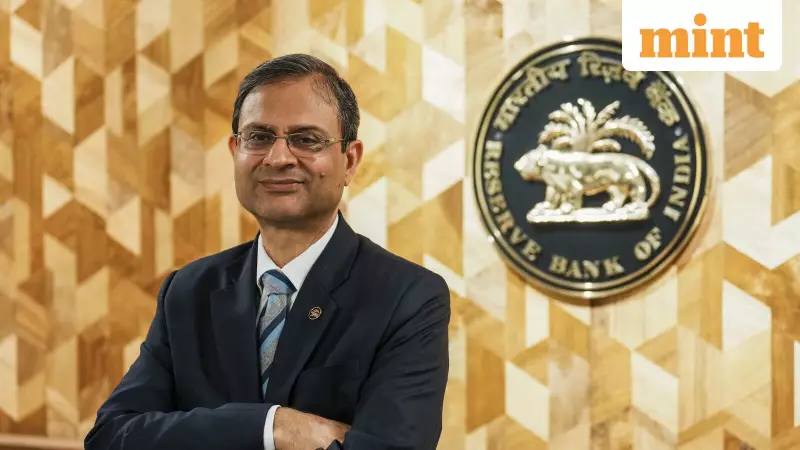
The Reserve Bank of India (RBI) held a crucial meeting on Monday with the leadership of major non-banking financial companies (NBFCs), emphasizing the need for disciplined lending and vigilant monitoring of loan portfolios. Governor Sanjay Malhotra led the discussions, which included managing directors and chief executive officers from a significant cross-section of the sector.
Key Participants and Governor's Core Message
The meeting saw participation from a wide array of financial entities. Alongside select private NBFCs, the discussions included government-owned NBFCs, housing finance companies (HFCs), and microfinance institutions. Representatives from key self-regulatory organisations like Sa-Dhan, the Micro Finance Institutions Network, and the Finance Industry Development Council were also present. Collectively, the attending entities command a substantial 53% of the total assets in the NBFC sector.
In his opening remarks, Governor Malhotra acknowledged the critical role NBFCs and HFCs play in driving credit flow across the economy. He strongly emphasized the principles of customer centricity, ethical conduct, and responsible lending. A significant part of his address focused on the importance of prompt grievance redressal to maintain public trust and ensure the sector's orderly and sustainable growth.

Context: Addressing Emerging Stress and Building on Stability
This high-level interaction, the first since February 13, 2025, comes against a backdrop of regulatory vigilance. The RBI has been closely observing credit growth patterns, asset quality trends, and conduct-related issues across the financial landscape. The specific emphasis on underwriting discipline and asset quality monitoring points to concerns over emerging pockets of stress and aggressive lending practices in segments like retail and micro, small and medium enterprises (MSMEs).
The meeting was also attended by Deputy Governors T. Rabi Sankar, Swaminathan J, Poonam Gupta, and S.C. Murmu, along with the head of the National Housing Bank, underscoring its importance.
Contrasting Signals: Strong Capital vs. Building Stress
The regulator's engagement presents a nuanced picture of the NBFC sector. On one hand, the RBI's own Financial Stability Report for December 2025 highlighted robust health in key areas. It noted that NBFCs' capital position remained strong, asset quality continued to improve, and profitability stayed stable. Stress tests indicated that, barring a few outliers, the sector's aggregate capital would remain above regulatory requirements even under adverse conditions.
However, the report also flagged cautionary signals. It pointed out that while the gross non-performing asset (GNPA) ratio has declined, fresh accretions to NPAs are trending higher. Furthermore, a rise in write-offs suggests some build-up of stress in loan portfolios. This dual reality of overall strength with underlying vulnerabilities likely framed the governor's call for sustained vigilance and sound underwriting practices during the discussions, where participants also shared feedback on policy and operational matters.






