

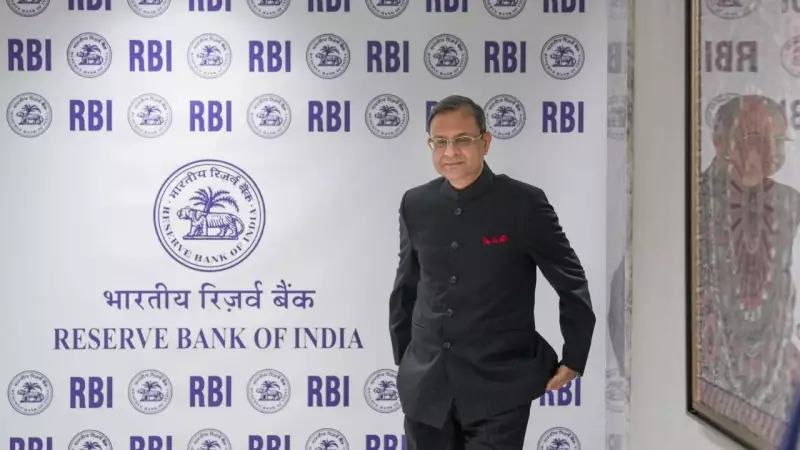
For the first time since its inception in 2016, the Reserve Bank of India's Monetary Policy Committee (MPC) has explicitly highlighted the dangers of inflation remaining excessively low. The minutes from its December 3-5 meeting, released recently, reveal a unanimous vote to reduce the key policy rate, driven by concerns that prices were rising far too slowly.
Unanimous Decision for a Rate Cut
The MPC voted with full agreement to lower the policy repo rate by 25 basis points to 5.25%. This decision was primarily motivated by a sharper-than-predicted decline in inflation, particularly in food prices. The committee expressed worry that real interest rates had become overly restrictive for the economy, potentially stifling demand.
RBI Governor Sanjay Malhotra pointed out that headline inflation had eased significantly. He attributed this to "exceptionally benign food prices," which were likely to cause inflation to undershoot the central bank's earlier projections. With both headline and core inflation remaining subdued, Malhotra argued that real interest rates needed to come down to stimulate economic demand and support growth.

Members Voice Concerns Over Demand Deficit
External member Nagesh Kumar pointed to the stark inflation numbers, including a headline rate of 0.3% in October 2025 and a full-year FY26 projection hovering around 2%. He stated that this created ample room for policy action. Kumar contended that inflation had fallen to a level that was unhealthy for a developing economy like India, signalling a potential demand deficit. He emphasised the need for a demand stimulus to preserve growth momentum in the second half of the fiscal year.
Economist Ram Singh made a strong and urgent case for the rate cut, advocating for a counter-cyclical policy to stabilise prices and bring them back toward the target swiftly. He warned that delaying action would keep real rates unnecessarily high, thereby hurting GDP growth. Singh also highlighted the risks of prolonged low inflation, which could squeeze corporate profit margins, increase the real burden of debt, and dampen private investment. He noted that Micro, Small, and Medium Enterprises (MSMEs) were especially vulnerable due to their limited pricing power and sticky wage structures.
Risk of Falling Behind the Curve
Another external member, Saugata Bhattacharya, shared a cautious perspective. He expressed his personal risk aversion to the criticism of having "fallen behind the curve." Bhattacharya was particularly wary of the mistake of labelling certain inflation drivers as "transient" when they might later emerge as structural components of the economy.
Deputy Governor Poonam Gupta identified the faster-than-anticipated moderation in headline Consumer Price Index (CPI) as the most critical recent development for monetary policy. She argued that this trend deserved greater weight in the committee's deliberations, given how low both current and forecasted inflation had become.
Indranil Bhattacharyya, an Executive Director at the RBI, noted that the calibrated policy easing, which has been underway since February 2025, has supported output stabilisation. He cautioned that a failure to adjust monetary policy to evolving economic conditions risked higher macroeconomic volatility. The muted inflation, he added, suggested weak demand pressures at a time when economic growth was already projected to slow down.
This historic shift in the MPC's rhetoric underscores a significant pivot from fighting high inflation to addressing the emerging risks of it staying too low, marking a new chapter in India's post-pandemic monetary policy journey.






