

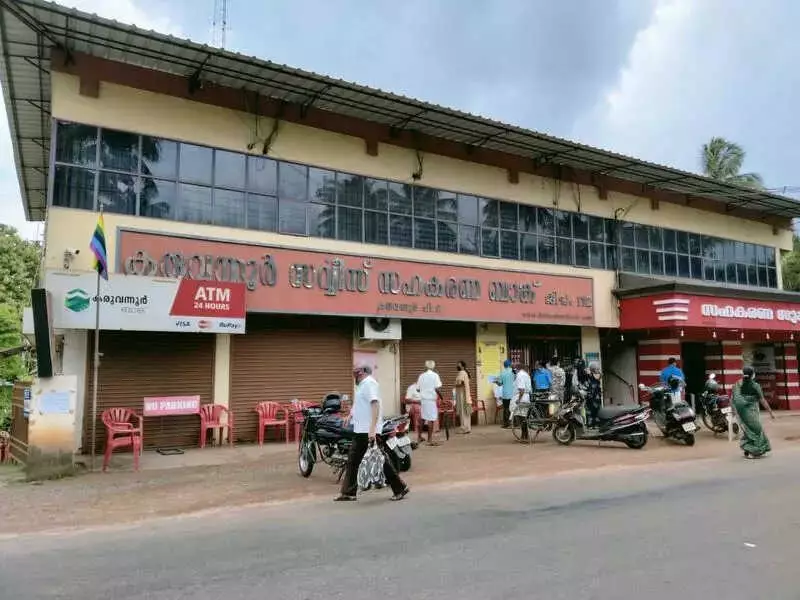
Fresh government data has exposed the lingering financial agony for thousands of ordinary savers, revealing that a staggering sum exceeding Rs 263 crore remains inaccessible to 30,078 depositors of the scandal-hit Karuvannur Service Cooperative Bank. The figures lay bare how the deep wounds of the massive fraud continue to haunt people years after it first came to light.
The Unfolding Crisis and the Current Financial Deadlock
The crisis officially erupted on July 28, 2021, when the bank's severe financial distress became public. At that time, the total deposit liability that the bank owed stood at Rs 313.80 crore. Despite the bank continuing its operations, the path to returning people's money is blocked by a massive hurdle: an outstanding loan portfolio of Rs 372.98 crore. The recovery of these defaulted loans is the primary determinant for the pace of repayments to anxious depositors.
Under a government-led revival package, the repayment process has been implemented in a staggered manner. In one specific phase between November 1, 2023, and January 15, 2025, the bank managed to fully repay deposits between Rs 50,000 and Rs 1 lakh belonging to 24,777 depositors, totaling Rs 63.89 crore. Looking at the entire period from the crisis onset until September 26, 2025, the bank has returned Rs 159.08 crore to depositors, which includes both principal and interest components.

The Massive Scale of the Unresolved Scam
However, these repayments only underscore the monumental scale of what is still unresolved. More than Rs 260 crore is yet to find its way back to the rightful owners. Official data confirms that intensive efforts are currently underway to recover the loan arrears and other dues owed to the bank. The government has stated that further repayments to depositors will become possible only once these amounts are realised. Additionally, surcharge proceedings against those responsible for the losses are expected to help mobilise funds for repayment.
The Karuvannur scam, which investigators believe began as early as 2010 but burst into public view only in 2021, was a complex web of financial deceit. It involved:
- Illegal loan sanctions
- Benami (proxy) transactions
- Use of forged signatures
- Gross misuse of bank assets
The total losses from these activities are estimated to be between Rs 100 crore and Rs 180 crore. The Enforcement Directorate (ED) has alleged that loans were disbursed using fabricated documents, frequently without the knowledge of the actual applicants, in blatant violation of banking norms and without proper collateral.
Human Cost and the Long Wait for Justice
The legal net has widened over time. According to ED chargesheets, 83 individuals have been accused so far. The list includes key bank officials and private financiers. Among the principal accused are former bank secretary Sunil Kumar T R, manager Biju M Kareem, accountant Jilse C K, private financier Satheesh Kumar, and real estate businessman Kiran P P.
For the depositors—many of whom are retirees, daily wage labourers, and small business owners—the scandal has long transcended newspaper headlines and ongoing investigations. The stark reality for them is captured in the latest official arithmetic: years after the fraud shook Kerala's trusted cooperative banking sector, tens of thousands of ordinary citizens are still waiting for over Rs 260 crore of their hard-earned money. Their hope for full restitution remains tightly coupled with recoveries that have, so far, failed to materialise at the needed scale.






