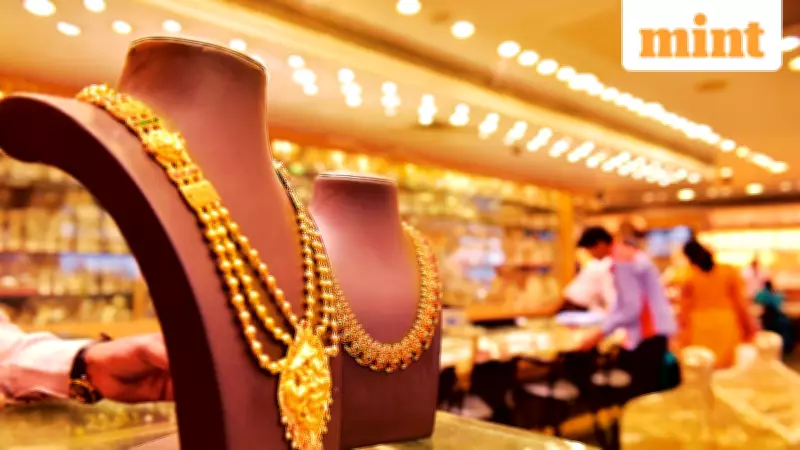
India's Golden Wealth: Household Gold Stock Valued at $4.5 Trillion Surpasses National GDP
For centuries, Indians have cherished gold, weaving it into the fabric of culture, tradition, and personal finance. This deep-rooted affinity has now transformed into an astonishing financial phenomenon. According to recent estimates from global financial services firm UBS, India possesses the world's largest stock of gold, with households and temples collectively holding approximately 28,000 tonnes of the precious metal.
Record Gold Prices Create Trillion-Dollar Windfall
The value of this massive gold reserve has skyrocketed, thanks to a remarkable surge in prices. Between FY24 and FY26 (as of end-January), gold prices have risen at a compound annual growth rate (CAGR) of 42%. This dramatic increase has propelled the total value of gold held by Indian households to an estimated $4.5 trillion.
To put this figure into perspective, it exceeds India's nominal GDP, which stands at roughly $4 trillion for FY26. This means the yellow metal accumulated in homes and temples across the nation is now worth more than the country's entire economic output for the year.

Wealth Locked in Gold: No Broad Consumption Boost Expected
Despite this enormous wealth creation, economists and analysts caution that it is unlikely to translate into widespread consumer spending. This contrasts sharply with the impact of high equity returns witnessed in recent years. For instance, the NIFTY TRI delivered a 26% CAGR during FY21-FY23, significantly boosting urban demand for discretionary consumption and supporting real estate markets.
Madan Sabnavis, Chief Economist at Bank of Baroda, explains this divergence. "Gold is held more as a permanent asset or as a long-term investment in India. Therefore, we cannot expect an outright consumption boost amid a sharp surge in the gold value of Indian households," he stated.
The cultural perception of gold as a safe haven and a store of value means households typically prefer to hold onto their gold rather than sell it, even when prices reach record highs.
Gold Loan Boom: Unlocking Liquidity Without Selling
Instead of liquidating their holdings, Indians are increasingly turning to gold loans to access cash while retaining ownership of their physical gold. This trend has led to a significant boom in the gold loan segment.
Data from the Reserve Bank of India (RBI) reveals a dramatic increase in lending against gold and gold jewellery. Banks and Non-Banking Financial Companies (NBFCs) together extended $20 billion in loans in FY25 and $23.4 billion year-to-date in FY26. This marks a substantial jump from the annual average of just $3 billion during FY22–FY24.
UBS attributes this sharp upswing to several factors:
- Record high gold prices increasing the collateral value
- A broader shift by lenders toward secured retail credit
- Aggressive expansion by both banks and NBFCs
- Lower interest rates compared to alternatives like Microfinance Institutions (MFIs)
Sabnavis elaborated on this mechanism: "What we have observed is that many people who bought gold by paying cash are now using it to borrow money from banks. Gold loans have increased, and the loan-to-value ratio is around 80% or so. This allows borrowers to access a higher amount of credit. This borrowed money is then being used for consumption purposes."
Impact on Low-Income Households and Consumption Patterns
This gold loan phenomenon is particularly significant for low-income households. For these families, gold serves a dual purpose: as a savings asset and as collateral. It helps smooth spending and meet financial needs during periods of income fluctuation.
UBS analysts provided insights into how these borrowed funds are typically utilized: "We think most gold loans would likely be spent on business-oriented needs such as working capital requirements and funding gaps for traders, small businesses, and agriculture. Additionally, the funds support rural consumption, including weddings, as well as education and healthcare expenses."

Since gold is viewed as a long-term asset, it is expected to primarily boost borrowing rather than outright liquidation, reinforcing its role as a financial safety net.
Gold Jewellery Demand Expected to Decline Amid High Prices
While gold loans are flourishing, the demand for gold jewellery is facing headwinds. The global brokerage firm UBS anticipates a slowdown in jewellery purchases due to the rising prices.
In its base case scenario, UBS estimates India's total gold demand—encompassing both jewellery and retail investment—to moderate to approximately 670 tonnes in FY26. This represents a 15% year-on-year decline from the 780 tonnes recorded in FY25, largely driven by lower jewellery demand.
Looking ahead to the following year, UBS expects India's gold demand to stabilize at close to 650 tonnes in FY27, with investment demand likely remaining a key driver of overall consumption.
Disclaimer: This analysis is for educational purposes only. The views and recommendations expressed are those of individual analysts or broking firms. Investors are advised to consult with certified experts before making any investment decisions.