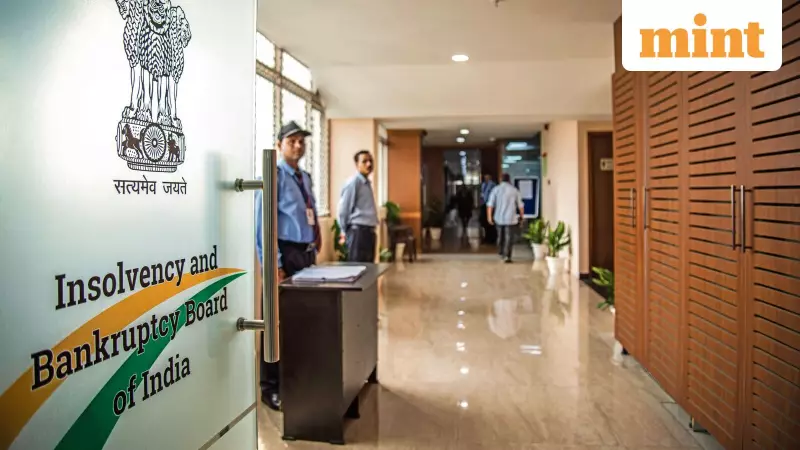
The Insolvency and Bankruptcy Board of India (IBBI) has unveiled a significant proposal to standardize how professionals value distressed assets, aiming to create uniform and credible reports while reducing debt resolution lawsuits across the country.
Announced on Wednesday, the new format requires enhanced disclosures about valuation risks, potential conflicts of interest, and the application of professional judgment in determining asset values. This initiative seeks to build stakeholder confidence in the due diligence process and facilitate more realistic negotiations for better outcomes.
Standardizing Valuation Reports
The move toward standardization comes as valuation reports have increasingly become subjects of litigation in various bankruptcy cases. A uniform format is expected to simplify assessments for both creditors and potential investors, which is crucial since creditors base their decisions to rescue or liquidate companies on these valuations.

The proposed format mandates specific information and documentation requirements, including compulsory conflict of interest disclosures and coverage of factors affecting recoverability such as costs and economic trends. The IBBI will accept public suggestions on this format until December 10.
Expert Reactions and Benefits
Yogendra Aldak, executive partner at Lakshmikumaran and Sridharan attorneys, emphasized that the new Insolvency and Bankruptcy Code (IBC) valuation guidelines will bring much-needed consistency, transparency, and standardization to the process.
"These guidelines will lead to reports that are well-reasoned and backed by sufficient evidence," said Aldak. He added that standardized valuation reports would promote more informed decision-making by resolution professionals and ultimately reduce litigation, thereby maximizing the value of corporate debtors' assets.
Addressing Real-World Challenges
Krunal Sheth, partner at NPV Valuation Services LLP, welcomed the proposal as a significant step toward improving transparency, credibility, and consistency in valuation reports. He noted that this should help reduce disputes similar to those seen in cases like Ramkrishna Forgings Ltd.
However, Sheth highlighted persistent challenges in valuation work: "In insolvency situations, data is often incomplete or unreliable, and many required qualitative assessments such as ESG factors, governance strength, promoter integrity, and customer or supplier risks are difficult to judge objectively."
Sheth emphasized that while the framework brings necessary discipline, valuation outcomes will still depend heavily on available information and professional judgment. He noted that the proposal remains a discussion paper whose true impact will depend on implementation.
Aldak further explained that a more accurate and complete view of a corporate debtor's financial health, facilitated by these guidelines, will help creditors achieve better recovery rates, benefiting the entire ecosystem of corporate insolvency resolution in India.