

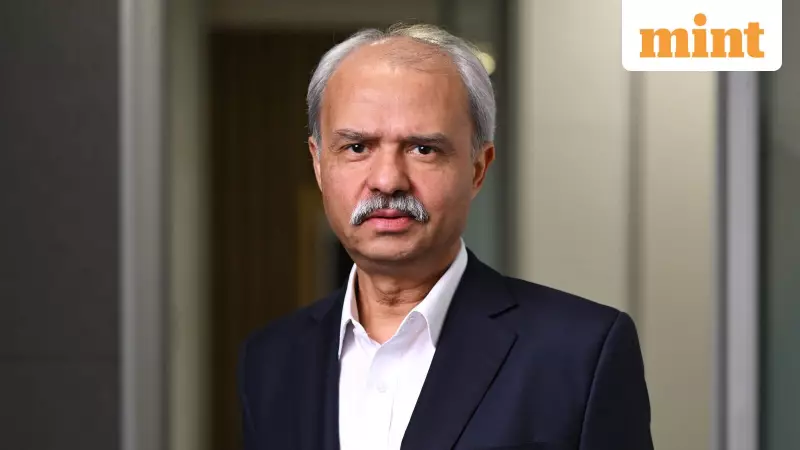
In a bold move to reclaim lost ground, HSBC India's chief executive, Hitendra Dave, has charted an aggressive expansion path following crucial regulatory approvals. The Reserve Bank of India (RBI) has granted the foreign bank permission to open 20 new branches across the country, a significant push that Dave hopes will propel HSBC into the league of India's top private lenders.
Seizing a Missed Opportunity
Reflecting on the past two decades, Dave did not mince words. He acknowledged that foreign banks, including HSBC, had "lost the plot" in India, allowing domestic private banks to dominate one of the world's most profitable markets. "It was our incompetence, our inability to see the future," Dave stated in a recent interview. Appointed as the India CEO in 2021, he now has a clear target: to position HSBC as the fifth largest private sector bank in India.
The recent RBI nod, received in January, allows HSBC to establish a physical presence in cities like Lucknow, Amritsar, Bhopal, Bhubaneswar, and Dehradun. The first of these new branches opened in Vadodara in early December. Once complete, this expansion will increase HSBC India's total branch network to 46. Dave emphasized the rarity of this permit, calling it "the largest branch expansion permit given by RBI to any international bank, at least going back two decades."

Targeting Wealth and Consumer Growth
The core strategy behind this physical expansion is a sharp focus on India's growing affluent segment. Dave identified wealth management and consumer banking as the primary drivers for HSBC's growth. The bank is strategically selecting cities that have witnessed significant wealth creation, boast strong manufacturing ecosystems, and have a sizable non-resident Indian (NRI) population.
This push is happening against a backdrop of foreign bank exits from the crowded Indian retail market. Notable examples include Citibank selling its retail business to Axis Bank and Deutsche Bank exploring a sale of its retail and wealth portfolio. Despite this trend, HSBC remains committed to its consumer business. As of 31 March, the bank held ₹23,123 crore in non-priority sector retail loans, covering housing, credit cards, and other personal loans.
HSBC's credit card business shows promising momentum. With 954,431 cards in circulation, it leads all foreign banks in India, trailing only the American Express network. The average spend per HSBC card in October was ₹17,477.5, close to the industry average of ₹18,784.4. Dave revealed that card spends have grown at a compound annual growth rate (CAGR) of 45% over the last two years.
Navigating a Competitive Landscape
The ambition to break into the top five is formidable. As of 30 September, the elite group comprised HDFC Bank, ICICI Bank, Axis Bank, Kotak Mahindra Bank, and IndusInd Bank. Foreign banks collectively hold a mere 3.3% share of outstanding loans in India, dwarfed by public sector banks (52%) and private banks (40%).
However, Dave sees a window of opportunity. He points to a renewed regulatory openness to foreign capital in banking, evidenced by deals like RBL Bank with Emirates NBD and Yes Bank with SMBC. He believes new players will bring fresh technology and products, ultimately growing the entire financial services pie. "All the top private banks are already giving us competition... I think it's tough in any case," Dave remarked, undeterred by the challenge.
To compete effectively, HSBC India is heavily investing in technology and hiring young engineering talent. Dave shared an anecdote about new hires questioning the bank's legacy systems, signaling a drive towards digital transformation. "The bank of the future will be run by these young new engineering grads," he asserted.
For Hitendra Dave and HSBC India, the message is clear. The regulatory green light for expansion is a chance to rectify past strategic omissions. The bank is now betting big on India's affluent consumers and its own ability to execute a focused, technology-driven growth plan in a fiercely competitive market.






