

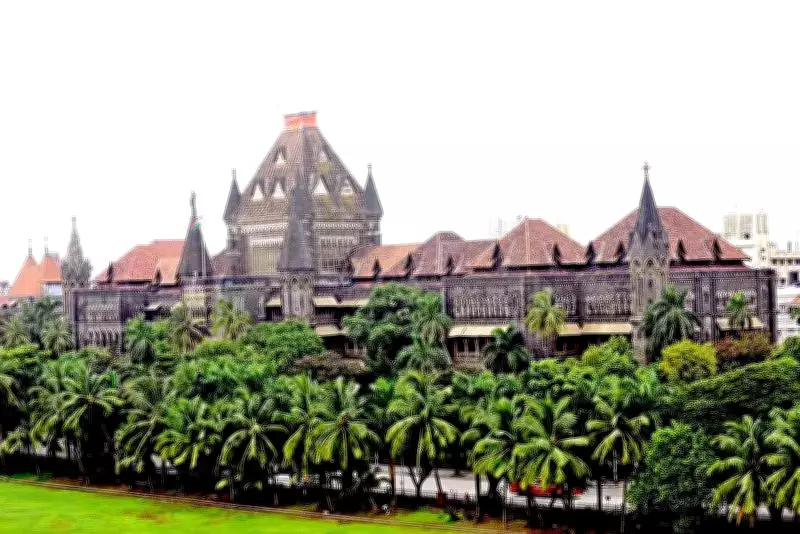
Bombay High Court Condemns Misuse of Insolvency Laws by Chronic Defaulters
In a significant ruling, the Bombay High Court has quashed an order from the Debt Recovery Tribunal (DRT) that had stayed all further post-sale proceedings related to a bank's auction of a south Mumbai flat. The court expressed deep concern over a "disturbing trend" where borrowers and "chronic defaulters" adopt a passive stance, only to invoke legal protections at the last minute to obstruct recovery efforts.
Court's Stern Observations on Borrower Tactics
The bench of Justices Manish Pitale and Shreeram Shirsat, in their March 18 order, highlighted that many defaulters "act as fence sitters," taking no action while banks proceed with recovery under the Securitisation and Reconstruction of Financial Assets and Enforcement of Security Interest Act, 2002. They noted that these individuals often initiate "collusive proceedings" under the Insolvency and Bankruptcy Code (IBC) precisely when auction purchasers are about to take physical possession of properties.
The court emphasized that such actions lead to a sudden halt in all steps under the Securitisation Act, allowing defaulting borrowers to "wear a cloak of immunity under the garb of a moratorium." This misuse, the judges stated, frustrates secured creditors and auction purchasers who are acting in accordance with the law.

Details of the Mumbai Flat Auction Case
The case centered on a flat in Mazgaon, south Mumbai, which was auctioned in December 2024 for Rs 2.5 crore. The Union Bank had loaned Rs 6.25 crore to the borrower and issued a default notice in March 2017. After multiple failed attempts at one-time settlements and auctions, the flat was successfully sold on December 12, 2024.
Following the auction, the borrower moved the National Company Law Tribunal (NCLT) to initiate insolvency proceedings and immediately petitioned the DRT, claiming that a moratorium under IBC had been triggered. This led to extensive litigation, culminating in the Supreme Court confirming on February 26, 2026, that the Mazgaon flat should be excluded from the moratorium.
Legal Arguments and Court's Final Decision
Counsel for the purchasers, Sidhart Samantaray, argued that the borrowers and guarantors were "frustrating and thwarting" the process to deprive them of physical possession. Charles Dsouza, representing the bank, supported this contention. In contrast, Kruti Bhavsar, counsel for the borrowers, maintained that the DRT's order was lawful, citing a moratorium that allegedly took effect on October 6, 2025, due to IBC proceedings in Guwahati NCLT.
The High Court, however, ruled in favor of the purchasers, stating that the bank's bidding process could not be faulted since the moratorium was invoked post-sale. The court underscored that the IBC is designed as an effective framework for timely resolution, aimed at improving ease of doing business and fostering economic growth. Yet, it lamented that chronic defaulters exploit these provisions to paralyze recovery processes.
Broader Implications for Debt Recovery in India
This judgment sheds light on the challenges faced by financial institutions in recovering debts from recalcitrant borrowers. The court's strong language against the misuse of insolvency laws serves as a warning to those who might attempt similar tactics in the future. It reinforces the need for legal systems to balance protection for genuine cases with mechanisms to prevent abuse by chronic defaulters.
The ruling is expected to have far-reaching effects on how banks and other creditors approach auction processes, potentially speeding up recoveries and reducing legal delays. As the Indian economy continues to evolve, such judicial interventions are crucial in maintaining the integrity of financial laws and ensuring that they serve their intended purpose of facilitating rather than hindering economic activities.






