

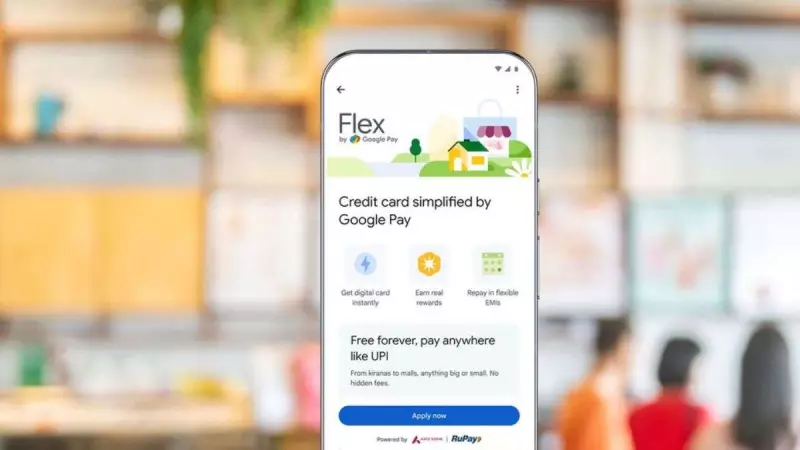
In a significant move set to reshape India's digital payments landscape, Google Pay has officially launched its first credit-linked product in the country. The tech giant has partnered with Axis Bank, one of India's leading private sector lenders, to introduce 'Flex', a unique credit card designed to work directly with the Unified Payments Interface (UPI).
What is Google Pay Flex and How Does It Work?
Google Pay Flex is not a traditional physical credit card. Instead, it is a digital-first credit line that integrates directly into the Google Pay app. The core innovation lies in its ability to allow users to make credit-based payments at any merchant that accepts UPI QR codes. This effectively brings the convenience of credit to the vast UPI network, which is used by millions of small vendors and large retailers across India.
To use Flex, eligible users will see it as a payment option within their Google Pay app when scanning a UPI QR code. They can select the Flex credit line to complete the transaction, which will then be billed to their linked Flex account. The product aims to simplify access to credit for everyday expenses without the need to carry a physical card or rely solely on a bank balance.

Key Features and Benefits for Indian Users
The launch of Google Pay Flex brings several compelling features tailored for the Indian market. The service went live on December 17, 2025, marking a new chapter in the fintech collaboration between a global tech leader and a major Indian bank.
Users can expect a host of benefits designed to enhance their spending and savings experience. The partnership leverages Axis Bank's expertise in banking and credit, combined with Google Pay's massive user base and technological prowess. This collaboration is seen as a direct effort to tap into the growing demand for seamless digital credit solutions among India's tech-savvy population.
Important features include:
- Instant Credit Access: A pre-approved credit limit for qualified Google Pay users.
- UPI Integration: The ability to pay via credit at any UPI merchant, vastly expanding where credit can be used.
- Rewards and Cashback: Users will earn rewards on transactions made through the Flex credit line, adding a layer of incentive.
- Digital-First Management: Complete control over the credit account, spending tracking, and bill payments directly within the Google Pay app.
Implications for India's Fintech and Banking Sector
The introduction of a UPI-powered credit card by Google Pay and Axis Bank is a landmark development. It blurs the lines between traditional banking credit products and modern, mobile-first payment platforms. This move is expected to intensify competition in the digital payments space, where players like PhonePe, Paytm, and traditional banks are also vying for market share.
For consumers, it promises greater choice and convenience, potentially bringing formal credit to segments of users who may not have used credit cards before. For the broader ecosystem, it signifies the next evolution of UPI, transitioning from a purely cashless payment rail to one that also facilitates instant credit.
The success of Google Pay Flex will depend on its adoption, the competitiveness of its interest rates and fees, and the overall user experience. However, its launch on December 17, 2025, undeniably sets a new benchmark for innovation in Indian fintech, pushing the envelope on what is possible within the country's world-class digital payments infrastructure.






