Precious Metals Recover After Early Session Pressure
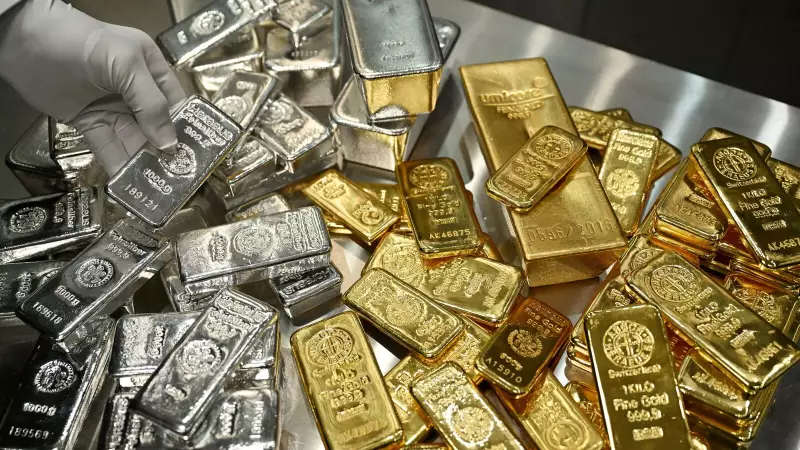
Gold and silver prices experienced significant volatility in the commodity markets on Thursday, 22 January 2026, initially dropping before staging a notable recovery later in the trading session. The early pressure came as investors booked profits following signs of de-escalation in the Greenland conflict, reduced geopolitical tensions surrounding Trump tariff fears, and a strengthening US dollar against global currencies.
Market Performance and Price Movements
The selling pressure pushed gold prices to an intraday low of ₹148,777 per 10 grams during early trading hours. Similarly, silver rates dropped to today's low of ₹304,039 per kilogram as market participants reacted to the changing geopolitical landscape. However, both precious metals demonstrated resilience by reversing from these intraday lows soon after the initial market session's decline.
According to Multi-Commodity Exchange (MCX) data recorded at 10:05 p.m. (IST), gold prices were trading 0.29% or ₹442 higher at ₹153,304 per 10 grams. This represented a recovery from the previous market close of ₹152,862 per 10 grams. Silver prices showed similar strength, trading 0.21% or ₹657 higher at ₹319,149 per kilogram compared to the previous close of ₹318,492 per 10 grams, as per MCX statistics.

Robert Kiyosaki's Perspective on Market Movements
Understanding the Real Message Behind Price Drops
American entrepreneur, investor, and author of the popular financial book Rich Dad Poor Dad, Robert Kiyosaki, offered his analysis of the precious metals market movements. He noted that although gold and silver prices dropped globally due to selling pressure triggered by US President Donald Trump's cancellation of tariff threats on the European Union and the announcement of a framework for Greenland, most market participants failed to grasp the underlying message.
"Gold and silver sold off after President Trump cancelled EU tariffs and announced a framework around Greenland. Markets cheered. Risk assets bounced. Precious metals pulled back," Kiyosaki observed. He expressed concern about how quickly people began declaring "See? Gold is dead" or "Silver was a bad call" as soon as commodity prices dropped temporarily.
The Danger of Short-Term Thinking
Kiyosaki emphasized that this reaction reveals "who still doesn't understand money." He elaborated with a crucial distinction: "THIS IS WHAT SHORT-TERM THINKERS ALWAYS MISS. Gold and silver don't move on emotion. Traders do." According to the financial expert, the fundamental nature of precious metals remains unchanged despite temporary market fluctuations driven by geopolitical developments.
What Tariff Cancellations Really Mean
The American investor explained the market psychology behind tariff cancellations: when tariffs are removed, markets typically assume there is 'less friction,' 'less inflation pressure,' and 'less urgency.' This creates a temporary sense of security for paper currencies, causing metals to pause or pull back. However, Kiyosaki cautioned that this represents mere market noise rather than substantive change.
"Cancelling tariffs doesn't eliminate debt. It doesn't shrink deficits. It doesn't reverse decades of currency dilution," he stated emphatically. Regarding the Greenland framework deal, Kiyosaki argued it's not primarily about trade but rather about "resources," "positioning," and "long-term power." He maintained that "Gold and silver don't care about headlines. They care about fundamentals. And those fundamentals haven't changed."
Why Silver Presents Unique Opportunities
The Dual Nature of Silver
Robert Kiyosaki expressed particular interest in silver during such market conditions, highlighting the white metal's unique characteristics. "Silver is both money and an industrial metal. That means it gets hit harder on optimism...and rebounds faster when reality returns," he explained. This dual nature creates volatility that Kiyosaki views not as weakness but as opportunity for informed investors.

The financial author elaborated on this perspective: "Volatility isn't weakness. It's opportunity — if you understand what you're holding. Short-term moves don't define long-term truth. Gold and silver don't exist to impress traders. They exist to protect purchasing power when policies fail."
Historical Patterns and Investment Philosophy
Kiyosaki reminded investors of enduring economic realities: "Tariffs come and go. Deals get announced. Markets celebrate. But debt remains...Printing continues...And history keeps repeating." This understanding informs his investment approach: "That's why I don't chase headlines. I watch incentives. And incentives still favour real assets over promises."
Sharing wisdom from his bestselling book, Kiyosaki concluded that "markets reward patience and punish emotion," emphasizing the importance of long-term thinking over reactive trading based on temporary market movements.
Analyst Perspective on Current Market Conditions
Technical Analysis and Trading Recommendations
Aamir Makda, Commodity & Currency Analyst at Choice Broking, provided technical analysis of the silver market. He noted the observation of an RSI divergence in the daily chart, which he described as a classic 'Red flag' for building any fresh buying positions. Based on current technical indicators, Makda advised caution: "In our view, this is not a right time to buy Silver at this moment as this fall may continue."
The analyst suggested a more measured approach: "If price stables over support levels, then traders may consider it as a 'Buy-on-dips'." This recommendation aligns with a strategy of waiting for market stabilization before entering positions, rather than reacting impulsively to price movements.
The commodity markets continue to demonstrate sensitivity to geopolitical developments and policy announcements, creating both challenges and opportunities for investors who can distinguish between temporary noise and fundamental value. As precious metals navigate these complex dynamics, expert perspectives highlight the importance of understanding underlying economic realities rather than reacting to short-term price fluctuations driven by market sentiment.