

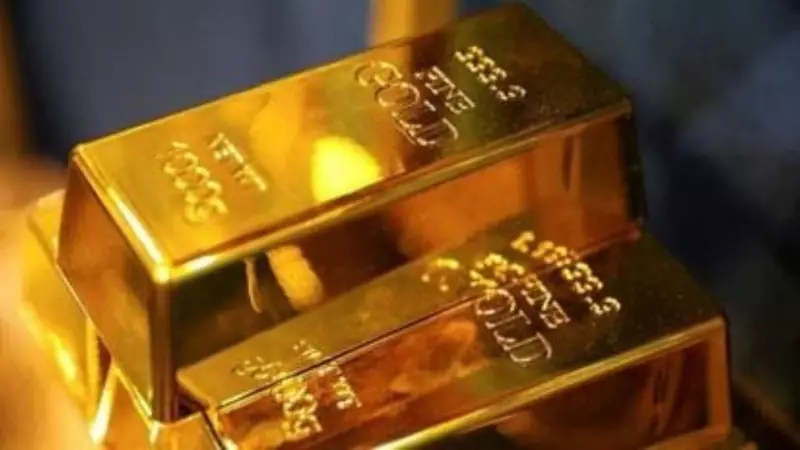
The recent, unprecedented surge in gold prices has left investors and economists alike pondering a critical question: is this a sustainable rally or a bubble waiting to burst? This isn't merely a story of investment value; it's a complex economic phenomenon with direct consequences for inflation and trade balances, particularly in a gold-loving nation like India.
The Meteoric Rise of Gold: A Look at the Numbers
The data reveals a startling upward trajectory for the precious metal. Starting from a modest $1,462 per ounce in FY20, the price of gold climbed steadily to an average of $1,988 in FY24. The real explosion occurred in FY25, when it rocketed to an average of $2,594. The current fiscal year has witnessed even more dramatic growth, with the average price sitting at $3,465. In a sharp climb over just seven months, the price leaped from $3,207 in April to a peak of $4,053 in October 2025.
Why is Gold Demand Skyrocketing?
Several interconnected factors are fuelling this golden rally. A primary driver is the volatility of the US dollar following the Ukraine war. Gold traditionally shares an inverse relationship with the dollar; when the greenback weakens, gold strengthens. The prevailing market sentiment, anticipating rate cuts from the US Federal Reserve, has further supported this dynamic, although a slower pace of cuts could stabilise the dollar and, in turn, gold prices.

Beyond currency fluctuations, market speculation has played a significant role. Investors and speculators have capitalised on the weaker dollar narrative to take substantial positions in the futures market, creating upward momentum even if they don't take physical delivery.
On the ground, retail demand in India and China, the world's two largest gold consumers, remains robust. Individuals are buying gold, both for physical purposes like weddings and in anticipation of further price increases, adding to the inflationary spiral.
Furthermore, Gold Exchange-Traded Funds (ETFs) have become a major demand driver. These funds are mandated to hold 70-80% of their assets in physical gold, creating a consistent and structural demand that keeps prices elevated.
Finally, a strategic shift is underway among global central banks. As part of a broader de-dollarisation trend, they are actively diversifying their foreign exchange reserves by moving away from a concentration in specific currencies and increasing their gold holdings.
The Ripple Effects: India's Economic Conundrum
This price surge is not happening in a vacuum and poses specific challenges for the Indian economy. Gold carries a weight of 1.08% in the Consumer Price Index (CPI). The current high prices are contributing significantly to core inflation numbers, which exclude volatile food and fuel items. This creates a dilemma for the Reserve Bank of India when formulating monetary policy and setting the repo rate.
Simultaneously, the import bill is swelling. Interestingly, while the value of imports has risen sharply, physical consumption has not kept the same pace. India imported 795 tonnes of gold in FY24, which decreased to 757 tonnes in FY25. For the first seven months of the current year, imports stand at a reasonable 300 tonnes, but this figure is expected to jump sharply during the November-December wedding season. Alarmingly, gold now constitutes almost 9% of India's total imports, which stood at $451 billion in the first seven months.
Future Outlook: Stability Over Sharp Gains
According to Madan Sabnavis, Chief Economist at Bank of Baroda, the immediate future may not see a repeat of the 2025 boom. The tariff shock has been largely absorbed by the global system, and the future of the US economy remains uncertain. With interest rates expected to remain broadly stable, a sharp upside for gold looks less probable. While a dramatic price collapse is not a certainty, the conditions for another massive surge are not currently present unless a new global economic shock occurs.






