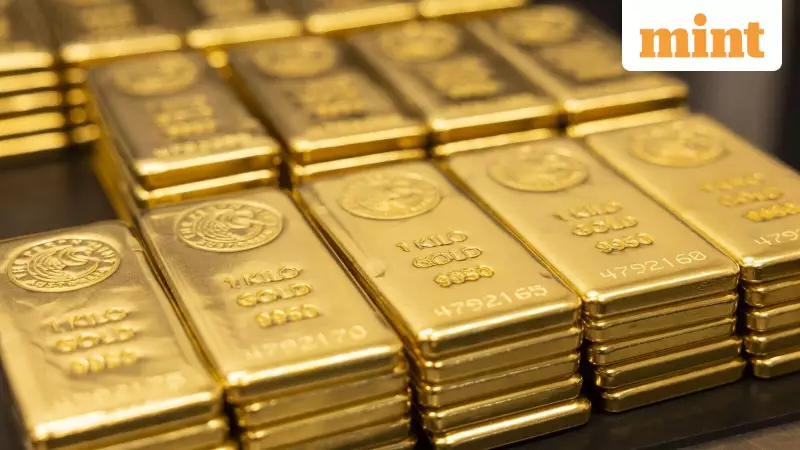
Gold's Dazzling Ascent to $5,100: A Beacon of Global Financial Insecurity
The price of gold has achieved a historic milestone, soaring past the $5,000 per ounce mark to reach $5,100 on Monday. This represents a dramatic increase from approximately $2,770 just a year ago, with financial experts now forecasting that the yellow metal could surpass $6,000 by the end of 2026. This unprecedented surge is largely attributed to the safe-haven effect triggered by the erratic policies of US President Donald Trump, which have significantly eroded confidence in the stability of the US dollar and its role as the world's primary reserve currency.
The Safe-Haven Rush Amid Political Volatility
The recent spike in gold prices reflects a profound fear of the future as President Trump's actions continue to rattle global markets. His rejection of established international trade and security frameworks, coupled with threats to the independence of the Federal Reserve, has shaken trust in US Treasury bonds and the dollar itself. Consequently, investors are flocking to gold as a reliable store of value during times of uncertainty.
However, it is crucial to recognize that gold is not a buy-and-forget asset. While its value has skyrocketed over the past year, a potential return to stability could see some investors shifting back to traditional assets like stocks and bonds, possibly leading to a correction in gold prices from these elevated levels.

Historical Context: From Bretton Woods to Floating Currencies
Gold once served as the bedrock of global finance under the Bretton Woods system established in 1944. This agreement pegged currencies to the US dollar, which was convertible to gold at $35 per ounce, providing exchange rate stability. However, an oversupply of dollars abroad, particularly in Europe, forced the US to abandon this gold convertibility in the early 1970s.
Since then, most currencies have floated based on global demand and supply, with some nations opting to peg their currencies to the dollar. The International Monetary Fund introduced Special Drawing Rights to assist countries with foreign exchange payments, offering a cushion during financial struggles.
The Erosion of Dollar Dominance
Currency values are fundamentally shaped by economic performance, encompassing factors such as trade demand, price stability, and productivity. While the US dollar has long been the most trusted reserve currency, its dominance is now under threat. In 2011 and 2023, despite credit rating downgrades of US debt, the dollar strengthened as capital sought safety in US government bonds. However, the current scenario is markedly different.
Following Moody's downgrade of US bonds last May, capital fled the dollar, a departure from previous trends. The share of global forex reserves held in dollars has declined from over 60% at the start of 2020 to 56% by the end of the third quarter of 2025. Central banks have been diversifying their holdings and increasing gold purchases since the Great Recession, a trend that has now intensified.
Future Implications and Risk Management
Looking ahead, if the Federal Reserve proves unable to tighten monetary policy in response to US fiscal deficits, further instability could ensue. Should gold prices become volatile, investors and central banks may need to explore alternative assets beyond traditional financial instruments, bullion, and commodities. This shift will likely require the deployment of sophisticated risk management tools, with artificial intelligence playing a pivotal role in navigating these complex financial landscapes.
In summary, gold's meteoric rise past $5,000 per ounce underscores a growing global anxiety about financial security, driven by political unpredictability in the United States. As the world grapples with these challenges, the future of reserve currencies and investment strategies remains uncertain, highlighting the need for adaptive and informed financial planning.