

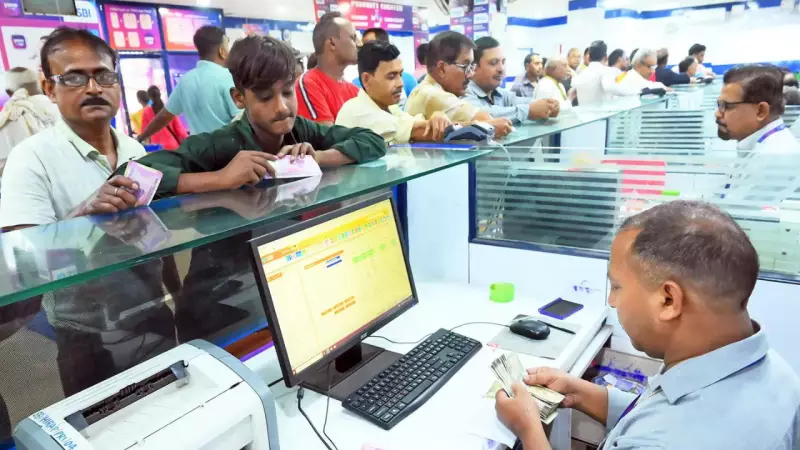
Global rating agency Fitch has delivered an optimistic assessment of India's banking sector, crediting stronger regulatory oversight by the Reserve Bank of India (RBI) and an improved supervisory framework for creating a more stable operating environment. The agency states these factors are lowering systemic risks and are credit positive for the nation's lenders.
Regulatory Reforms and Stronger Metrics
In a recent report, Fitch highlighted that regulatory responses to financial stress, frameworks for monitoring risks, and the recovery of impaired loans have all seen marked improvement in recent years. The agency believes this has significantly reduced the weaknesses that led to the last major spike in bad loans between the financial years 2016 and 2018.
The data underscores this recovery. The banking sector's non-performing loan (NPL) ratio has plummeted to 2.2% in the first half of the 2025-26 financial year (FY26). This is a dramatic fall from a peak of 11.2% recorded in FY18. Simultaneously, the common equity Tier 1 (CET1) capital ratio, a key measure of financial strength, has risen to 14.8% from 9.3% in FY14.

A Supportive Economic Backdrop
Fitch notes that these regulatory shifts are occurring alongside strong economic growth prospects and reduced inflation risks, further bolstering the sector's health. The agency expects India's economy to grow robustly at over 6% annually over the next two years, providing banks with ample opportunities for profitable lending expansion.
The sector's return on assets, at around 1.3%, is now comparable with peer banking systems in the Asia-Pacific region, reflecting what Fitch categorizes as a 'bbb' category operating environment. The upcoming implementation of an Expected Credit Loss (ECL) framework is also seen as a positive step, as it should further reduce earnings volatility by smoothing provisions over the business cycle.
Room for Prudent Growth
The report pointed out that India's banking sector credit-to-GDP ratio stood at 59% in 2025, which is notably below the peer average of 101%. This gap suggests there is significant headroom for lending growth to moderately exceed nominal GDP growth in the medium term.
However, Fitch cautions that this growth must be managed carefully. The agency stated that such expansion would not pose major risks to systemic stability, but only if underwriting standards are maintained at their current robust levels.
Overall, Fitch's analysis indicates that a combination of stronger supervision, ongoing regulatory reforms, and a favourable macroeconomic climate has positioned Indian banks to operate with reduced risks. This environment allows them to continue expanding credit in a prudent manner, marking a substantial improvement from the challenges of the past decade.






