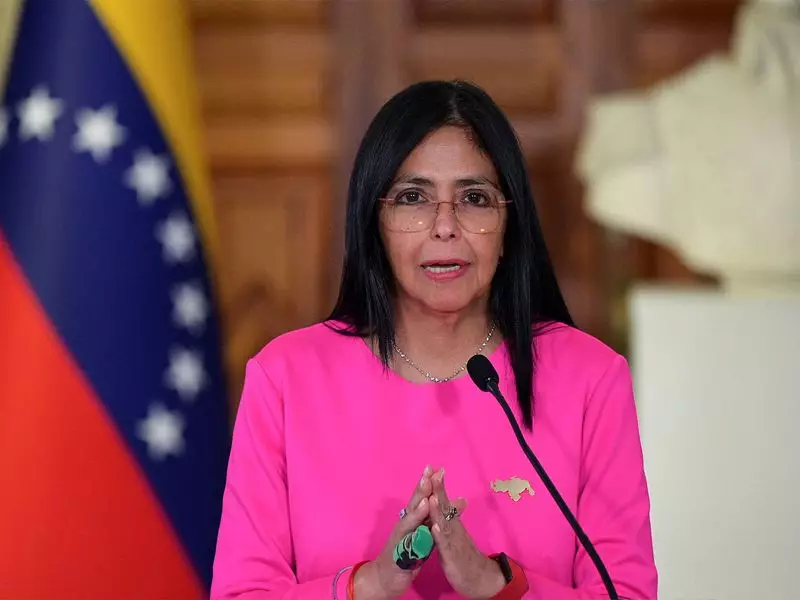
In a dramatic turn of events that has sent shockwaves through the South American nation, Venezuela's Supreme Court of Justice has declared the removal of President Nicolás Maduro and appointed Vice President Delcy Rodríguez as the country's acting president. This unprecedented legal and political maneuver, announced on Thursday, marks a significant escalation in the nation's long-running constitutional and political crisis.
The Court's Decree and Its Immediate Aftermath
The ruling, issued by the nation's highest judicial body, stated that the court had "declared the absolute nullity of the acts of designation" of Nicolás Maduro as the head of state. This legal interpretation effectively stripped Maduro of his presidential authority. Consequently, the court invoked Article 234 of the Venezuelan Constitution, which outlines the procedure for presidential succession. The article stipulates that in the event of a permanent absence of the president, the executive vice president assumes the presidency of the republic.
Following this constitutional provision, the Supreme Court ordered that Delcy Rodríguez, the Executive Vice President, immediately assume the role of acting president. The court's decision was framed as a necessary step to ensure the continuity of the state and adherence to the constitutional order. This move represents a direct challenge to Maduro's government, which has been at the helm since 2013 and has faced intense domestic and international pressure over economic collapse and allegations of authoritarianism.

Context of the Political Crisis
This judicial intervention did not occur in a vacuum. Venezuela has been mired in a profound political and economic crisis for nearly a decade. The legitimacy of Maduro's presidency has been contested since his 2018 re-election, which was widely criticized by the international community and domestic opposition as neither free nor fair. In 2019, opposition leader Juan Guaidó declared himself interim president, receiving recognition from dozens of countries, including the United States and many in Europe.
However, Maduro retained control with the crucial support of the Venezuelan military and institutions like the Supreme Court, which has consistently ruled in his government's favor. The court's sudden about-face to declare his removal is therefore a seismic event, suggesting a potential fracture within the ruling establishment. The decision raises immediate questions about the role of the powerful military and the future alignment of other state institutions.
Implications and Unanswered Questions
The appointment of Delcy Rodríguez as acting president creates a complex new chapter in Venezuela's turmoil. Rodríguez, a longtime loyalist of the ruling socialist party and a former foreign minister, is a formidable political figure in her own right. Her assumption of power via a court order, rather than an election or a clear constitutional trigger like death or resignation, sets a controversial precedent.
The international reaction is likely to be mixed and cautious. Nations that previously recognized Guaidó may view this as an internal power shift within the Chavista movement rather than a genuine democratic transition. Meanwhile, allies like Russia and China will be closely monitoring the stability of their partner government. Domestically, the move could either consolidate power under a new face or trigger further instability and conflict between different factions.
The key facts remain: the decision was made on Thursday by Venezuela's Supreme Court of Justice; Nicolás Maduro was declared removed; and Delcy Rodríguez was named acting president under Article 234 of the constitution. The coming days will be critical in determining whether this judicial decree translates into a tangible transfer of power or becomes another contested episode in Venezuela's enduring political saga.