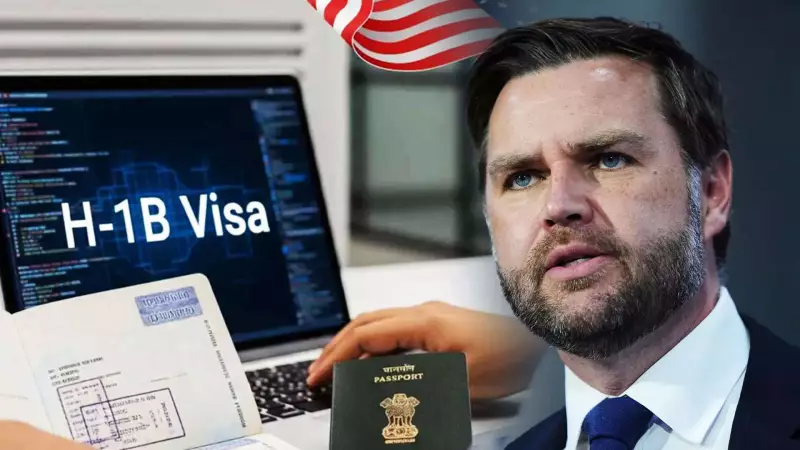
In a move that directly impacts the Indian tech community, United States Vice President JD Vance has framed stringent new restrictions on the H-1B visa program as a moral and economic necessity. His strong endorsement, invoking religious principles, has thrown the futures of thousands of skilled Indian professionals into immediate uncertainty during the holiday season.
A Moral Justification for Economic Protectionism
Vance, a key figure in President Donald Trump's administration, has publicly backed the sweeping immigration crackdown. He described the policy push to prevent corporations from outsourcing jobs to cheaper foreign labour as an exercise in "true Christian politics." The Vice President's argument centres on protecting the economic dignity of American workers, positioning the H-1B visa overhaul not just as policy but as a moral duty.
This ideological framing marks a significant shift in the rhetoric surrounding the skilled worker visa program, which has long been a critical pipeline for global talent, especially from India, into the US tech and engineering sectors.

Immediate Consequences for Indian Professionals
While the political debate continues, the real-world effects are already being felt. For the large community of Indian H-1B holders and applicants, the consequences are personal and severe. Key changes include:
- The abrupt cancellation of numerous visa interviews, leaving applicants in procedural limbo.
- An expansion of social media and background scrutiny for applicants.
- The imposition of a staggering $100,000 fee on new H-1B applications, a massive financial barrier designed to drastically reduce intake.
These measures have created a climate of fear and instability. Many Indian professionals and their families now find themselves stranded mid-process, with their legal status and career plans in America hanging in the balance as the year ends.
Isolationism Versus Global Talent
The administration's hardline stance, justified by Vance's moral argument, is raising louder questions about a broader strategic pivot. Critics are increasingly concerned that America's new approach masks a deeper shift towards economic isolationism.
This shift risks alienating a key source of global innovation and skill. The H-1B program has historically been a two-way street, filling critical talent gaps in the US while offering opportunities to high-skilled workers worldwide. The current crackdown, particularly its impact on Indian nationals who receive a majority of these visas, suggests this symbiotic relationship is under threat. The debate now centres on whether protecting American jobs in the short term will come at the long-term cost of losing access to the world's best talent.
The situation remains fluid, but for now, the holiday season has brought anything but cheer for thousands of Indian tech workers whose American dreams face an unpredictable future under the new visa regime.