Massive Winter Storm Sweeps Across United States, Placing Millions at Risk
A sprawling and potent winter storm is forecast to sweep across the United States this weekend, placing more than 160 million people directly in the path of hazardous conditions. The system threatens to deliver a dangerous mix of heavy snow, sleet, freezing rain, and extreme cold, leading to widespread travel disruptions and potential infrastructure failures.
National Weather Service Issues Dire Warnings
The National Weather Service (NWS) has warned that the storm, tracking eastwards from the High Plains and Rockies, will leave extremely dangerous conditions in its wake. The primary threat stems from a combination of heavy snowfall and potentially catastrophic ice accumulation, a pairing known to cripple transportation networks and power grids.
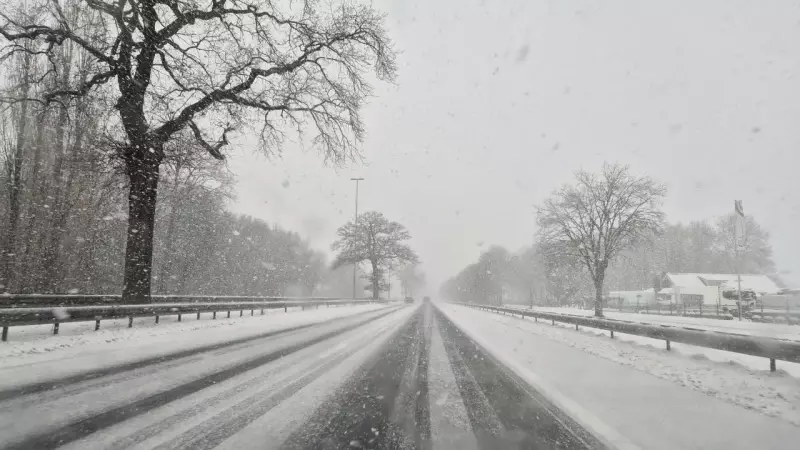
Across extensive regions including the Southern Plains, Ohio Valley, Mid-Atlantic, and Northeast, snowfall totals could exceed 12 inches, severely disrupting public transportation and creating perilous driving conditions. Just south of the main snow band, freezing rain and sleet threaten to coat trees and power lines with ice, dramatically increasing the risk of widespread, prolonged power outages.

Freezing rain and ice make travel difficult, if not impossible, emphasized Mr. Richard Bann, a meteorologist at the Weather Prediction Center in College Park, Maryland.
Detailed Storm Timeline and Impact Zones
The storm's progression is expected to unfold over several days, affecting a broad swath of the country:
- Friday: The system will take shape in the afternoon, emerging from the Southern Rockies. Scattered snow is forecast for Colorado and New Mexico before it expands into the Southern Plains, including Kansas, Oklahoma, and the Texas Panhandle.
- Saturday: Overnight, the storm will spread deeper into Texas, reaching Arkansas and Tennessee by morning, and pushing into parts of the Midwest. By Saturday night, impacts could extend into northern Alabama, Georgia, and the Carolinas, with snow to the north and a mix of sleet and freezing rain farther south.
- Sunday: Wintry weather is expected to reach the Mid-Atlantic early in the day, then spread northward into New England as the storm continues its eastward track.
- Monday: Snowfall is expected to taper off across the Northeast, but a surge of bitterly cold air will settle in behind the storm, stretching from the Southern Plains through New England.
Eleven States Declare State of Emergency
In anticipation of the severe weather, at least 11 states have preemptively declared a state of emergency. These states include Alabama, Arkansas, Georgia, Louisiana, Mississippi, Missouri, North Carolina, South Carolina, Tennessee, Texas, and Virginia.
Travel is going to become more and more treacherous starting late Friday afternoon and lasting through the rest of the weekend, the National Weather Service in Norman, Oklahoma, cautioned in an online statement.
Major Travel Disruptions Across Air, Rail, and Road
The storm is already causing significant travel chaos nationwide. According to reports, approximately 1,300 flights have been cancelled across the United States, with expectations for more cancellations as the storm intensifies. This follows major airlines issuing travel waivers for flights this weekend. Delta Air Lines has specifically cancelled flights in North Texas, Oklahoma, Arkansas, Louisiana, and Tennessee.
Road travel is also expected to be severely impacted, with periods of impossible driving conditions. Transportation departments are taking action; for instance, Dallas has begun salting roads ahead of expected freezing rain and snow by Friday afternoon. Similarly, the Louisiana Department of Transportation has mobilized crews to prepare roads for the drastic weather.

Major commuter rail systems in the Northeast, including New Jersey Transit, Metro-North Railroad, and the Long Island Rail Road, have committed to providing riders with real-time updates on departures and any service delays. Meanwhile, Amtrak is implementing service changes nationwide as the storm approaches, warning that schedule adjustments may be necessary depending on the storm's path.
Power Outages and Extreme Cold Compound Dangers
Forecasters warn that power outages caused by ice accumulation could leave residents without heat as temperatures plummet. Mr. Bann noted that snow could fall in areas lacking adequate snow-removal equipment, and prolonged cold could prevent melting, leaving roads icy and dangerous for extended periods. Emergency officials are urging residents in affected areas to prepare for potential power outages, travel disruptions, and dangerous cold.
Public Rush to Stockpile Supplies
Following warnings from state weather departments, citizens are rushing to grocery stores to stock up on essentials. Social media platforms are filled with images of empty grocery shelves. People are not just piling up canned goods or batteries but also perishable items and normal grocery staples. US Federal agencies and the American Red Cross recommend stockpiling food with a long shelf life, low salt content, and that does not require cooking. Suitable items include energy and protein bars, canned food, water, and fruits that do not require refrigeration.
Blast of Extreme Cold to Follow Storm
After the storm moves through, an extremely cold air mass from Canada is expected to spill across the eastern two-thirds of the United States. This could extend travel disruptions and infrastructure problems into early next week. From the Plains to the Northeast, communities will face bitterly cold temperatures and dangerously cold wind chills, the Weather Prediction Center warned.
Wind chills in North Dakota could plunge to minus 50 degrees Fahrenheit, while subzero wind chills may spread across the Southern Plains, Mississippi Valley, and into parts of the Mid-Atlantic. It's going to be hazardous for humans to step outside, Mr. Bann stated.
An Unusually Broad and Impactful Storm
This storm is forecast to impact a vast portion of the United States, with dangerous conditions expected for nearly everyone east of the Rockies, according to the National Weather Service. Alex Lamers, a meteorologist with the Weather Prediction Center, told The New York Times that the system is likely to fall into the echelon of unusually impactful storms. He added that It's not something you see every winter, warning that the storm is likely to affect about half the US population with accumulating ice, sleet or snow.