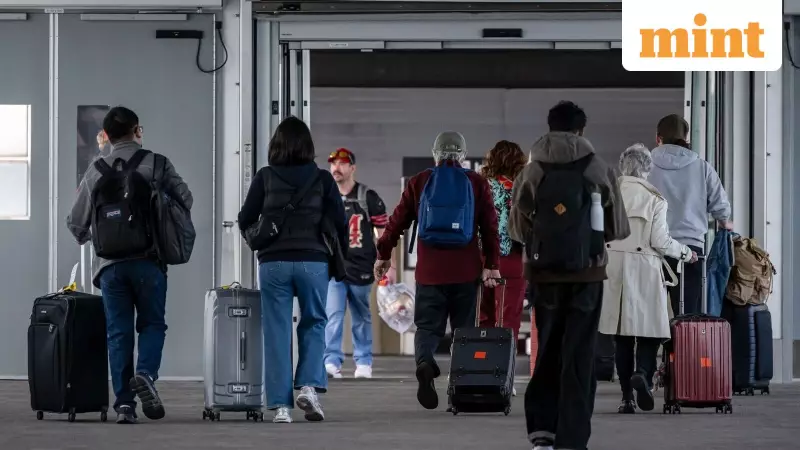
The United States Transportation Security Administration (TSA) has announced a significant policy shift that will impact travellers lacking federally approved identification. Starting February 1, such passengers will face a $45 fee to proceed through airport security.
New Fee Structure and Enforcement Details
According to a Reuters report, this measure is designed to motivate individuals to obtain upgraded identity documents that meet the stricter REAL ID standards. While the TSA began enforcing these standards in May of this year, the initial approach involved warnings and enhanced screening for non-compliant travellers. Officials now state they will encourage passengers to secure a REAL ID or be prepared to pay the fee before arriving at the airport.
The newly announced $45 charge will cover travel for a period of 10 days. This marks an increase from a previously proposed fee of $18, which was published in the Federal Register on November 20. TSA officials clarified that the higher cost is due to greater-than-anticipated expenses associated with managing this alternative screening option.

Who is Exempt and What IDs Are Accepted?
The fees are nonrefundable, and the payment process at the airport could take up to 30 minutes for those who haven't settled it beforehand. In exceptional circumstances, officials retain the discretion to waive the charges. Notably, children under 18 years are not required to show identification at airport checkpoints and are exempt from this fee.
For most adults, a state-issued driver's license that complies with REAL ID requirements is the common document. However, several alternatives remain acceptable, including:
- Passports issued by any government.
- Permanent resident cards (Green Cards).
- Department of Defence identification cards.
- DHS Trusted Traveller cards (like Global Entry, NEXUS).
TSA data indicates that approximately 94% of current air travellers already present valid, accepted identification at airports.
The Long Road to Stricter ID Norms
The push for more secure identification traces back to 2005, when the U.S. Congress approved new, stricter federal standards for issuing IDs like driver's licenses. This legislation was a direct response to a key recommendation by the September 11, 2001, commission, which urged the government to set robust standards for identification sources.
The law establishes minimum security benchmarks for both the issuance and production of licenses and IDs. While its enforcement for air travel has been delayed multiple times over the years, it is now being fully implemented. These IDs are also required for access to federal buildings and military bases.
The introduction of the fee is the latest step in a nearly two-decade-long effort to enhance national security through standardized and harder-to-forge identification documents for all air travellers within the United States.