In a significant move, the United States has outlined a plan to take long-term control of Venezuela's oil sales and revenue. The goal, according to US Energy Secretary Chris Wright, is to stabilise the South American nation's shattered economy and eventually rebuild its crucial oil sector.
Leverage for Change: The US Strategy on Venezuelan Oil
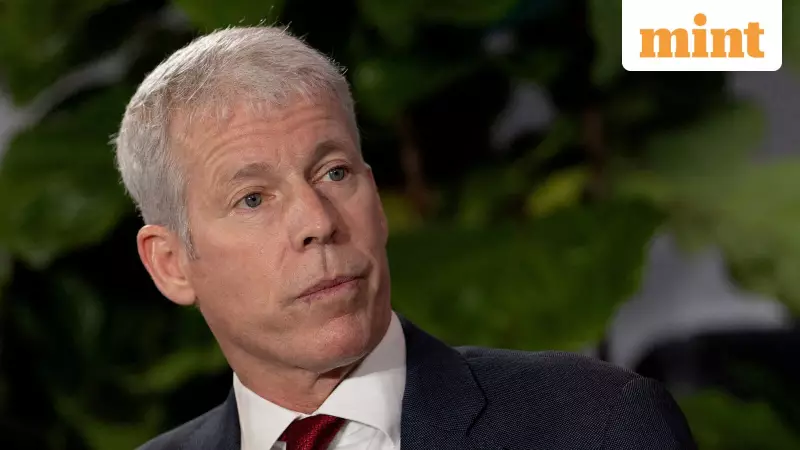
Speaking at the Goldman Sachs Energy, CleanTech & Utilities Conference in Miami on Wednesday, Wright emphasised that this control is essential for driving necessary changes in Venezuela. This stance comes just days after US forces conducted a raid in Caracas, leading to the ousting of the country's leader, Nicolas Maduro, on Saturday.
"We need to have that leverage and that control of those oil sales to drive the changes that simply must happen in Venezuela," Wright stated clearly. He explained that the revenues generated would first be used to stabilise Venezuela's economy. Later, a portion could be directed to repay international oil giants Exxon Mobil and ConocoPhillips for losses they suffered nearly two decades ago when their assets were nationalised by former President Hugo Chavez.

The Mechanics of the Oil Sales Plan
The operational plan involves marketing Venezuela's already stored oil first, followed by selling its future production. A key part of this strategy includes sales to US refineries that are specially equipped to process Venezuela's heavy crude. All revenues will be deposited into accounts controlled by the US government.
The US Department of Energy confirmed that such sales have already begun. The government has engaged "the world's leading commodity marketers and key banks" to execute and financially support these transactions. On Tuesday, Washington announced an initial deal with Caracas to export up to $2 billion worth of Venezuelan crude to the United States.
Venezuela's state-run oil company, PDVSA, confirmed on Wednesday that negotiations with the US for oil sales are progressing. A PDVSA board member, Wills Rangel, told Reuters that the US would need to purchase cargoes at international market prices.
Rebuilding an "Energy Powerhouse" and Repaying Debts
Wright expressed strong belief in Venezuela's potential, calling it a nation that "should be a wealthy, prosperous, peaceful energy powerhouse." Despite sitting atop the world's largest oil reserves, the OPEC member currently accounts for only about 1% of global supply due to decades of underinvestment and mismanagement. Production has plummeted from a peak of 3.5 million barrels per day in the 1970s to an average of about 1.1 million bpd last year.
Wright has been in talks with US oil companies to understand the conditions needed for them to re-enter Venezuela and help boost production in the longer term. He acknowledged that while a short-term increase is possible with new equipment and technology, a full recovery to past production levels would take years.
Regarding the massive debts owed to ConocoPhillips and Exxon Mobil, Wright told CNBC in an interview that "those are very real and need to be recompensed in the future," but stressed that stabilising Venezuela's economy must come first.
The announcement had an immediate impact on markets, with shares of US refiners like Marathon Petroleum, Phillips 66, and Valero Energy rising between 2.5% and 5%.
White House Meetings and Company Involvement
Raising Venezuela's crude output is a top objective for President Donald Trump. He is scheduled to meet with the heads of major oil companies at the White House on Friday. Representatives from Exxon Mobil, ConocoPhillips, and Chevron—the top three US oil companies—are expected to attend.
Wright revealed he spoke with the CEOs of Exxon, Conoco, and Chevron immediately after Maduro was seized. He expects these companies to play an advisory role in rehabilitating Venezuela's oil sector, though he noted immediate multi-billion dollar investments are not expected next week.

Currently, Chevron is the only US oil major still operating in Venezuela's oil fields. The agreement with Caracas is seen as a direct response to Trump's demand for Venezuelan officials to open up to US oil companies or face the risk of further military intervention. Trump has stated he wants interim Venezuelan President Delcy Rodriguez to grant "total access" to the country's oil industry for the US and private firms.
Summarising the plan's intent, Wright concluded, "Instead of the oil being blockaded, as it is right now, we're going to let the oil flow... It will benefit the American people, the American economy and global energy markets, but of course, it will also massively benefit the people of Venezuela."