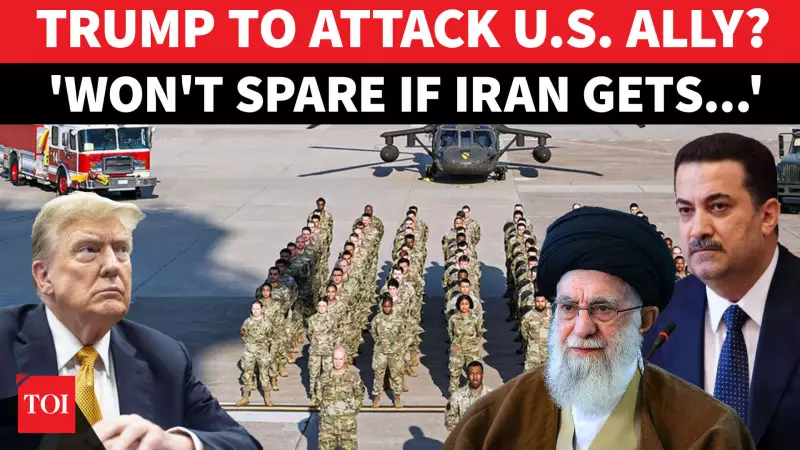
In a significant escalation of economic pressure tactics, the United States has issued stark warnings that it could freeze Iraq's vital oil revenues if political parties aligned with Iran manage to enter the next government in Baghdad. This development represents a strategic tightening of Washington's vise on Tehran's regional influence without deploying military forces.
Economic Leverage as Political Weapon
U.S. officials have delivered these cautions through closed-door communications, signaling that billions of dollars in Iraqi oil money currently held at the prestigious Federal Reserve Bank of New York could be frozen at Washington's discretion. This approach marks a calculated shift toward using raw economic power as a primary tool of foreign policy, bypassing traditional military interventions.
The Maximum Pressure Campaign Revived
This threat aligns perfectly with President Donald Trump's revived "maximum pressure" campaign, which aims to systematically squeeze Iran and curb its expanding influence across the Middle East. By targeting Iraq's financial lifeline—its substantial oil revenues—the United States seeks to create powerful economic disincentives against political cooperation with Tehran.

The strategy demonstrates how Washington can exert substantial influence over Baghdad's political landscape without deploying a single tank or troop. Iraq's economy remains heavily dependent on oil exports, making this revenue stream particularly vulnerable to external pressure. The funds in question represent a crucial portion of Iraq's national income, essential for government operations, public services, and economic stability.
Regional Implications and Strategic Calculations
This development occurs against a backdrop of heightened regional tensions and complex geopolitical maneuvering. The warning serves multiple strategic purposes: it discourages Iraqi political factions from aligning too closely with Iran, reinforces American influence in Baghdad's power dynamics, and maintains pressure on Tehran amid ongoing regional conflicts.
The Federal Reserve Bank of New York's role as custodian for these funds gives Washington direct access to a powerful economic lever. This arrangement, originally established to facilitate international oil transactions, has now become a potential instrument of political coercion in the high-stakes arena of Middle Eastern politics.
As Iraq navigates its complex political future, this American warning introduces new economic variables into an already complicated equation. The threat of frozen revenues could significantly alter political calculations in Baghdad, potentially reshaping coalition negotiations and government formation processes in ways that favor Washington's regional objectives.