The United States executed a significant military operation in Venezuela on Saturday, with former President Donald Trump announcing on Truth Social that Venezuelan leader Nicolás Maduro had been apprehended and removed from the nation. This aggressive action marks a dramatic escalation following months of mounting pressure from Washington over narco-terrorism allegations against Maduro.
Night of Explosions and Gunfire in Caracas
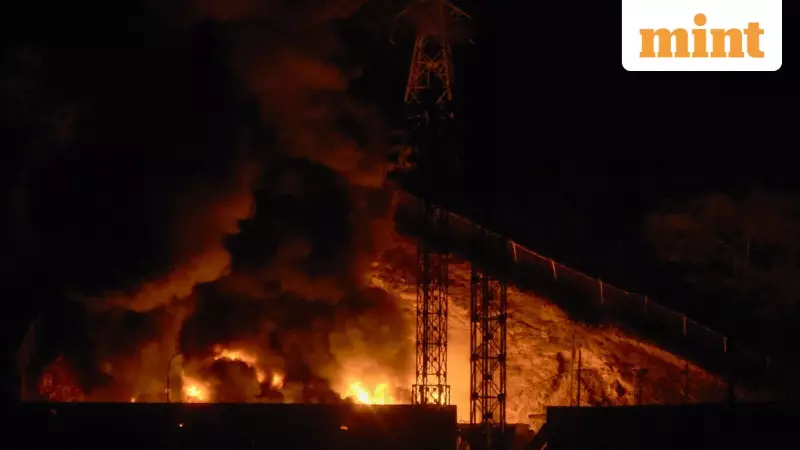
Residents of the Venezuelan capital were jolted awake in the early hours of January 3, 2026. Multiple explosions rocked the city, accompanied by the sound of low-flying aircraft. The incidents, which started around 2 am local time, prompted panic as people rushed into the streets or took to social media to share their experiences. Gunfire was also reported in areas including Higuerote and La Guaira, towns near Caracas.
The attack, which appeared to last less than 30 minutes, left its mark on the city's infrastructure. Smoke was seen rising from the hangar of a military base in Caracas, and another military installation in the capital suffered a power outage. While some neighbourhoods saw armed individuals and civilian militia members on the streets, other parts of the city remained eerily empty hours after the assault.

Venezuela's Response and Citizen Accounts
The Venezuelan government was swift to label the event an "imperialist attack." It issued a statement calling citizens to action, urging them to take to the streets and repudiate the strike. The government stated that Maduro had "ordered all national defense plans to be implemented" and proclaimed a state of external disturbance, granting him expanded powers.
For ordinary Venezuelans, the night was one of terror. María Eugenia Escobar, 58, of La Guaira, told AFP the explosions lifted her from bed, leaving her in tears as a long-feared moment seemed to arrive. Carmen Hidalgo, a 21-year-old office worker, described the ground shaking and the terrifying experience of explosions and planes overhead, feeling as if the air itself was striking her.
Background of a Growing Standoff
This large-scale strike did not occur in a vacuum. It is the culmination of a sustained campaign by the US military, which since early September has been targeting vessels in the Caribbean Sea and eastern Pacific Ocean. The Trump administration stated that by Friday, 35 such strikes had occurred, resulting in at least 115 deaths.
This military pressure followed a significant buildup of US forces near South America, highlighted by the November arrival of the nation's most advanced aircraft carrier. Trump has consistently defended these actions as necessary to curb drug flow into the US, framing it as an "armed conflict" with drug cartels. Despite Venezuela expressing a willingness to negotiate an anti-drug trafficking agreement just a day before the strike, the US proceeded with its most direct intervention yet.
The immediate aftermath leaves many questions unanswered, including the exact status of Maduro and the potential for further military actions. The event signifies a dangerous new chapter in the long-standing political and economic conflict between the United States and Venezuela.