Pentagon Orders Major Naval Deployment from Indo-Pacific to Middle East
The United States Department of Defense has issued a significant military order, redirecting the USS Tripoli amphibious assault ship and an estimated 2,500 Marines from their Indo-Pacific theater to the Middle East. This strategic move provides the US with a self-contained forcible entry capability in a region experiencing heightened geopolitical friction.
Details of the Naval Deployment
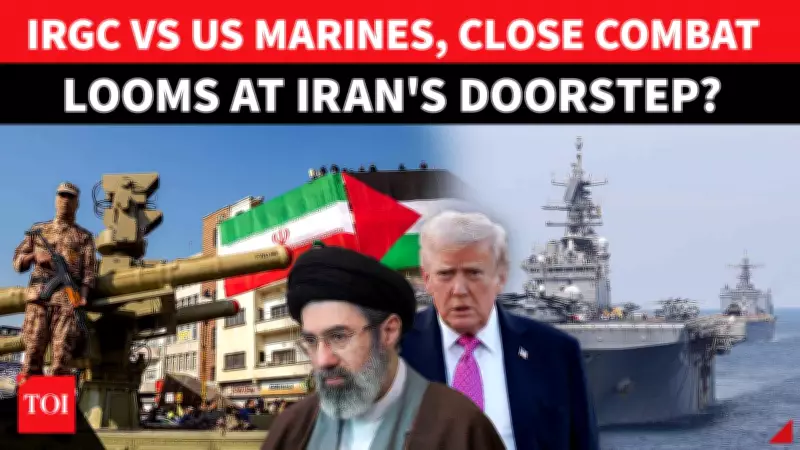
The USS Tripoli, an America-class amphibious assault ship based in Japan, is a formidable vessel equipped with advanced F-35B fighter jets, Osprey tiltrotor aircraft, and various helicopters. It will not be traveling alone; the deployment includes the escort ships USS Robert Smalls and USS Rafael Peralta. The entire naval group is anticipated to arrive in the Middle Eastern theater within approximately two weeks.
Upon arrival, these forces will join over 50,000 US troops already stationed in the region. Notably, former President Donald Trump and commentator Pete Hegseth have publicly stated that the deployment of ground troops remains a possibility that has not been ruled out, indicating the fluid and serious nature of the situation.

Context of Escalating Regional Tensions
This substantial military redeployment occurs against a backdrop of severe regional instability. Iran has effectively closed the strategic Strait of Hormuz, a critical maritime chokepoint for global oil shipments. This action has resulted in over 1,000 cargo ships being stranded, disrupting international trade and energy supplies.
Simultaneously, US forces have conducted a strike on Iran's Kharg Island oil export terminal, a key facility for the nation's petroleum exports. These events represent a significant escalation in the ongoing tensions between the United States and Iran, with military actions now directly impacting economic and strategic assets.
Strategic Implications and Global Concerns
The redeployment carries a notable strategic cost for American global posture. By moving the USS Tripoli and a substantial Marine contingent from the Indo-Pacific, the US presence in that region has demonstrably thinned. This reduction occurs at a precise moment when China is closely monitoring US military movements and capabilities in the Asia-Pacific, potentially altering the balance of power and strategic calculations.
The situation underscores the complex challenges of managing simultaneous security concerns in different global theaters. The Middle East deployment aims to address immediate threats and assert US influence, but it does so by drawing resources away from a long-term strategic focus on the Indo-Pacific, where China's growing military and economic power presents a sustained challenge.
This development highlights the interconnected nature of global security and the difficult decisions faced by military planners in an era of multipolar competition and regional conflicts.