

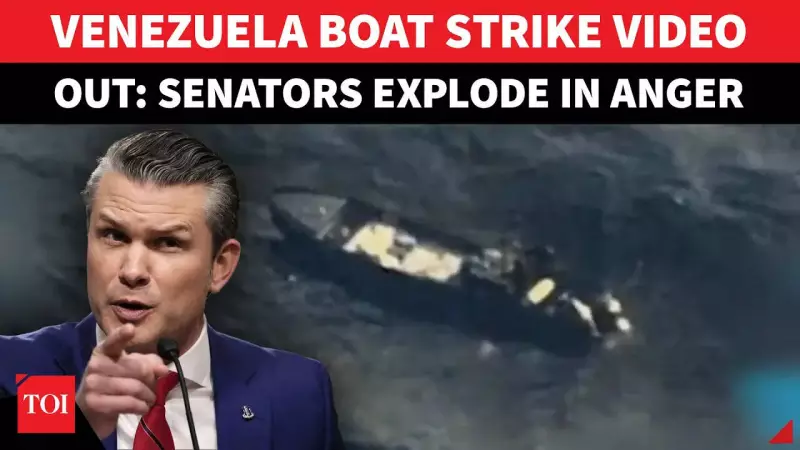
American lawmakers have been left deeply disturbed after viewing a classified video depicting a military boat strike involving Venezuela. The footage, shown to senators, has sparked intense reactions and a heated debate about transparency and the harsh realities of conflict.
Senators' Visceral Reactions to the Footage
Following a private screening, Senator Richard Blumenthal, a Democrat from Connecticut, did not mince words. He stated that the American public "absolutely needs to see the video," predicting they would be "shocked, sickened, even ashamed" by its contents, particularly a second, more graphic clip. Blumenthal argued there is no valid reason to withhold this additional video when related footage has already been made public.
In stark contrast, Senator Tim Sheehy, a Republican from Montana, offered a different perspective. Sheehy, who has a military background, suggested that the disturbing events captured in the video represent the unvarnished truth of armed service and warfare.

The Broader Context of US-Venezuela Tensions
This revelation comes amidst a period of significantly heightened friction between the United States and Venezuela. The incident referenced in the video is part of a larger pattern of confrontations. Notably, the news follows reports of a recent close call where a US military tanker nearly collided with a private jet near Venezuelan airspace at 26,000 feet.
Furthermore, the previous administration under former President Donald Trump had taken a hardline stance, declaring the Venezuelan government a terrorist group and imposing bans on its oil tankers. These moves prompted Caracas to appeal to the United Nations over what it termed a "US shocker."
A Divided Response and the Path Forward
The senators' divergent views highlight a fundamental split in how such sensitive military actions are perceived. On one side is the demand for public accountability and full disclosure, championed by Blumenthal. On the other is the viewpoint, expressed by Sheehy, that acknowledges the brutal and often shocking nature of military engagements as an inevitable reality.
This internal debate among US policymakers unfolds as the geopolitical situation around Venezuela remains volatile. The call to release the video publicly sets the stage for a potential new chapter in the ongoing discourse about government transparency, the ethics of military intervention, and the public's right to witness the consequences of foreign policy decisions.






