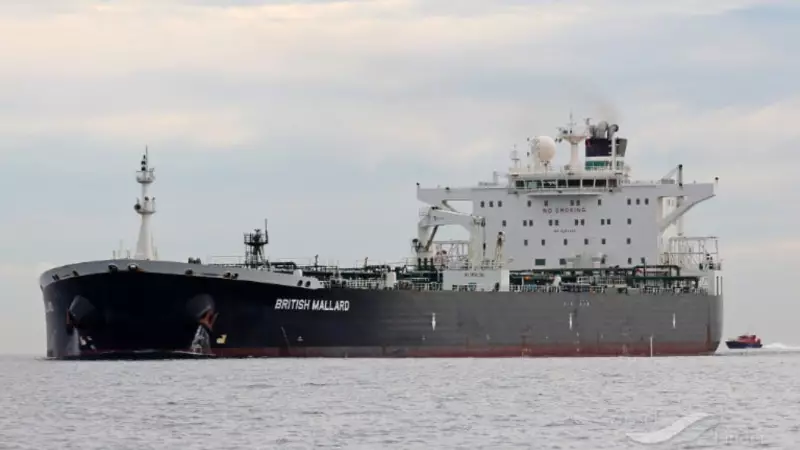
The United States has executed another high-seas seizure of a Russian oil tanker, marking a significant escalation in its enforcement of sanctions against Moscow. The vessel, identified as the Vladimir Kozitsky, was confiscated in the Caribbean Sea, according to a statement from the US Department of Justice.
A Pattern of Enforcement in International Waters
This action represents the second such seizure by US authorities in a matter of weeks, following the earlier confiscation of another tanker, the Oligarch. The move underscores a determined campaign to disrupt the maritime networks facilitating Russia's oil exports in defiance of Western sanctions imposed after the invasion of Ukraine. The Department of Justice confirmed the vessel was taken into custody recently, though the precise date of the operation was not disclosed.
The Vladimir Kozitsky was reportedly transporting a cargo of crude oil when it was intercepted. US officials allege the tanker and its operations were in clear violation of the extensive sanctions regime targeting Russia's critical energy sector. By seizing the physical asset, the US aims to impose a direct financial cost and create a deterrent effect for other vessels and entities involved in similar trade.

The Legal and Geopolitical Implications
This seizure is not an isolated maritime incident but a calculated component of a broader economic pressure strategy. The United States, in coordination with its allies, has progressively tightened sanctions, including imposing price caps on Russian oil. The enforcement of these caps relies on disrupting shipments that sell above the set limit, and seizing vessels serves as a powerful tool of enforcement.
The back-to-back confiscations signal a new phase of proactive, at-sea enforcement, moving beyond mere sanctions listings and financial penalties. It demonstrates Washington's willingness to use its naval and legal authority to physically impede the flow of sanctioned Russian commodities. This approach complicates logistics for Moscow, increases insurance and shipping costs, and forces Russian traders to seek ever more clandestine and costly methods to export oil.
Raising the Stakes for Global Energy Markets
The repercussions of these seizures extend beyond the immediate loss of the vessels and their cargo. They introduce substantial risk for ship owners, insurers, and captains involved in transporting Russian oil. The legal basis for the seizures allows the US to potentially forfeit the vessels, turning them into assets for Ukraine's reconstruction or for US enforcement agencies.
For the global energy market, these actions contribute to market volatility and uncertainty. While aimed at curtailing Russian revenue, they also force a reshuffling of global oil trade routes and intermediaries. The Caribbean, a major transit and transshipment hub for global energy, has now become a focal point for this sanctions enforcement battleground.
In conclusion, the seizure of the Vladimir Kozitsky is a bold statement of intent from the United States. It confirms that the US is prepared to take tangible, physical action to enforce its sanctions policy, directly targeting the maritime infrastructure supporting Russia's war economy. This tactic is likely to continue, posing ongoing challenges for Russian oil exports and reshaping aspects of international shipping law and practice in contested geopolitical waters.